

 Travel Essentials
 Travel Essentials

A comprehensive travel guide to Troyes, featuring medieval half-timbered houses, exceptional stained glass, historic churches, and cultural museums in the Champagne region.
 Travel Essentials
Nestled in the Champagne region of northeastern France, Troyes stands as one of Europe’s most remarkable medieval destinations, offering visitors an immersive journey through centuries of architectural splendor and artistic achievement. This historic city, home to over 3,000 intricately decorated half-timbered houses, represents a living museum where medieval craftsmanship meets contemporary culture. Whether you’re a first-time visitor planning a weekend escape or a seasoned traveler seeking authentic French heritage, Troyes delivers an experience that transcends typical tourism, inviting guests to wander its atmospheric streets and discover layers of history at every corner.
The foundation of understanding Troyes begins with recognizing its distinctive urban layout. The old town’s configuration resembles a Champagne cork in shape—a fitting coincidence given that Troyes served as the historic seat of the Counts of Champagne during the medieval period. This symbolic geometry extends beyond mere coincidence; it represents how geographic form and cultural significance intertwine throughout the city’s development.
Walking through Troyes is an activity unto itself. The historic center invites leisurely exploration on foot, with narrow cobblestone streets leading to intimate squares, charming cafes, and unexpected architectural discoveries. The town’s manageable size means that most major attractions remain within comfortable walking distance, allowing visitors to experience the city at a contemplative pace without the overwhelming scale of larger European capitals. For those seeking deeper contextual understanding, guided tours provide valuable historical perspective, particularly regarding the city’s prominence as a major medieval trade hub between the 12th and 15th centuries, when merchants from Flanders, Germany, Italy, and Spain converged on Troyes’ twice-yearly fairs to trade wool, furs, silk, and spices.
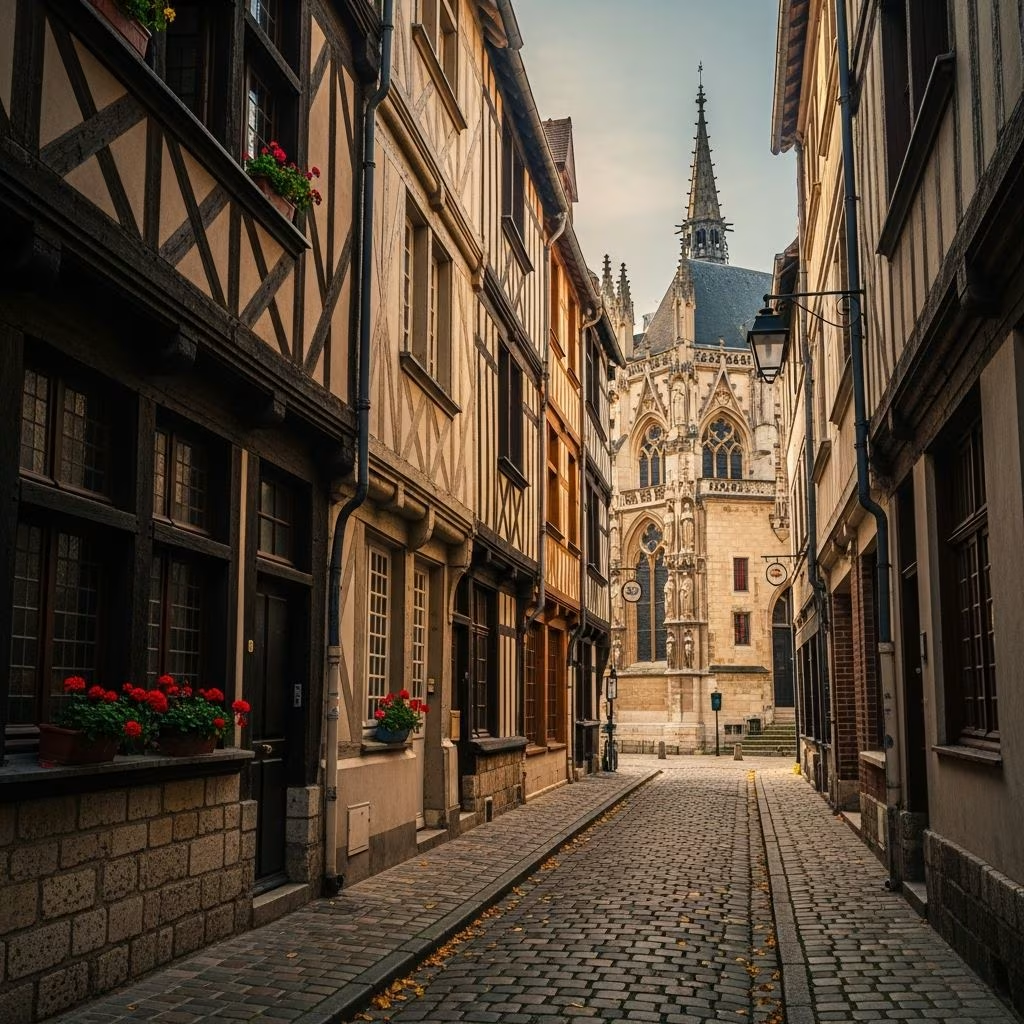
The most immediately striking feature of Troyes is the sheer concentration of medieval half-timbered structures. With approximately 3,000 examples, the city boasts the greatest number of these distinctive buildings in France. These aren’t merely historical curiosities preserved behind museum glass; rather, they form the living fabric of daily life, housing restaurants, boutiques, residences, and cultural institutions.
The half-timbered houses display remarkable diversity in their architectural details. The timber frames showcase intricate joinery patterns, while the infill materials and colorful façades reflect different periods and construction techniques spanning several centuries. Notable streets include Rue Champeaux, lined with particularly vibrant examples of these structures, and the extraordinarily narrow Ruelle des Chats, one of France’s most confined medieval alleyways, where exposed stone walls create an almost tunnel-like passage through the old town. These atmospheric lanes offer photographers and architecture enthusiasts endless inspiration while serving as living reminders of urban design principles from an era when space efficiency was paramount.
The ongoing gentrification of the old town represents a conscious effort to preserve these architectural treasures while maintaining their functionality within contemporary urban contexts. Rather than becoming frozen historical exhibits, the half-timbered houses continue to serve vital community functions, ensuring their preservation through active use rather than museum-like stasis.
Troyes’ religious heritage extends far beyond simple spiritual significance, encompassing some of Europe’s finest ecclesiastical architecture and artistic achievement. The city contains ten churches within its center, with the Cathédrale Saint-Pierre-et-Saint-Paul standing as the most architecturally ambitious. This magnificent Gothic structure underwent construction spanning five centuries, yet remains deliberately incomplete. The cathedral’s southern tower was never built, a striking testament to the limitations of medieval church finances and the long arc of historical development. Visitors observing the cathedral’s asymmetry gain immediate insight into how temporal constraints shaped architectural outcomes.
The cathedral’s interior glows with exceptional stained glass windows representing multiple artistic periods and techniques. These luminous artworks demonstrate the sophisticated craftsmanship that defined medieval glazing practices, transforming ordinary light into extraordinary chromatic experiences that shift throughout the day as the sun’s angle changes.
The Église Sainte-Madeleine, dating to 1120, holds particular significance as Troyes’ oldest church and houses one of only 21 rood screens remaining in France. This early 16th-century stone partition separating the chancel from the nave exhibits extraordinary flamboyant Gothic sculpture, originally rendered in polychrome before 18th-century whitening obscured much of the original decorative effect. A 20-minute audio guide provides essential context for appreciating the intricate carved details and understanding the theological symbolism embedded in the sculptural program.
The Saint-Jean-au-Marché church features an atypical open-air belfry and holds historical significance as the site where King Henry V of England married Catherine of France, connecting Troyes to broader European political narratives of the medieval period.
For visitors seeking to understand and appreciate stained glass beyond its architectural context, La Cité du Vitrail offers an unprecedented opportunity. This dedicated museum, which opened in late 2022, revolutionizes how viewers engage with stained glass artistry by presenting works at eye level rather than forcing the neck-straining perspective required in traditional church settings. This curatorial decision fundamentally transforms the viewing experience, allowing visitors to examine the remarkable craftsmanship, technical mastery, and artistic vision of the medieval glaziers who created these works.
The museum’s pedagogical approach combines aesthetic appreciation with historical education, explaining the evolution of glazing techniques, the symbolic meanings embedded in decorative programs, and the social roles of craftspeople within medieval urban hierarchies. This institution represents Troyes’ commitment to making its artistic heritage accessible and comprehensible to contemporary audiences.
Beyond ecclesiastical art, Troyes houses remarkable institutions devoted to understanding how humans have transformed raw materials through skill and creativity across centuries. The MOPO (Musée d’Outils, Professions et Objets) presents 12,000 handmade tools organized thematically, creating an essentially tactile history of human labor from the 17th through 19th centuries. Established by the French Guild of Travelling Craftsmen in 1974, this institution remains unique in France for its comprehensive approach to documenting manual trades and traditional crafts.
The MOPO’s significance extends beyond its impressive artifact collection. The museum houses the second-largest technical library in France, containing 32,000 works that document the theoretical foundations underlying practical craftsmanship. For visitors interested in understanding how objects were created before industrial mass production, how knowledge was transmitted across generations, and how social organization supported specialized trades, the MOPO provides invaluable insight. English-language audio guides accommodate international visitors navigating the French-language explanatory panels.
The Musée d’Art Moderne (Museum of Modern Art) provides striking contrast to Troyes’ medieval orientation, offering world-class contemporary artistic expression within the historic urban context. This juxtaposition reflects the city’s successful integration of historical preservation with cultural dynamism, resisting the museum-village fate that claims some European heritage destinations.
Troyes combines historical significance with practical shopping opportunities that appeal to contemporary visitors. The city has developed as a significant outlet shopping destination, with factory stores offering merchandise at reduced prices alongside boutiques featuring regional specialties and artisanal products. This commercial dimension reflects how Troyes has adapted its medieval mercantile traditions—originally centered on twice-yearly fairs trading luxury textiles and spices—into modern retail contexts.
The culinary landscape deserves particular attention for visitors seeking authentic regional experiences. Local specialties include andouillette, a distinctive sausage preparation, while the beverage selection extends beyond Champagne (despite the regional association) to include Prunelle de Troyes, a distinctive sloe-based liqueur available exclusively within the city. Cellier St Pierre, a 12th-century building opposite the cathedral, specializes in wines and regional liqueurs, with the Prunelle receiving gold-medal recognition. Dining options cluster along the picturesque Aube River and within the atmospheric medieval alleyways, offering authentic gastronomic experiences embedded within the historical environment.
While Troyes’ medieval core demands substantial attention, the surrounding region offers enriching day-trip possibilities. The Lac de la Forêt d’Orient, located approximately 25 kilometers east, represents the largest of three artificial lakes created to regulate Seine River flow and prevent flooding in Paris. These engineering projects, realized in the modern era, have created recreational havens for fishing enthusiasts, birdwatchers, and water-sports participants. The landscape surrounding these lakes provides geographical relief and ecological interest that complements the urban historical experience of the city center.
A three-day itinerary allows comprehensive engagement with Troyes’ major attractions. This timeframe permits selection from eight remarkable churches, visits to at least two significant museums, leisure time for shopping and dining, and potential day excursions to regional attractions. First-time visitors benefit from beginning in the historic center, establishing geographic orientation, and gradually extending exploration toward peripheral neighborhoods and institutions.
The city’s walkable scale and pedestrian-friendly infrastructure make independent exploration accessible, though guided tours provide valuable contextual depth for understanding the interconnected historical narratives spanning Troyes’ development from medieval trade hub to contemporary cultural destination. The presence of orientation markers throughout the old town—including distinctive triangular signs featuring crusader imagery—assists wayfinding for self-guided exploration.
Seasonal considerations influence the Troyes experience. Spring and autumn typically offer pleasant weather and moderate visitor numbers, allowing comfortable pedestrian exploration without overwhelming crowds. Summer temperatures and tourist influxes create busier conditions, while winter’s shorter days and occasional inclement weather require modified touring strategies. The city’s indoor attractions—museums, churches, and covered shopping areas—provide weather-independent activities, making Troyes viable across seasons despite regional climatic variations.
In an era when European travel often gravitates toward major metropolitan centers—Paris, Lyon, Marseille—Troyes offers a refreshingly different experience. This authentic medieval city combines exceptional architectural preservation, world-class artistic and cultural institutions, regional culinary traditions, and manageable scale in ways that larger destinations struggle to achieve. The city represents neither a museum-village frozen in time nor a modernized metropolis obscuring historical roots; rather, it demonstrates how heritage can be actively lived and experienced within contemporary contexts.
For first-time visitors to France seeking experiences beyond conventional tourist circuits, for architecture and history enthusiasts pursuing tangible connections to medieval Europe, and for travelers valuing authenticity over spectacle, Troyes delivers profound rewards. The city invites visitors to slow their pace, engage with architectural details, listen to historical narratives embedded in urban form, and participate in the rhythms of provincial French life. This distinctive character ensures that a Troyes visit becomes not merely another destination checked from a traveling list, but a meaningful encounter with authentic European heritage and contemporary culture intertwined.
