

 Travel Essentials
 Travel Essentials

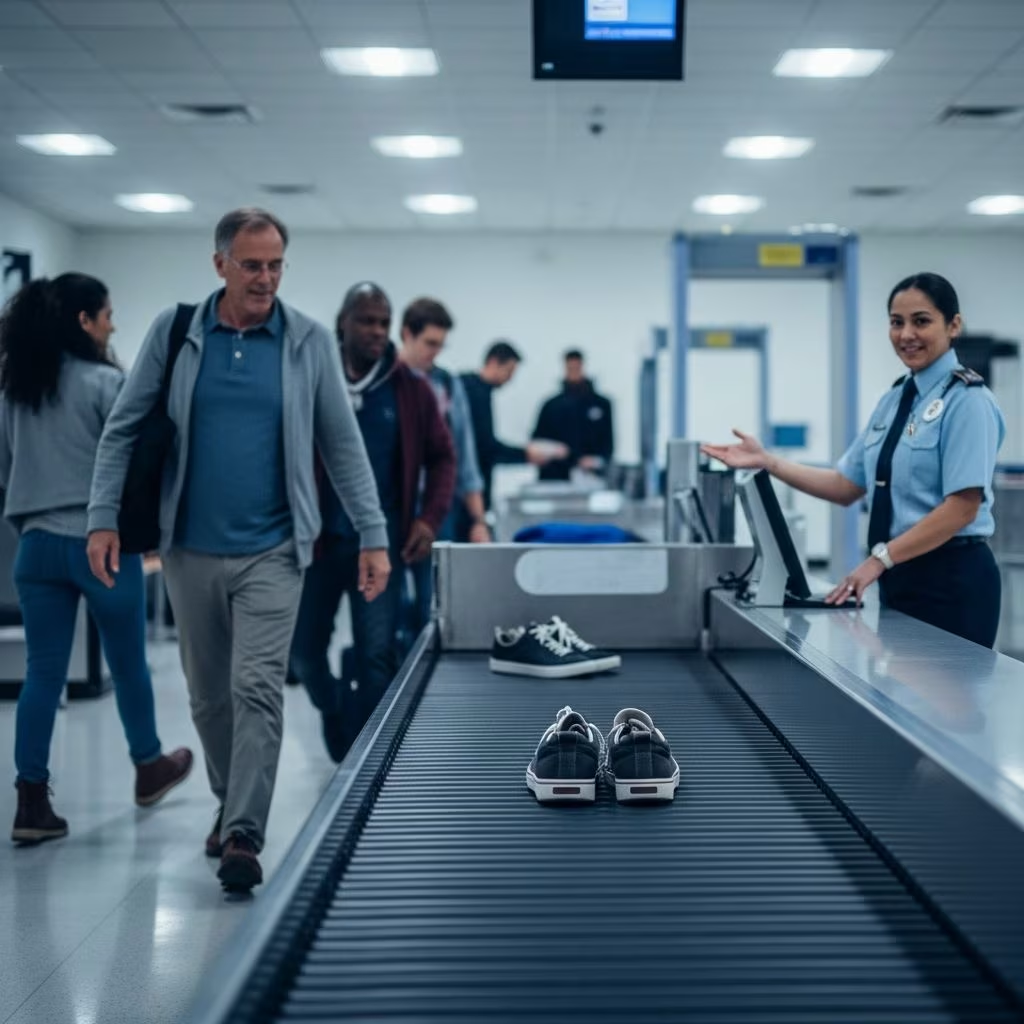
TSA has ended its long-standing shoes-off rule at U.S. airport checkpoints, using newer screening technology to speed up travel without weakening security.
 Travel Essentials
For nearly two decades, removing shoes at airport security checkpoints has been as predictable as boarding passes and security lines. On July 8, the Transportation Security Administration announced a significant policy shift that would fundamentally change how millions of travelers experience airport security screening across the United States. The elimination of the mandatory shoe removal requirement represents one of the most substantial changes to airport procedures since the policy was originally implemented in 2006, marking a major turning point in travel convenience and security protocol modernization.
Understanding why the TSA implemented the shoe removal requirement in the first place provides important context for appreciating this recent policy change. The origins of this security procedure trace back to a specific security incident that fundamentally altered how airports worldwide approached passenger screening and threat detection.
In 2001, Richard Reid, who became known as the “shoe bomber,” attempted to detonate explosives hidden within his shoes aboard American Airlines Flight 63 traveling from Paris to Miami. Although Reid’s attempt ultimately failed, the incident exposed a critical vulnerability in airport security protocols and demonstrated that conventional screening methods at the time could not reliably detect threats concealed in footwear. This near-tragedy prompted security officials to reassess their approaches to preventing similar attacks.
Five years after the Reid incident, in 2006, the TSA formalized the shoe removal requirement as part of its security screening procedures at all U.S. airport checkpoints. The policy applied universally to virtually all passengers, creating a consistent procedure that became one of the most visible and widely recognized aspects of airport security. For nearly two decades, this requirement remained largely unchanged, becoming deeply ingrained in traveler expectations and airport operations worldwide.
The fundamental driver behind the TSA’s decision to eliminate the shoe removal mandate centers on dramatic improvements in security screening technology. The gap between 2006 and 2025 witnessed revolutionary changes in how security officials can detect potential threats without requiring passengers to remove their footwear.
Officials from the Department of Homeland Security emphasized that advanced imaging technology and detection capabilities developed over the past nineteen years have substantially enhanced security effectiveness. These modern screening systems can now identify prohibited items and potential threats with significantly greater accuracy and reliability than the technologies available when the shoe removal policy was initially enacted.
Beyond technological advancement, the TSA restructured its security approach around what officials term “layered security.” This multifaceted strategy combines several security measures working in concert to enhance overall airport safety without relying on any single procedure. Homeland Security Secretary Christy Noem explained that the administration maintains complete confidence in maintaining security standards while simultaneously improving the passenger experience through this layered approach.
Additionally, the implementation of the Real ID law in May 2025 added another layer to the security infrastructure. Originally conceived in the aftermath of the 2001 terror attacks, the full implementation of Real ID requirements provided additional verification capabilities that reduced the necessity for certain manual security procedures.
While the elimination of the shoe removal requirement benefits virtually all air travelers, certain groups have experienced particular advantages from this change:
The transition away from mandatory shoe removal fundamentally alters checkpoint workflows and passenger experience. Rather than creating entirely new procedures, the policy change builds upon existing security infrastructure that has evolved significantly since 2006.
The TSA maintains that despite this elimination, airport security remains stringent and comprehensive. Officials acknowledge that in certain circumstances, individual passengers may still be required to remove shoes during additional security screening layers, should particular situations warrant enhanced scrutiny. This flexibility ensures that security personnel retain the ability to address specific concerns or anomalies detected during screening without compromising overall security protocols.
Checkpoint processing efficiency represents another significant benefit of this policy change. During periods of record-breaking travel volumes, streamlining procedures that historically consumed considerable time creates meaningful improvements in passenger flow and reduces congestion at security areas. The combined effect of faster checkpoint processing and improved passenger experience creates tangible benefits throughout the airport ecosystem.
Many frequent travelers have long utilized TSA PreCheck, a trusted traveler program that permits participants to maintain their shoes during security screening, among other benefits. Understanding how this policy change relates to existing programs clarifies the broader implications for different passenger categories.
TSA PreCheck participants have previously paid approximately $80 annually for benefits including the ability to keep shoes on during screening, along with maintaining jackets and sweaters during the process. The rigorous background checks associated with PreCheck enrollment create a trusted traveler status that historically justified these expedited procedures.
With the universal elimination of the shoe removal requirement, PreCheck subscribers maintain their other premium benefits while losing their exclusive advantage regarding footwear. However, PreCheck programs continue offering additional value through other expedited procedures and reduced security scrutiny for verified trusted travelers. This change ultimately democratizes one aspect of airport security that was previously available only to paid program participants.
The policy change represents a nationwide shift that took effect immediately upon announcement on July 8. Unlike some security initiatives that undergo extended trial periods at select airports before broader implementation, this change implemented directly across all U.S. airport security checkpoints.
However, earlier in the policy development process, the TSA had conducted limited trial programs at approximately half a dozen airports during preliminary testing stages. These pilot programs allowed security officials to evaluate operational impacts, identify potential challenges, and refine procedures before full national implementation.
The nationwide rollout demonstrates the TSA’s confidence in the technological improvements and security protocols supporting this decision. By implementing the change universally rather than incrementally, the agency streamlined operations and created uniform procedures across the entire U.S. airport system.
Recognizing that shoe removal had become psychologically associated with airport security in the public consciousness, TSA officials prioritized clear communication about the security rationale supporting this change. The emphasis on layered security approaches and technological advancement helps passengers understand that eliminating one procedure does not compromise overall protection.
Officials also acknowledged that technology advances since 2006 have been dramatic, creating detection capabilities that would have seemed remarkable to security professionals from the earlier era. This technological context helps justify the policy modification to passengers who may question whether security has been diminished.
The TSA’s assurance that shoe removal remains available as a tool for additional screening in specific circumstances addresses concerns about security flexibility. This approach balances passenger convenience with security requirements, acknowledging that certain situations may warrant more intensive screening procedures despite the general elimination of the requirement.
Travelers at major airports, including Washington’s Reagan National Airport, greeted the policy change positively. For passengers accustomed to removing shoes at checkpoints for two decades, the ability to proceed through security while maintaining footwear represents a notable convenience improvement.
The travel and hospitality industries recognized this policy change as a positive development for passenger satisfaction. Airlines, airport operators, and travel organizations acknowledged that streamlined security procedures contribute to improved overall travel experiences, which influences passenger satisfaction and travel frequency.
News organizations and travel media extensively covered the policy change, highlighting it as one of the most significant modifications to airport procedures in many years. The widespread coverage reflects public interest in airport security policies and passenger convenience issues.
This policy change establishes a precedent for periodically reassessing security procedures in light of technological advancement and operational experience. As security technology continues evolving and as airports gain experience implementing this modified procedure, future adjustments to security protocols may become increasingly common.
The emphasis on layered security approaches suggests that future policy developments may continue emphasizing multifaceted security strategies rather than relying on individual procedures or requirements. This framework allows flexibility to eliminate outdated procedures while maintaining robust security through other complementary measures.
The successful implementation of this nationwide policy change demonstrates that the TSA remains capable of modernizing procedures while maintaining security effectiveness. This institutional capacity to evolve procedures based on technological advancement and operational learning suggests that travelers may see additional refinements to airport security procedures in coming years.
Passengers should recognize that while the shoe removal requirement has been eliminated, airport security remains comprehensive and professional. Travelers should still expect thorough screening procedures, including walk-through metal detectors, X-ray screening of luggage, and other standard security measures.
While shoes may remain on during standard screening, travelers should dress in consideration of potential additional screening requirements. Individuals who may be selected for enhanced security screening should be prepared to comply with additional procedures, which could include shoe removal in specific circumstances.
Ultimately, the elimination of the shoe removal requirement simplifies the checkpoint experience without fundamentally altering the comprehensive nature of airport security screening. Travelers benefit from this streamlined procedure while maintaining confidence that sophisticated, layered security protocols protect aviation safety.
