

 Travel Essentials
 Travel Essentials

TSA may relax 3.4-ounce liquid restrictions at airport security checkpoints, marking a potential shift in post-9/11 travel policies implemented with advanced screening technology.
 Travel Essentials
For nearly two decades, travelers have navigated one of the most recognizable airport security protocols in modern travel: the strict limitations on carrying liquids in carry-on baggage. This rule, which restricts passengers to containers holding 3.4 ounces (100 milliliters) or less of liquids, gels, and aerosols, has become so ingrained in travel culture that most frequent flyers can recite it from memory. However, recent statements from government officials suggest this long-standing regulation may be approaching a significant transformation.
In July 2025, Homeland Security Secretary Kristi Noem indicated that the Transportation Security Administration (TSA) is actively evaluating modifications to its liquid restrictions policy. This potential shift represents more than a simple procedural adjustment—it signals a broader reassessment of how security protocols can evolve while maintaining passenger safety and national security standards.
Understanding the rationale behind current liquid regulations requires examining the specific security threat that prompted their implementation. In 2006, British authorities disrupted a sophisticated terror plot involving militants who intended to detonate liquid explosives concealed within ordinary beverage containers aboard transatlantic flights departing from London. This foiled attack fundamentally altered how aviation security agencies worldwide approached the transportation of liquids on commercial aircraft.
The TSA responded by implementing comprehensive restrictions that took effect immediately following the incident. These measures were designed to prevent similar threats from materializing by severely limiting the quantities of liquids passengers could transport through security checkpoints and into aircraft cabins. The regulation has remained largely unchanged for nearly two decades, becoming one of the most visible symbols of post-9/11 aviation security infrastructure.
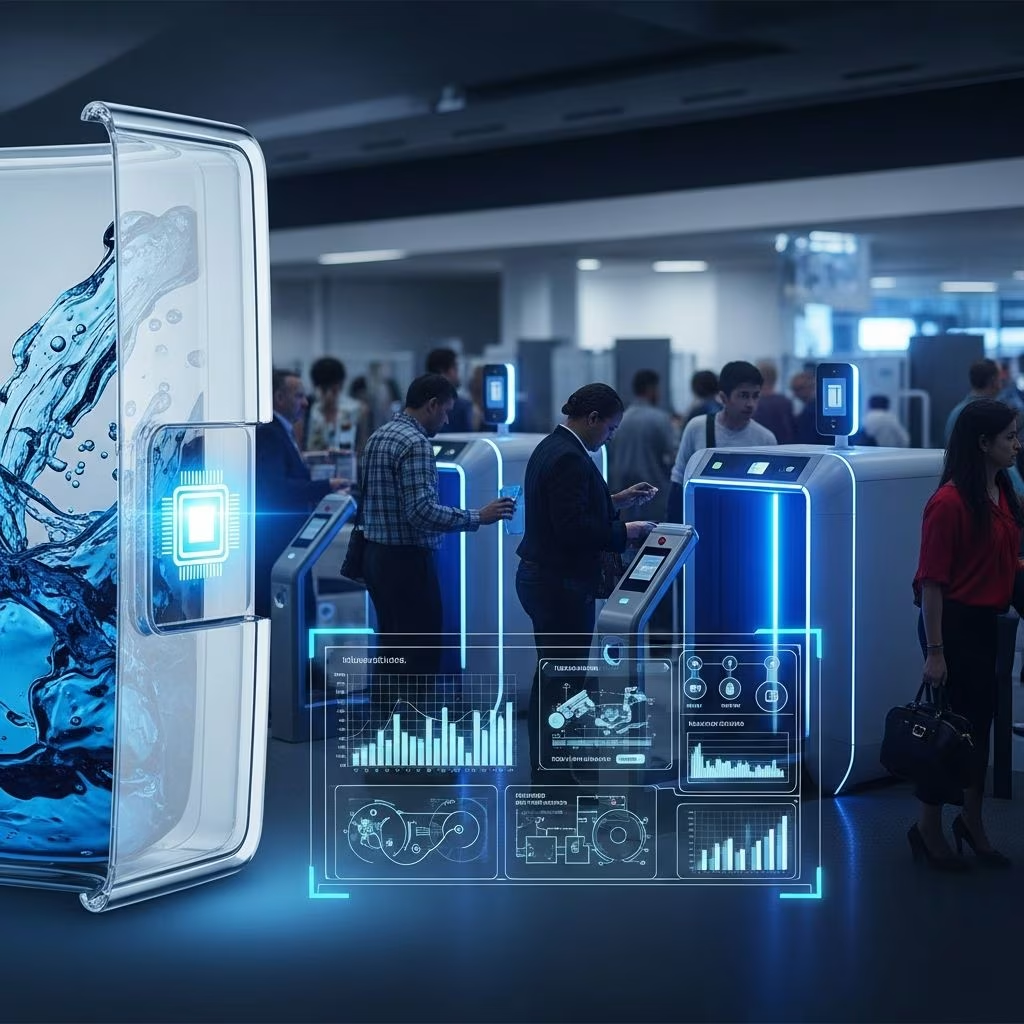
One of the primary arguments supporting a potential relaxation of liquid restrictions involves significant improvements in detection technology. Modern airports have increasingly deployed advanced CT (computed tomography) scanners at security checkpoints—sophisticated imaging devices that provide three-dimensional analysis of carry-on baggage contents. These machines can identify threats with substantially greater precision than the equipment available when the original restrictions were established.
According to TSA officials, these advanced screening systems can penetrate baggage opaquely and generate clear internal images, allowing security personnel to identify suspicious items without requiring physical bag inspections or liquid removal procedures. The capability represents a fundamental shift in security methodology: instead of relying on blanket restrictions to prevent threats, agencies can now use technology to directly identify dangerous materials.
Secretary Noem emphasized this technological advantage when discussing potential policy modifications. She stated: “We have put in place in TSA a multilayered screening process that allows us to change some of how we do security and screening so it’s still as safe.” This statement reflects the philosophy that advanced technology can maintain security standards while reducing passenger inconvenience.
The existing liquid restrictions significantly affect the travel experience for millions of passengers annually. Current TSA guidance requires that all liquids, gels, and aerosols in carry-on baggage be contained in individual containers holding no more than 3.4 ounces, with all containers placed in a single one-quart resealable plastic bag. This requirement applies to an extensive range of items:
The practical consequences of these restrictions manifest throughout the airport security experience. Passengers must frequently purchase travel-sized versions of products at premium prices, invest time decanting larger containers into smaller ones, or check baggage to transport full-size items. For international travelers or those on extended trips, these limitations create genuine inconvenience and added expenses.
The current regulatory framework does include specific exemptions designed to accommodate particular passenger needs. Medications and infant formula currently receive exceptions, allowing passengers to transport these items in quantities exceeding the standard 3.4-ounce limitation when medically necessary. Additionally, certain specialized items have received exemptions from standard restrictions:
These exceptions acknowledge that rigid application of restrictions to all liquids would create unnecessary hardship for specific passenger categories without meaningfully advancing security objectives.
While Homeland Security officials have not announced specific parameters for potential liquid restriction modifications, several scenarios appear plausible based on current technology and policy discussions. First, TSA could expand exemptions for additional item categories, similar to existing exceptions for medications and infant formula. Second, the agency might increase allowable container sizes from 3.4 ounces to a larger standard, perhaps 10 or 12 ounces, to accommodate more full-size personal care products while maintaining some containment protocol.
A third possibility involves regional or phased implementation of modified rules, potentially beginning at airports equipped with the most advanced CT scanning equipment. This approach would allow the TSA to evaluate how policy changes affect security operations and passenger flow before implementing changes nationwide.
Secretary Noem did not provide specific timelines or detailed parameters for potential modifications when discussing the matter in July 2025, stating that any formal announcement would come in the future. This ambiguity reflects the deliberative process required for significant security policy changes, which typically involve coordination between multiple federal agencies and extensive stakeholder consultation.
The potential modification of liquid restrictions should be understood within the context of other recent TSA policy adjustments. Most notably, in 2025 the TSA ended the long-standing requirement that passengers remove their shoes during security screening at all airports nationwide. This change followed decades of the shoe-removal protocol being implemented after early 2000s security incidents.
The elimination of the shoe-off requirement demonstrates that TSA leadership under the current administration is willing to reconsider security measures that, while once justified by legitimate threats, have become increasingly burdensome relative to their security value. The shoe-removal protocol, while not abandoned entirely, now represents an optional procedure used selectively rather than a universal requirement. This precedent suggests organizational willingness to evaluate other established security procedures through a similar cost-benefit lens.
Critics of potential liquid restriction relaxation raise legitimate security concerns. Although the 2006 London plot was disrupted before execution, the sophistication of that planned attack demonstrates that liquid explosives present genuine aviation security risks. Any modification to restrictions must carefully balance the inconvenience imposed on legitimate travelers against the importance of maintaining defenses against this particular threat category.
However, proponents of policy modification argue that modern screening capabilities provide alternative mechanisms for identifying liquid threats. Advanced CT scanning technology can detect explosive materials in liquid form as effectively as container size restrictions—arguably more effectively, since size-based restrictions rely on the assumption that liquid explosives cannot be concealed in permitted containers. Modern imaging technology eliminates this assumption by directly visualizing container contents.
Additionally, the TSA implements what officials describe as a “multilayered screening process” that incorporates multiple detection methods simultaneously. These layers might include physical screening, advanced imaging technology, behavioral analysis, background checks, and other measures that collectively maintain security even if individual components are modified.
Examining how international aviation authorities manage liquid restrictions provides useful perspective on potential pathways for policy modification. Various countries and regions have implemented different approaches to liquid screening. Some European airports, for instance, have deployed advanced screening technology that reduces the need for strict container size restrictions in certain circumstances. These international experiences can inform how the TSA might structure any modifications to ensure consistency with global aviation security standards.
While specific timelines remain uncertain, any significant modification to TSA liquid policies would likely follow a structured implementation process. Such changes typically include extended notice periods allowing travelers and airlines to understand new procedures, training programs for TSA personnel, technology upgrades at airports where necessary, and monitoring periods to evaluate policy effectiveness before full nationwide implementation.
Given the nationwide scope of TSA operations and the need to maintain consistent security standards across all U.S. airports, implementation of modified liquid policies would require coordination between federal security officials, airport operators, airline representatives, and other stakeholders. The timeline from initial announcement to full operational implementation could span several months to over a year.
No formal decision has been announced. Secretary Noem indicated that the TSA is evaluating potential modifications, but no timeline or specific changes have been confirmed.
No official timeline has been provided. The TSA typically requires extended implementation periods for major policy changes.
Current exceptions for medications and infant formula would likely remain in place under any modified policy, as these serve important passenger health needs.
Modern CT scanners can visualize bag contents with sufficient clarity to identify threatening materials, potentially reducing the need for restrictive container size regulations.
Implementation approaches have not been specified, but phased implementation beginning at airports with advanced screening equipment is possible.
Until official announcements are made, travelers should continue following existing TSA liquid restrictions. Keeping containers at 3.4 ounces or less and packing them in a one-quart resealable bag remains the current requirement. However, monitoring official TSA communications and news sources is advisable for updates on potential policy modifications.
Travelers should visit the TSA’s official website to verify current regulations before flights, as policies may be updated with limited advance notice. Airports increasingly equipped with advanced screening technology may eventually implement modified procedures before nationwide implementation of any policy changes.
