

 Travel Essentials
 Travel Essentials

Tulum Beach earns the title of having the whitest sand globally per a detailed study using RGB analysis on 200+ beaches, surpassing Seychelles and Greece spots.
 Travel Essentials
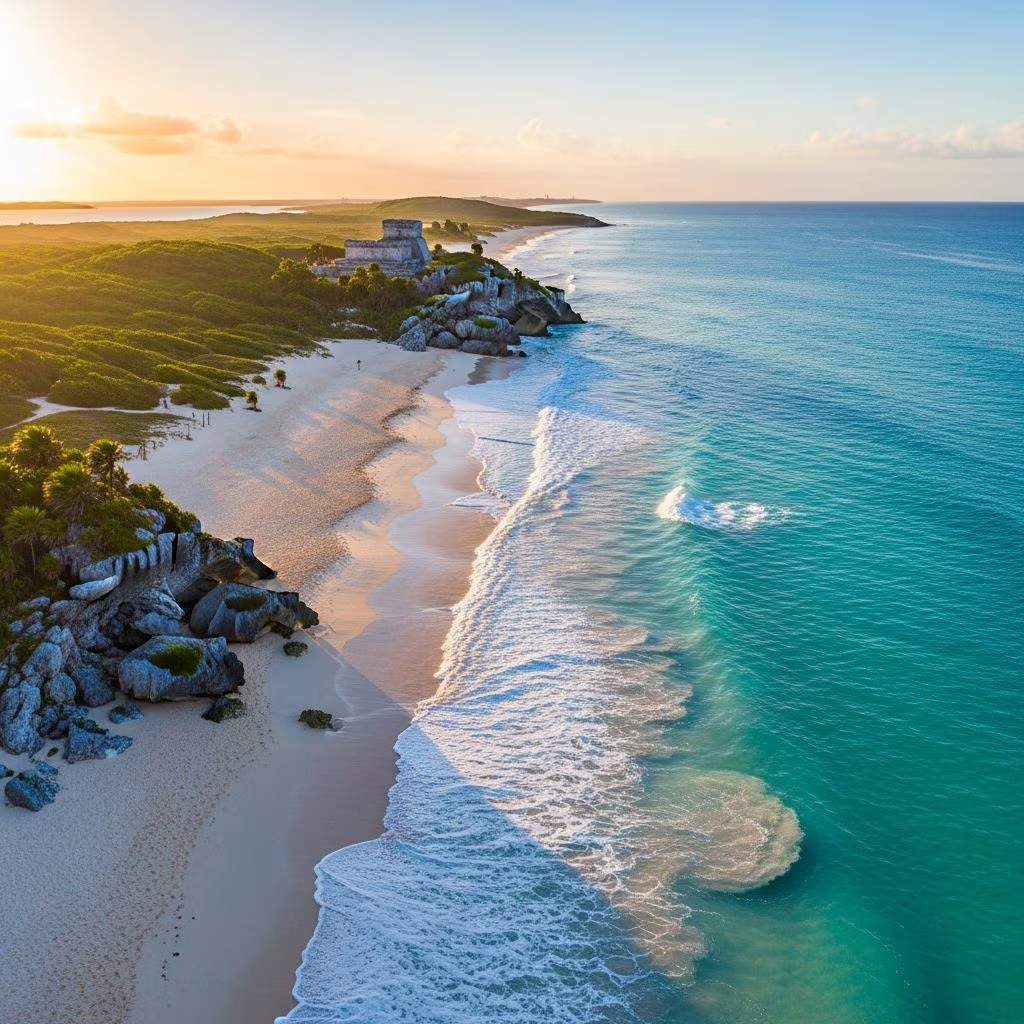
Tulum Beach in Mexico stands out as having the whitest sand on Earth, according to a comprehensive study by CV Villas that analyzed over 200 beaches worldwide using precise color metrics. This Riviera Maya gem scored a mere 1.4 points from pure white, outshining competitors from the Caribbean, Europe, and beyond.
Determining the whitest sand involves more than visual appeal; it requires objective measurement. Researchers employed a methodical approach: capturing screenshots from Google Maps aerial views of beaches globally, then using a digital color dropper tool to extract RGB (Red, Green, Blue) values from the sand pixels. These values were compared against the ideal RGB code for pure white (255, 255, 255) via an online color difference calculator, yielding a coefficient that quantifies deviation—the lower, the whiter.
This technique ensures scientific rigor, eliminating subjective opinions. Tulum’s sand achieved a coefficient of 1.4, making it exceptionally close to perfection. Such purity arises from quartz grains polished by natural forces, often free of impurities like iron oxides that tint other sands yellowish or gray.
The study ranked beaches based on their whiteness coefficients. Here’s a breakdown of the leaders:
| Rank | Beach | Location | Coefficient |
|---|---|---|---|
| 1 | Tulum Beach | Mexico | 1.4 |
| 2 | Anse Source D’Argent | Seychelles | 4.3 |
| 3 | Marmari Beach | Greece | 6.5 |
| 4 (tie) | Tropea Beach | Italy | 6.9 | 4 (tie) | Platja de Muro | Spain | 6.9 | 6 | Cala Pluma | Spain | 7.2 | 7 | Plage de Valras | France | 7.8 | 8 | Cala Brandinchi | Italy | 8.2 | 9 (tie) | Stocking Island Beach | Bahamas | 8.5 | 9 (tie) | Taylor Bay Beach | Turks and Caicos | 8.5 |
Spain dominates with multiple entries, including two in the top five, while North America and Europe feature prominently.
Stretching six miles along Mexico’s Yucatan Peninsula, Tulum Beach combines its ultra-white sand with turquoise waters and ancient Mayan ruins perched dramatically on cliffs. The sand’s brilliance stems from high-purity quartz eroded from nearby limestone formations, washed ashore over millennia. Unlike volcanic black sands or coral-derived pink varieties, Tulum’s is a textbook example of silica-rich, wave-tumbled perfection.
Visitors rave about the powdery texture that doesn’t retain heat, ideal for barefoot strolls. The beach’s setting enhances its allure: palm-fringed shores meet the Caribbean Sea, creating postcard vistas at sunrise and sunset.
White sand forms through specific processes. Primarily, it’s crushed quartz (silicon dioxide), resistant to weathering and reflective due to its crystal structure. In tropical regions like Tulum, waves and currents grind rocks into fine particles, sorting out darker minerals.
Contrast this with beaches like Hawaii’s green sands (olivine crystals) or Guam’s coral sands, which appear whiter but score higher on deviation scales due to subtle hues.
While Tulum leads, other regions shine:
Scotland’s Luskentyre (18th tie) surprises with its northern latitude, proving purity transcends tropics.
Access Tulum via Cancun International Airport (1.5-hour drive). Stay in eco-friendly resorts or boutique hotels steps from the sand. Best season: December to April for dry weather.
| Activity | Details | Tips |
|---|---|---|
| Snorkeling | Explore nearby cenotes and reefs | Book guided tours for safety |
| Ruins Tour | Cliff-top Mayan site | Visit early to beat crowds |
| Sunset Yoga | Beachfront classes | Free sessions often available |
Respect eco-rules: no glass, stay on paths to protect dunes. Tulum’s popularity means arriving early secures prime spots.
Tulum’s fame brings pressures. Sargassum seaweed influxes can temporarily mar shores, though locals clear it efficiently. Rising tourism strains water resources and coral reefs. Sustainable practices like reef-safe sunscreen and low-impact operators preserve this gem. The study’s publicity could boost conservation awareness, ensuring the whitest sands endure.
Whiteness is one metric; accessibility, water clarity, and vibe matter too. Tulum scores high across boards, blending natural beauty with cultural depth. For families, calmer sections prevail; adventurers love cliff-jumping nearby.
Alternatives like Whitehaven Beach, Australia (25th), offer similar hues with unique swirling patterns from tidal flows.
Yes, per CV Villas’ RGB analysis of 200+ beaches, with a 1.4 coefficient from pure white—the lowest recorded.
Google Maps screenshots fed into color droppers for RGB extraction, compared to pure white via calculators.
Dry season (Dec-Apr) for optimal sand visibility and weather.
Public access is free; ruins entry costs ~$5 USD.
It outranks Varadero (11th) and leads Mexico handily.
This ranking spotlights global diversity. From Seychelles’ granite boulders to Greece’s azure coves, each beach offers unique charms. Use it as a bucket-list guide for your next escape.
