

 Travel Essentials
 Travel Essentials

Explore Tunisia's rich history from Roman Carthage to desert oases, relax on Mediterranean beaches, and immerse in Berber culture with practical tips for your trip.
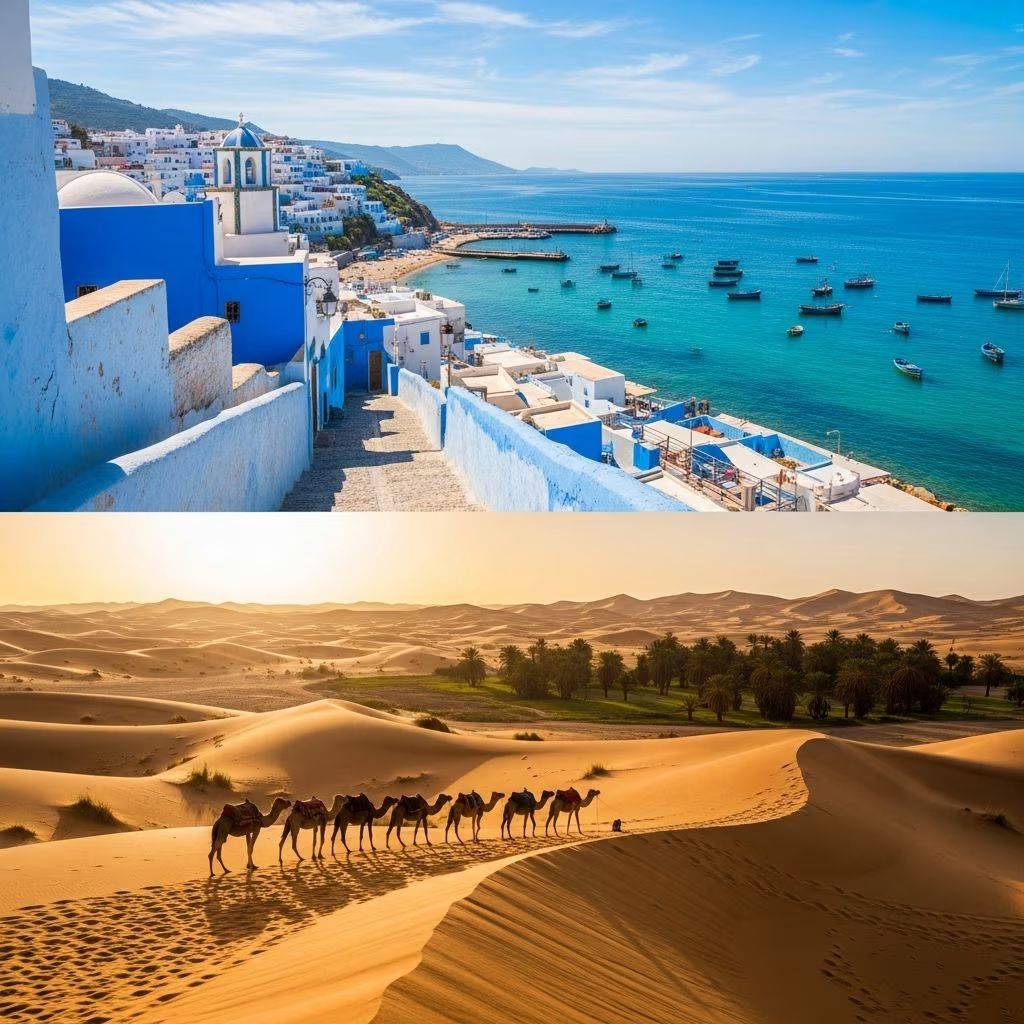 Travel Essentials
Tunisia captivates with its blend of Mediterranean allure, ancient civilizations, and vast Saharan expanses. This North African gem offers sun-kissed beaches, monumental Roman ruins, bustling souks, and thrilling desert escapades, making it ideal for history enthusiasts, beach lovers, and adventure seekers alike.
Spanning over 1,000 kilometers of coastline along the Mediterranean, Tunisia delivers postcard-perfect beaches in places like Hammamet and Djerba, where soft white sands meet turquoise waters. Beyond the shores, the country’s layered history—from Phoenician Carthage to Roman amphitheaters and Berber oases—provides endless exploration. Venture south into the Sahara for camel treks amid shifting dunes, or wander the labyrinthine medinas of Tunis and Sousse, UNESCO World Heritage sites pulsing with Arabo-Muslim architecture and vibrant markets. Unlike more crowded destinations, Tunisia remains refreshingly authentic, with fewer tourist traps and a warm local hospitality that enhances every journey.
The optimal travel window aligns with mild weather for comfortable sightseeing and beach time. Spring (March to May) brings blooming landscapes and temperatures around 20-25°C (68-77°F), perfect for hiking Atlas Mountains or touring ruins without the summer heat. Autumn (September to November) mirrors this, with cooling seas ideal for swimming and fewer crowds. Summer (June-August) suits beachgoers tolerant of 30-40°C (86-104°F) highs, though inland areas sizzle. Winter offers mild coastal days (15-20°C/59-68°F) but cooler desert nights; it’s low-season for budget travelers exploring medinas. Avoid Ramadan if possible, as some sites close early and the vibe shifts.
Tunis-Carthage International Airport serves major European hubs with direct flights from London, Paris, and Rome, often under 3 hours. From there, louages—shared minibuses—are the efficient, cheap backbone of transport (e.g., Tunis to Sousse: ~10 TND/$3 USD, 2 hours). Trains connect coastal cities reliably, while car rentals unlock flexibility for desert roads (international permit advised). In medinas, walk or hire taxis; apps like Bolt operate in Tunis. For Sahara trips, join guided 4×4 tours from Tozeur.
| Route | Louage Cost (TND) | Time | Alternative |
|---|---|---|---|
| Tunis to Hammamet | 10-15 | 1.5 hrs | Train |
| Sousse to El Jem | 5-8 | 1 hr | Bus |
| Tozeur to Douz | 20-25 | 3 hrs | 4×4 Tour |
| Tunis to Djerba | 40-50 | 6 hrs (via Sfax) | Ferry/Flight |
Tunisia’s northeast coast shines with resort vibes. Hammamet buzzes with modern marinas, golf courses, and supervised beaches offering parasailing, jet skis, and scuba dives amid clear waters. Nearby Monastir provides calmer sands and the ribat—a fortress-monastery with panoramic views. Djerba, an island paradise, lures with upscale resorts, flamingo-filled salt lakes, and the ancient Synagogue de la Ghriba, one of Africa’s oldest Jewish sites. Water sports abound: kite surfing in Hammamet, boat tours around Djerba’s Houmt Souk.
Djerba stands out for its white-sand stretches and pottery markets. Cycle or golf cart around, tasting fresh seafood at beachside eateries. Hammamet’s medina contrasts luxury with traditional hammams and souks selling ceramics.
Tunisia boasts some of Africa’s finest Roman legacies. Start in Carthage, the UNESCO-listed ruins near Tunis: explore the Antonine Baths, amphitheater, and sea-view theaters from Punic and Roman eras. El Jem’s colossal 3rd-century amphitheater rivals Rome’s Colosseum, hosting summer festivals. Dougga, northwest, reveals intact temples, forums, and homes amid olive groves—a photographer’s dream. Kairouan, Islam’s fourth holiest city, features the Great Mosque and medina souks. Bulla Regia offers unique underground villas.
The south plunges into 27,000 km² of Sahara, with dunes near Douz for camel rides at sunset and stargazing under pollution-free skies. Tozeur and Nefta oases burst with date palms, brick palaces, and Star Wars filming sites like Mos Espa. 4×4 dune bashing, quad biking, or troglodyte cave stays immerse you in Berber life. Trek or camp amid shifting sands.
Tunis’ medina, a UNESCO maze, teems with mosques, palaces, and souks for spices, leather, and carpets. Sousse mirrors this with its ribat and souk bargains. Sample couscous, brik (fried pastries), harissa-spiced meats, and makroud sweets. Hammams offer scrub rituals; cafes serve mint tea amid hookah smoke. Berber influences shine in desert villages.
Currency: Tunisian Dinar (TND); 1 USD ≈ 3 TND. ATMs widespread; carry cash for souks. Language: Arabic official, French common, English in tourist spots. Visa: Free 90-day entry for many (check updates). Health: Vaccinations advised; drink bottled water. Bargain politely in markets.
Exercise caution due to terrorism risks; avoid border areas with Algeria/Libya. Coastal and tourist sites are generally safe; use licensed guides.
Yes, popular areas like Tunis, Hammamet, and Djerba are secure with precautions; heed advisories.
Hammamet and Djerba top lists for facilities and activities.
Use louages and street food; shoulder seasons save 30-50%.
Many nationalities get 90 days visa-free; confirm via embassy.
Camel trek at sunset in Douz.
