

 Travel Essentials
 Travel Essentials

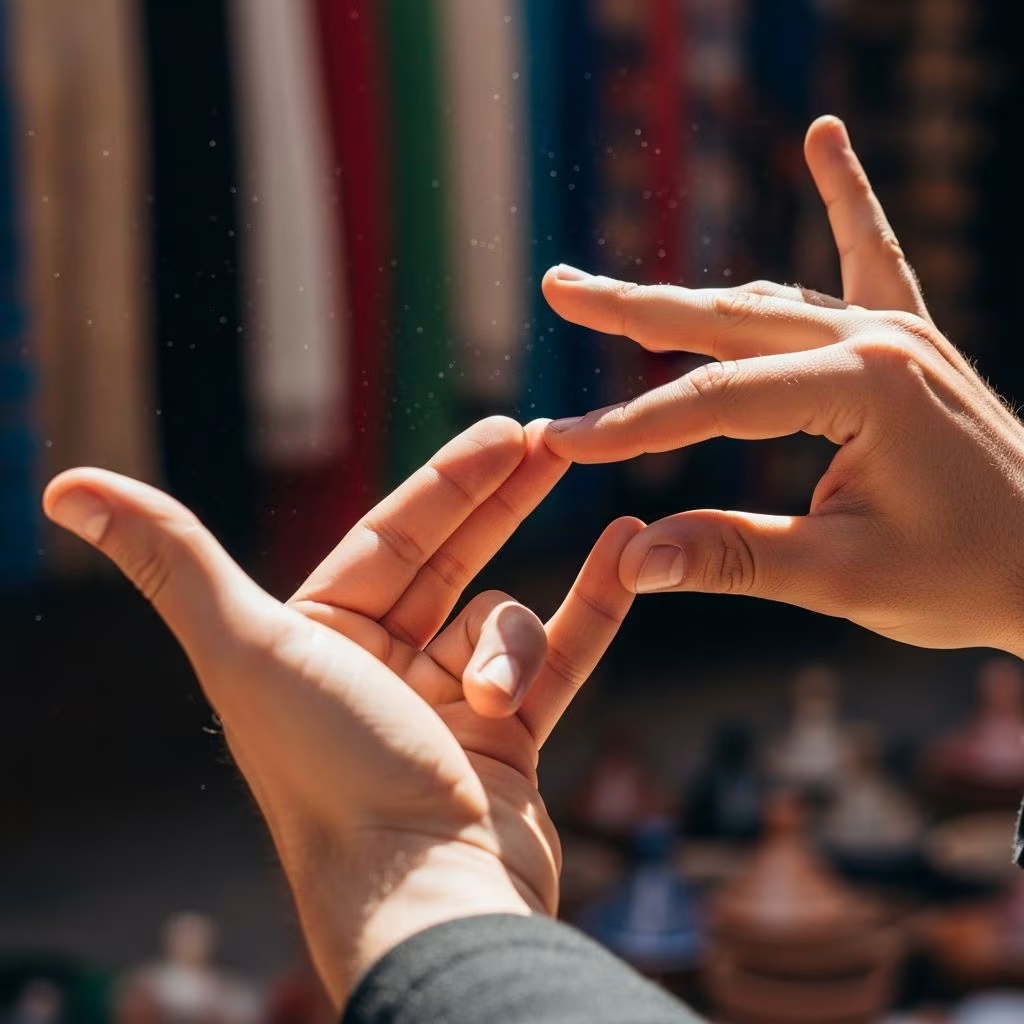
Unlock the meanings behind Tunisia's unique hand gestures. From greetings to warnings, learn to communicate non-verbally like a local and avoid cultural pitfalls on your North African adventure.
 Travel Essentials
Traveling through Tunisia offers a rich tapestry of experiences, from ancient Carthage ruins to bustling souks in Tunis. Yet, beneath the surface of spoken Arabic and French lies a vibrant world of non-verbal cues that locals use daily. Hand gestures in Tunisia serve as a shortcut to understanding, expressing everything from hospitality to caution without a single word. For visitors, grasping these signals can transform awkward encounters into warm connections, while ignorance might lead to unintended offense.
This guide dives deep into the most common Tunisian hand movements, explaining their contexts, nuances, and cultural roots. Whether you’re sipping mint tea in Sidi Bou Said or haggling in the medina, these insights will equip you to navigate social interactions with confidence. Rooted in Berber, Arab, and Mediterranean traditions, Tunisian gestures blend influences from across North Africa and beyond, making them a fascinating study in human expression.
Tunisia’s position at the crossroads of civilizations has shaped its communication style. Gestures here are not mere accessories to speech; they often carry more weight than words. Anthropologists note that in high-context cultures like Tunisia, where relationships and subtlety reign supreme, body language conveys intent, emotion, and even politeness levels.
Consider the emphasis on hospitality—a cornerstone of Tunisian identity. A simple hand motion can invite you to share a meal or signal genuine welcome. Conversely, certain signs warn of danger or disapproval, protecting both locals and visitors in crowded spaces. Understanding these helps bridge the gap between tourist and friend.
Historical influences play a role too. Ottoman, French colonial, and indigenous Berber elements have layered into a unique gestural vocabulary. In rural areas, gestures might echo ancient pastoral signals, while urban Tunis pulses with modern adaptations influenced by Italian and Maltese neighbors across the Mediterranean.
Nothing captures Tunisian warmth like the gestures that draw you in. Start with the classic open-palm wave, palm facing outward and fingers slightly spread, moved gently side to side. This isn’t the vigorous Western wave; it’s a subtle acknowledgment, often paired with a nod, saying “sawla” (hello) from afar.
For closer encounters, the hand-to-heart touch stands out. Press your right hand to your chest, then extend it palm up toward the other person. This motion, known as the “heart salute,” expresses sincerity and respect, especially when thanking someone for tea or directions. Women might soften it with a slight bow, while men add a firm gaze.
At meals, watch for the bread-breaking gesture: holding an imaginary loaf with both hands and mimicking a tear. It’s an invitation to join, rooted in communal dining traditions where sharing bread symbolizes unity.
Counting on fingers in Tunisia follows a distinct pattern unfamiliar to many Westerners. The thumb represents one, index for two, up to the pinky for five. For six, the thumb and pinky touch while other fingers extend—a compact signal perfect for market bargaining.
| Number | Gesture Description | Context |
|---|---|---|
| 1-5 | Thumb to pinky sequentially | Counting items, prices |
| 6 | Thumb-pinky circle, others out | Quick tallies in shops |
| 7 | Index and middle fingers up, others folded | Common in cafes for orders |
| OK (zero/affirmation) | Thumb-index circle | Universal but with local flair |
Agreement comes via a side-to-side head tilt with an upward palm flick—imagine shaking ‘no’ but meaning ‘yes.’ It’s the Tunisian thumbs-up equivalent, subtle yet clear in conversations. Negation flips it: a sharp downward palm chop, fingers rigid, signaling firm refusal.
In Tunisia’s lively streets, safety gestures abound. The ‘stop’ hand—palm out, fingers together, extended firmly—halts traffic or conversations abruptly. Drivers use it universally at medina entrances.
A circling index finger near the temple warns of someone being ‘crazy’ or untrustworthy, often with a pursed lip. Use sparingly as tourists, lest it offend. For pickpockets, locals point two fingers at their eyes then jab outward, meaning ‘watch out.’
Another vital one: the chin flick upward with fingers curled, indicating ‘what’s up?’ or dismissal. In tense moments, it defuses with humor.
Tunisians express joy with rapid hand clapping near the waist, fingers snapping softly—pure delight at a good joke or wedding dance. Anger brews with fists clenched and shaken gently, never wildly, preserving dignity.
Love or admiration? Pinch thumb and forefinger, kiss them explosively, then fling outward like scattering stars. It’s chef’s kiss meets Mediterranean passion, perfect for praising tagine or a sunset view.
Tunisia isn’t monolithic. In coastal Sfax, gestures lean maritime—waving hands like sails for ‘let’s go.’ Inland Djerba’s Berber communities favor slow, deliberate palm spreads for blessings, echoing ancient rituals. Northern Tabarka, with its Italian ties, incorporates expressive eyebrow wiggles with hand shrugs for ‘who knows?’
Urban vs. rural divides matter too. Tunis sophisticates mix French shrugs (shoulders up, palms out) with Arab precision, while Saharan Douz uses wide arm sweeps to mimic desert winds, denoting vastness or freedom.
Not all signals translate well. The Western ‘OK’ circle can imply vulgarity in some North African contexts—opt for thumbs-up instead. Pointing with the index finger accuses; use the whole hand or chin nod.
Feet gestures insult—never point soles at people. Left hand is for hygiene, so eat and greet with right only. In mosques, no handshakes between unrelated genders; a nod suffices.
Observe before acting: Mirror locals in cafes. Practice in mirrors to gauge subtlety. Context rules—same gesture shifts meaning by tone or location.
Combine with phrases: Pair hand-to-heart with “shukran” (thanks). Learn basics via apps or guides. Women travelers: Gestures are unisex but delivery softer yields respect.
The hand-to-heart salute—universal for politeness and gratitude.
Slightly; men are firmer, women gentler, but meanings stay consistent.
Yes, it’s widely understood positively, unlike some regional taboos.
Chat with cafe owners or join cultural workshops in Tunis.
Similar but Tunisian versions have unique Mediterranean twists.
Mastering these signals elevates your trip from sightseeing to soul-connecting. Imagine bargaining seamlessly in Kairouan or sharing laughs in Hammamet hammams. Gestures foster trust, unlocking home-cooked meals and insider tips.
As Tunisia modernizes, these traditions endure, especially among elders. By learning them, you honor a living heritage, ensuring your travels resonate deeply.
