

 Travel Essentials
 Travel Essentials

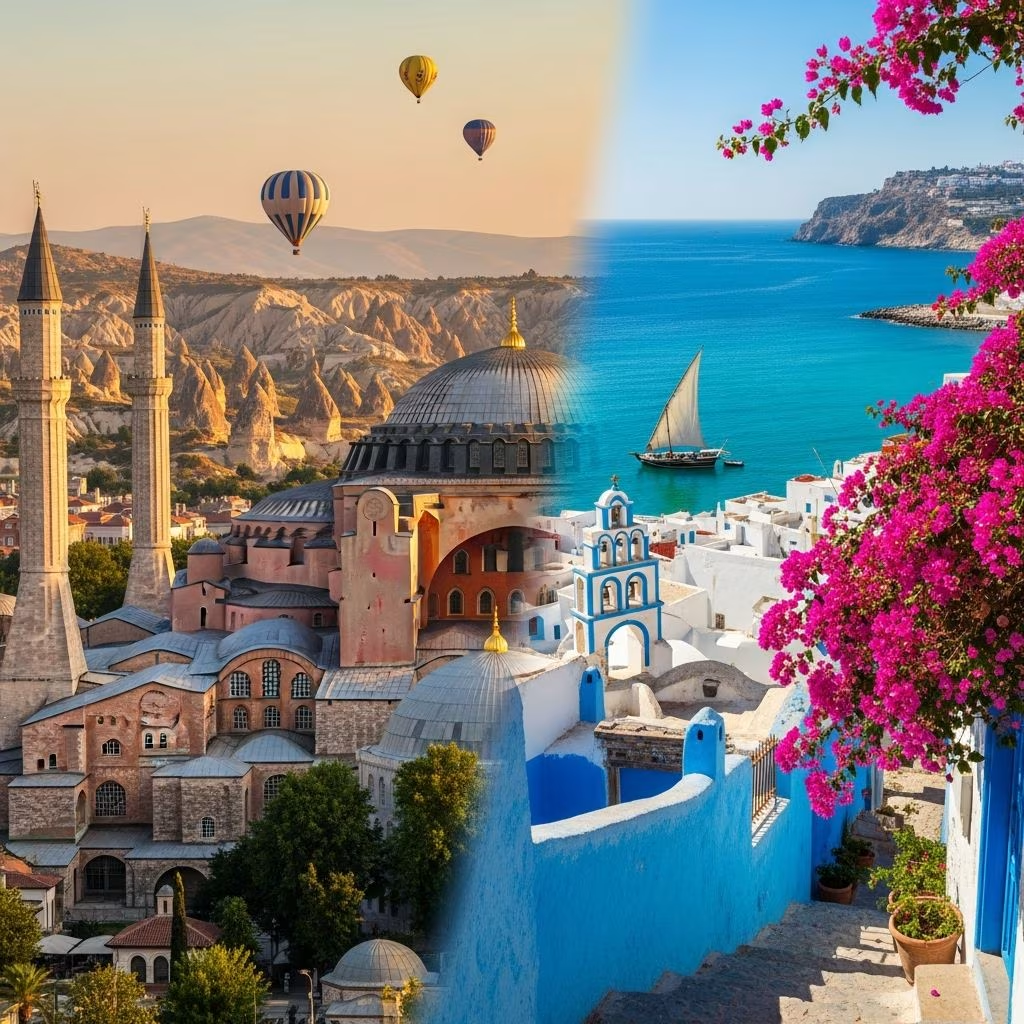
Discover how to combine coastal Turkey and North African Tunisia for a unique Mediterranean experience, blending Aegean charm with Saharan culture.
 Travel Essentials
The Mediterranean coastline stretches across multiple nations, each offering distinct experiences shaped by unique cultural, historical, and geographical influences. Two particularly compelling destinations sit on opposite shores of this ancient sea: Turkey’s southwestern Aegean region and Tunisia’s northern Mediterranean coast. By visiting both locations within a single trip, travelers can observe how the same body of water has influenced two vastly different civilizations, creating contrasting yet equally captivating travel experiences.
Turkey and Tunisia occupy strategic positions across the Mediterranean basin. Turkey’s southwestern coast, particularly the Aegean region, extends into Western Asia Minor with European cultural influences. Meanwhile, Tunisia lies in North Africa’s Maghreb region and boasts over 1,300 kilometers of Mediterranean and Saharan coastline, blending Berber heritage, Roman history, and Arab influences. This geographic positioning means travelers can experience the Mediterranean from fundamentally different perspectives—one shaped by Ottoman and modern European influences, the other by Phoenician, Roman, and Islamic civilizations.
The proximity of these destinations relative to international hubs makes combining them logically feasible. Major airlines connect Istanbul and Ankara to numerous European and Middle Eastern cities, while Tunisia’s international airports serve as gateways from Europe and the Middle East. This accessibility eliminates the need for complicated routing, allowing travelers to split their vacation between the two nations efficiently.
Turkey’s Aegean coastline represents one of the Mediterranean’s most developed and tourist-friendly regions. The area combines natural beauty with modern amenities, creating an accessible entry point for Mediterranean exploration. The region’s appeal stems from several interconnected factors:
The Aegean breeze carries the energy of a place where ancient Greek city-states once flourished alongside Ottoman trade networks. Today, this region pulses with the rhythm of contemporary Mediterranean leisure culture. Visitors encounter organized beaches, waterfront restaurants serving fresh seafood, and shopping districts catering to diverse preferences. The infrastructure supports both active exploration and passive relaxation, making it suitable for various traveler types and fitness levels.
Across the sea, Tunisia presents a distinctly different Mediterranean character. Rather than the polished infrastructure of developed Mediterranean destinations, Tunisia offers authentic cultural immersion alongside natural beauty. The country remains relatively undiscovered compared to European Mediterranean hotspots, which paradoxically enhances its appeal for travelers seeking genuine experiences.
Tunisia’s Mediterranean identity draws from layers of historical conquest and cultural blending. The blend of Phoenician, Roman, Arab, Ottoman, and French influences manifests in architectural details, culinary traditions, and daily life. Visitors encounter ancient Roman mosaics, Islamic medinas with narrow winding streets, and Saharan desert landscapes extending inland from coastal regions. This combination creates a more historically immersive experience than many contemporary Mediterranean destinations.
The country also distinguishes itself through affordability. Tunisia remains a budget-friendly option compared to European Mediterranean destinations, with daily travel budgets of $50-80 USD per person in 2025 covering meals, transport, and mid-range accommodations. This economic advantage allows visitors to spend more time exploring and less time worrying about expenses.
Successfully combining Turkey and Tunisia requires strategic planning regarding duration, transportation, and activity sequencing. Most travelers allocate 1-2 weeks total, splitting time roughly equally between the two destinations or adjusting based on personal interests.
A practical approach involves spending 5-7 days in Turkey’s Aegean region, then transitioning to Tunisia for a similar duration. This timeframe allows sufficient exploration without excessive travel days. The sequence depends on your departure point—if flying from Europe, starting in Turkey and concluding in Tunisia often proves more convenient, though the reverse works equally well.
For Turkey, focus on specific Aegean communities rather than attempting to cover vast distances. Select one or two coastal towns as bases, taking day trips to nearby attractions. This approach minimizes travel fatigue and accommodation changes while maximizing time in each location.
Tunisia itineraries traditionally concentrate on the northern region for first-time visitors, particularly if time is limited. The capital, Tunis, serves as the natural entry point, with coastal towns like Monastir and Djerba accessible via efficient transportation networks. Many travelers combine coastal relaxation with inland excursions to historical sites, creating balanced itineraries that blend beach time with cultural exploration.
Moving from Turkey to Tunisia involves several practical considerations. Direct flights between Turkish coastal cities and Tunisia may not exist, requiring routing through major hubs like Istanbul or connecting through European cities. Alternatively, travelers can fly from Turkey to a European hub, then continue to Tunisia, using the intermediate stop as a connection point rather than an extended stay.
Ferry services occasionally operate between Turkish and Tunisian ports seasonally, though schedules fluctuate. Researching current options before booking flights ensures you select the most convenient transition method. Most travelers find flying to be the most practical option, despite potential layovers.
One compelling reason to visit both destinations involves experiencing how the same sea supports radically different vacation aesthetics. Turkey’s Aegean region hums to the rhythm of contemporary Mediterranean leisure—organized beach clubs, scheduled water sports, curated dining experiences, and commercial tourism infrastructure create a familiar vacation template for travelers accustomed to developed destinations.
Tunisia, conversely, invites a slower, more exploratory pace. Without the same level of commercial tourism infrastructure, visitors often encounter the Mediterranean in less mediated ways. Time moves differently in Tunisian coastal towns, where the pace reflects local rhythms rather than tourist schedules. This contrast between the two shores enriches the overall journey, preventing the trip from becoming monotonous.
| Aspect | Turkey’s Aegean | Tunisia’s Coast |
|---|---|---|
| Primary Historical Influence | Greek Classical, Ottoman, Modern | Phoenician, Roman, Islamic, French |
| Architectural Character | Mediterranean Revival, Contemporary | Islamic Medinas, Roman Ruins, Colonial |
| Language Landscape | Turkish, English widely spoken | Arabic, French, Limited English |
| Culinary Emphasis | Fresh Seafood, Mediterranean Herbs | Spiced Dishes, Desert Influences |
| Tourism Development | Highly Developed | Emerging, Authentic Experiences |
Understanding these distinctions helps travelers appreciate what each destination offers beyond surface-level beach and sun appeal. Turkey’s Aegean represents an accessible gateway to Mediterranean culture for travelers preferring familiar infrastructure and services. Tunisia offers depth for those willing to venture beyond comfort zones, rewarding curiosity with authentic cultural encounters and historical insights spanning multiple civilizations.
Before planning a combined itinerary, verify visa requirements for both countries based on your nationality. Turkey maintains visa policies varying by passport country, as does Tunisia. European citizens often enjoy visa-free or visa-on-arrival access to both destinations, while other nationalities should verify requirements in advance.
Turkey uses the Turkish Lira, while Tunisia uses the Tunisian Dinar. Carrying multiple currencies or relying on ATMs requires advance planning. The cost differential between destinations significantly impacts overall trip budgets—budget-conscious travelers can extend their time substantially by reversing the sequence, spending more time in Tunisia’s lower-cost environment.
Within each country, efficient public transportation networks connect major towns. Buses, minibuses, and shared taxis provide affordable options for budget travelers, while rental cars offer greater flexibility for independent exploration. Booking transportation in advance during peak seasons ensures availability and potentially better rates.
Mediterranean travel seasonality affects both destinations similarly. Peak summer months (June-August) bring warm weather and crowded conditions across both regions. Shoulder seasons (April-May and September-October) offer pleasant weather with fewer tourists and lower prices. Winter temperatures remain mild but occasionally wet, particularly in Tunisia’s northern regions.
Consider your preferred vacation style when selecting travel dates. Summer suits beach-focused itineraries despite crowds, while shoulder seasons appeal to travelers prioritizing cultural exploration and comfortable temperatures without mass tourism congestion.
A balanced approach allocates 5-7 days per country within a 10-14 day vacation. This timeframe provides sufficient time for meaningful exploration without excessive travel days between locations.
Your departure location determines the optimal sequence. Flying from Europe typically suggests starting in Turkey, then finishing in Tunisia. Adjust based on specific flight availability and pricing.
Overall costs depend on accommodation and dining choices. Turkey’s Aegean generally costs more than Tunisia, so travelers can balance budgets by spending more time in Tunisia’s lower-cost environment.
Turkey’s tourist areas include substantial English speakers. Tunisia requires more patience—French helps significantly, while English availability varies by location. Translation apps supplement communication effectively.
April-May and September-October offer ideal conditions—warm weather, manageable crowds, and lower prices than summer months.
The true value of combining Turkey and Tunisia extends beyond checking destinations off a list. This itinerary creates opportunities for meaningful comparison and contrast—observing how geography, history, and cultural development shape human experience. Watching the same Mediterranean Sea from two distinct shores, with different languages filling the air and different culinary traditions nourishing your body, creates perspective-shifting travel moments.
Travelers leave with enriched understanding of Mediterranean diversity, recognizing that “the Mediterranean” encompasses vastly different experiences depending on location. This insight transforms a vacation into an educational journey, deepening appreciation for cultural nuance and historical complexity across regions.
