

 Travel Essentials
 Travel Essentials

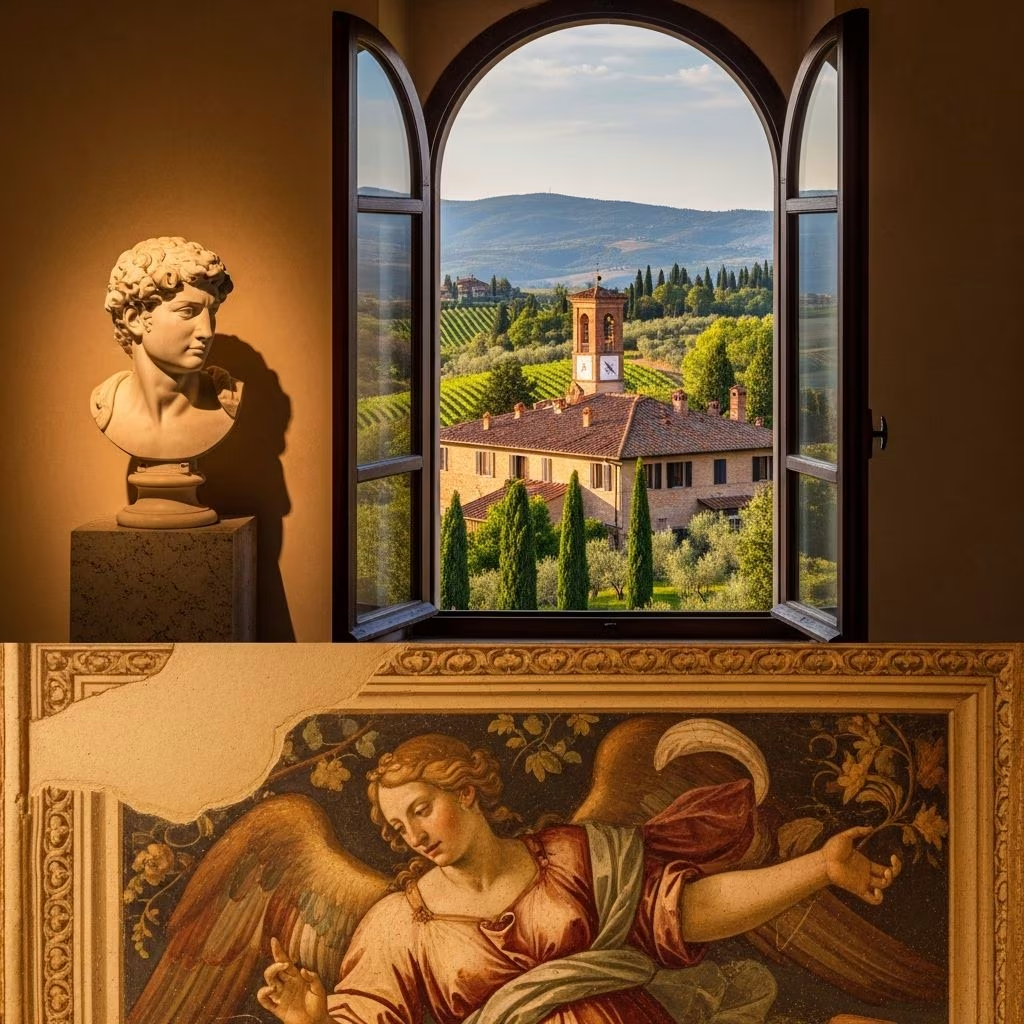
Explore Tuscany's unparalleled art and architecture: Florence's Renaissance icons, Siena's Gothic splendor, and hidden chapels with masterful frescoes across UNESCO sites.
 Travel Essentials
Tuscany stands as a living museum where ancient Etruscan remnants blend seamlessly with Renaissance innovations and Baroque flourishes. This central Italian region captivates with its dense concentration of world-class art and architecture, drawing travelers to explore Florence’s monumental sculptures, Siena’s intricate mosaics, and the rolling hills of Val d’Orcia dotted with perfectly planned Renaissance towns.
The story of Tuscan art begins millennia ago with the Etruscans, whose vibrant frescoes adorn tombs and temples, offering glimpses into a sophisticated pre-Roman civilization. These early works feature bold colors and dynamic scenes of daily life, banquets, and rituals, preserved in sites like the Necropolis of Sovana near Sorano. Transitioning to Roman influence, Tuscany boasts Hellenistic-style bronzes and marble statues that echo classical Greek ideals, visible in Florence’s archaeological museums.
Medieval developments saw Gothic styles dominate, particularly in Pisa’s Campo dei Miracoli, where the Leaning Tower, Duomo, and Baptistery showcase striped marble facades and intricate pulpits carved by Nicola Pisano. These structures, begun in the 11th century, represent Pisan Romanesque architecture—a unique fusion of Lombard, Islamic, and classical elements.
No discussion of Tuscan art omits Florence, the epicenter of the Renaissance. Here, visionaries like Filippo Brunelleschi revolutionized architecture with linear perspective and dome engineering, most iconically realized in the Duomo’s massive cupola, completed in 1436. Visitors ascend its 463 steps for panoramic city views, marveling at the engineering feat that defied medieval limitations.
Sculpture flourished too, with Donatello’s bronze David—the first freestanding nude since antiquity—gracing the Bargello Museum. Michelangelo’s David in the Accademia Gallery towers at 17 feet, its anatomical precision symbolizing Florentine humanism. Meanwhile, Botticelli’s ethereal Birth of Venus and Primavera in the Uffizi Gallery capture mythical grace with flowing lines and luminous tempera.
Beyond museums, Florence’s churches house fresco cycles that narrate biblical tales. The Brancacci Chapel in Santa Maria del Carmine features Masaccio’s revolutionary Tribute Money, pioneering atmospheric perspective and chiaroscuro. Ghirlandaio’s vibrant scenes in Santa Maria Novella’s Tornabuoni Chapel depict contemporary Florentine society amid sacred stories.
Rivaling Florence, Siena preserves a Gothic heart in its shell-shaped Piazza del Campo, site of the twice-yearly Palio horse race. The Duomo di Siena, a striped black-and-white marble marvel started in 1179, boasts Nicola Pisano’s hexagonal pulpit, Duccio’s rose window, and a floor of 56 inlaid panels depicting biblical and allegorical scenes by 40 artists from 1369 to 1547.
The Piccolomini Library within the Duomo displays vibrant frescoes by Pinturicchio, illustrating Pope Pius II’s life in vivid blues and golds. Donatello’s wooden St. John the Baptist statue adds sculptural depth. Nearby, Palazzo Pubblico frescoes by Simone Martini and Ambrogio Lorenzetti in the Museo Civico explore good and bad governance through panoramic cityscapes and moral allegories.
| Site | Key Artist/Work | Style/Period |
|---|---|---|
| Duomo Floor | Multiple artists | Gothic-Renaissance (14th-16th C) |
| Piccolomini Library | Pinturicchio frescoes | High Renaissance |
| Museo Civico | Lorenzetti’s Allegories | 14th Century Gothic |
The UNESCO-listed Val d’Orcia exemplifies Renaissance urban planning. Pienza, redesigned in 1459 by Bernardo Rossellino under Pope Pius II, embodies humanist ideals with its geometric piazza, Palazzo Piccolomini, and cathedral aligned for perfect proportions. Cypress-lined roads and golden wheat fields frame this ‘ideal city,’ inspiring photographers and architects alike.
San Gimignano’s medieval skyscrapers—17 towers piercing the sky—evoke a Tuscan Manhattan. Climb Torre Grossa for views, and explore Palazzo Comunale’s frescoed chambers by Simone Martini, including the majestic Maestà.
Smaller sites reveal intimate artistry. In Florence, Fra Angelico’s delicate frescoes at San Marco Monastery adorn monks’ cells with Annunciation scenes, their serene spirituality reflecting Dominican devotion. Sant’Apollonia’s refectory hosts Andrea del Castagno’s dramatic Last Supper, rivaling Leonardo’s Milan version.
Orsanmichele’s exterior niches display guild-commissioned sculptures: Donatello’s St. Mark, Nanni di Banco’s Quattro Coronati. Assisi’s Basilica di San Francesco, though Umbrian, influences Tuscan pilgrims with Giotto and Cimabue frescoes blending Gothic and proto-Renaissance styles.
Arezzo’s Piero della Francesca frescoes in San Francesco depict the Legend of the True Cross with geometric precision and luminous color. Volterra’s alabaster workshops trace Etruscan roots, while Pisa’s Camposanto frescoes survived wartime bombs to show medieval narrative art.
Pisa’s Piazza dei Miracoli unites four masterpieces: the leaning Duomo, Baptistery with its singing acoustics, Pisano’s pulpit, and Camposanto’s haunting frescoes like Triumph of Death. These Pisan Romanesque gems influenced Lombard and Islamic designs.
Nearby Lucca’s amphitheater-shaped walls and Pistoia’s Cattedrale di San Zeno house Verrocchio sculptures. Pietrasanta’s marble studios attract modern sculptors, bridging ancient Carrara quarries—source of Michelangelo’s marbles—with contemporary art.
Uffizi for paintings, Accademia for David, Bargello for sculptures.
Absolutely—its Duomo and Piazza del Campo offer Gothic beauty unmatched nearby.
Yes, in Siena’s Duomo (statues) and planned tours to Carrara quarries.
Minimum 5-7 days: 3 in Florence, 1 each Siena/Pisa, plus Val d’Orcia.
San Gimignano towers, Pienza workshops, and Duomo floors engage kids.
Tuscany’s art and architecture weave a tapestry of human achievement, from Etruscan vitality to Renaissance humanism. Each stone and stroke invites reflection on beauty’s enduring power.
