

 Travel Essentials
 Travel Essentials

Essential guide for newcomers to Tuscany: plan your perfect trip with itineraries, top destinations like Florence, Siena, and Val d'Orcia, plus food, wine, and travel advice.
 Travel Essentials
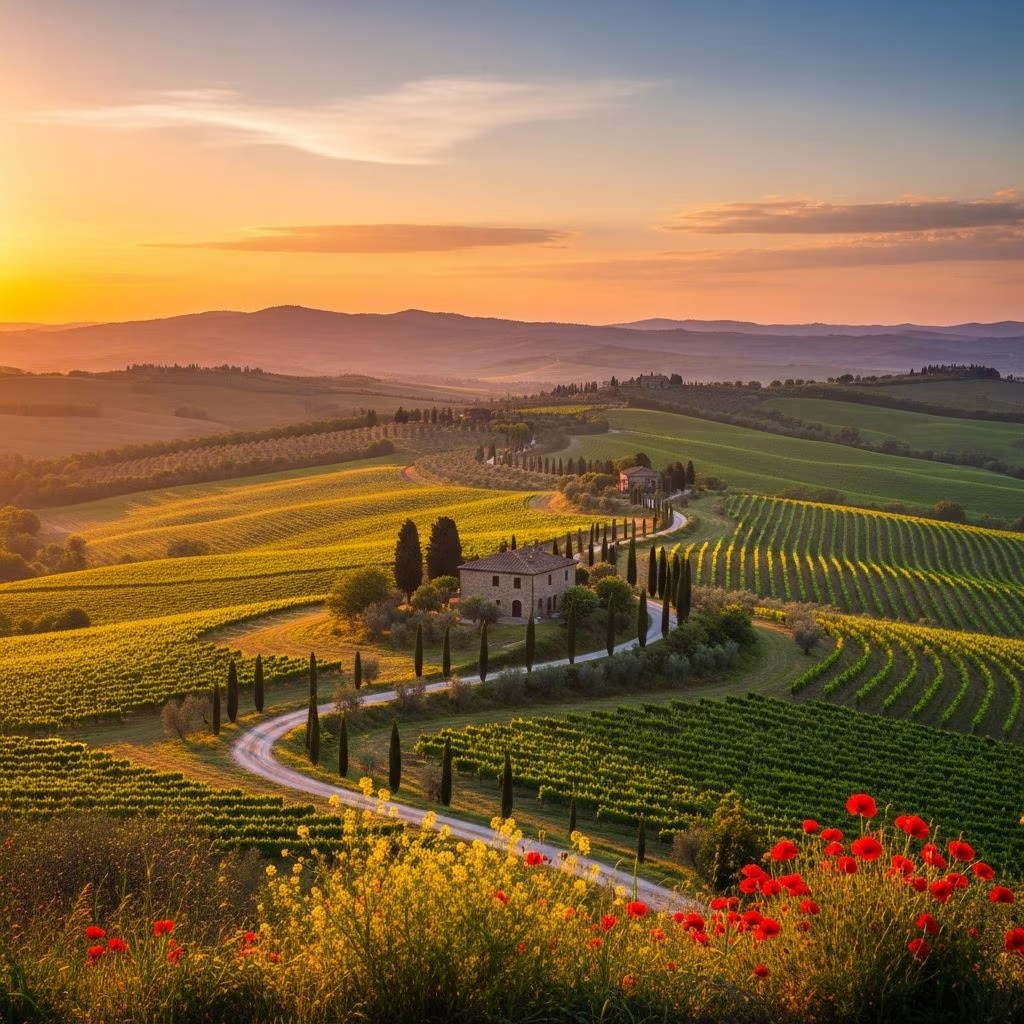
Tuscany captivates with its rolling hills, medieval hilltop villages, world-class wines, and Renaissance masterpieces. This guide equips newcomers with everything needed for an immersive first journey through this iconic Italian region.
The region’s allure lies in its seamless blend of natural splendor and cultural depth. Vineyards stretch across sun-drenched valleys, cypress trees punctuate skylines, and historic centers pulse with life. Unlike more crowded destinations, Tuscany rewards patient travelers with authentic experiences—from farm-fresh meals to panoramic vistas that inspired masterpieces.
For beginners, the key is balancing urban highlights with rural tranquility. Florence offers artistic treasures, while countryside drives reveal postcard-perfect scenes. Expect a tempo that encourages lingering over espresso or sunset views.
Spring (April-June) and fall (September-October) deliver mild temperatures (15-25°C), blooming wildflowers, and harvest festivities. Summer brings heat (up to 35°C) and peak tourists, best avoided unless prioritizing festivals. Winter suits budget travelers seeking cozy agriturismi stays amid fewer visitors.
Florence’s Peretola Airport (FLR) or Pisa International (PSA) serve as gateways, with easy train links to central hubs. High-speed trains from Rome or Milan reach Florence in 1.5-3 hours. For countryside freedom, rent a car at arrival—automatic transmissions are scarce, so book ahead.
Pro Tip: Fly into Pisa for western access (Lucca, Pisa), or Florence for eastern bases (Chianti, Siena).
| Arrival Point | Best For | Travel Time to Florence |
|---|---|---|
| Pisa Airport | West Tuscany (Lucca, Pisa) | 1 hour by train |
| Florence Airport | Central/East (Siena, Chianti) | 20-30 min taxi |
| Rome by Train | Southern entry | 1.5 hours high-speed |
Trenitalia connects Florence, Siena, Pisa, and Lucca efficiently (e.g., Florence-Siena: 1.5 hours). Buses fill gaps for hill towns. Driving unlocks Val d’Orcia and Chianti’s backroads—narrow lanes demand caution, but GPS apps like Google Maps suffice.
Park outside historic centers (ZTL zones restrict traffic; fines are steep). Fuel costs €1.8-2/liter; tolls add up on autostradas.
Florence’s Oltrarno district offers boutique hotels near authentic trattorias. Siena’s compact centro storico suits history lovers with family-run B&Bs.
Agriturismi—working farms—immerse you in vineyard life near San Gimignano or Montalcino. Expect pools, home-cooked dinners (€30-50/person), and rates from €100/night.
This flexible plan starts slow in the countryside, builds to cultural hubs, minimizing backtracking.
Shorten to 7 days by combining Siena/Florence.
Home to Michelangelo’s David and Botticelli’s Birth of Venus. Ponte Vecchio bridges the Arno; Boboli Gardens provide respite. Book skip-the-line tickets.
Piazza del Campo hosts the thrilling Palio horse race (July/August). Gothic Duomo dazzles with inlaid marble floors.
14 medieval towers pierce the sky; vernaccia wine pairs with gelato.
Cypress roads, rolling hills—film-famous from Gladiator. Pienza, Montalcino, Montepulciano blend villages and vineyards.
Strada Chiantigiana winds through castles and cellars. Tastings at Castellina or Greve.
Lucca’s intact Renaissance walls for biking; Pisa’s Leaning Tower climb offers city panoramas.
Olive oil, pecorino, truffles define plates. Must-tries: ribollita soup, bistecca alla fiorentina steak, pappa al pomodoro.
Dine at agriturismi for €25-40 set menus; markets like Mercato Centrale in Florence burst with produce.
Chianti Classico’s sangiovese dominates; Montalcino’s Brunello ages powerfully. Book tours at estates like Antinori or Banfi—no designated driver? Opt for bus tours.
Tasting fees: €15-50; combine with olive oil presses.
Layer for variable weather: comfy shoes for cobblestones, sunhat, reusable water bottle (fontane provide free water). Dress modestly for churches (knees/shoulders covered).
Practice ‘buongiorno’ greetings; tipping is minimal (round up bills). Slow down—Italians prioritize enjoyment over efficiency.
From Florence: Fiesole’s Roman amphitheater. Siena vicinity: Monteriggioni’s walls. Val d’Orcia: Monticchiello’s viewpoints.
Yes for countryside; trains suffice for cities.
7-10 days covers highlights without rush.
Montalcino or Chianti agriturismo.
Thrilling but crowded; book hotels early.
Abundant: crostini, pappa al pomodoro, cheese platters.
| Category | Daily Cost (€, per person) |
|---|---|
| Accommodation | 80-150 |
| Food | 40-70 |
| Transport (car/gas) | 30-50 |
| Attractions/Wine | 20-40 |
| Total | 170-310 |
Save with agriturismi, picnics, free vistas.
