

 Travel Essentials
 Travel Essentials

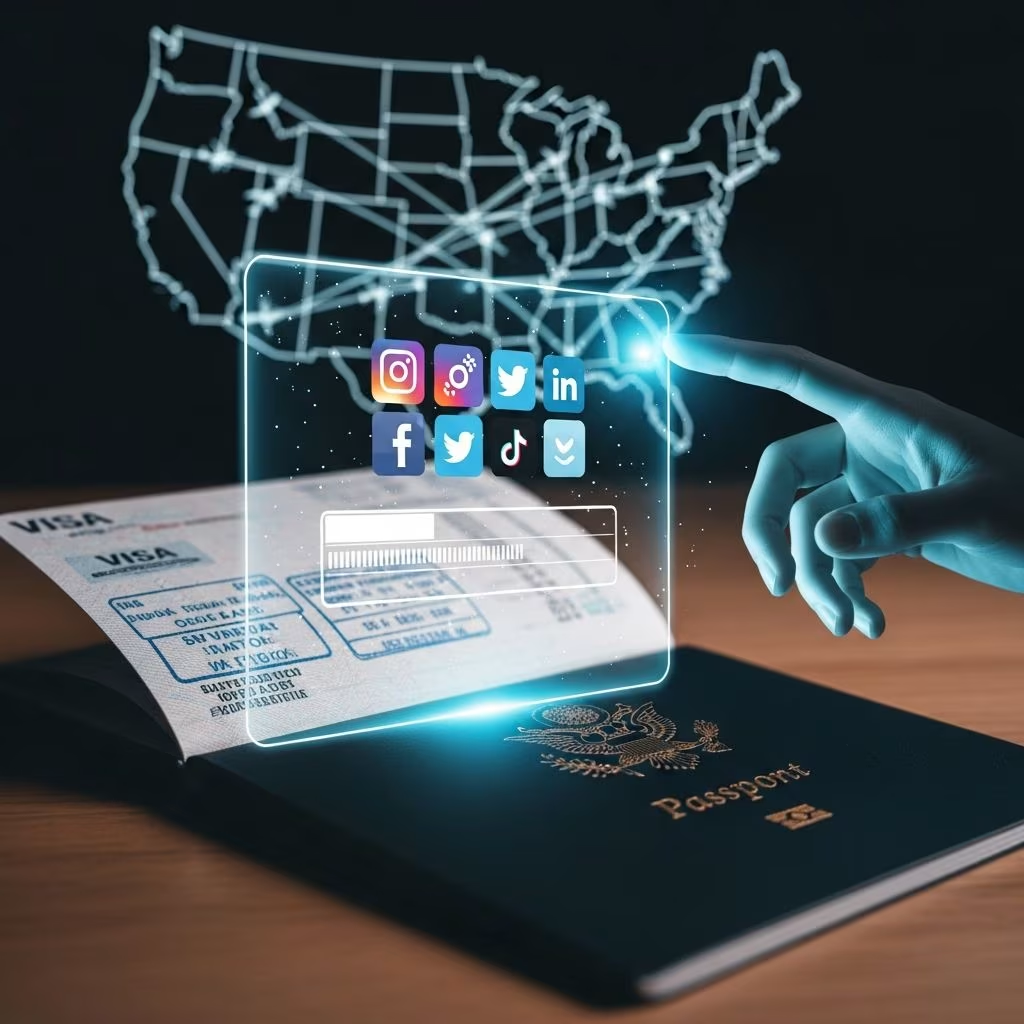
Proposed changes to US ESTA require tourists from 42 countries to submit extensive social media history, emails, and biometrics for entry, aiming to bolster security amid privacy concerns.
 Travel Essentials
Travelers planning trips to the United States from visa-waiver countries face a significant policy shift. U.S. Customs and Border Protection (CBP) has proposed sweeping changes to the Electronic System for Travel Authorization (ESTA), making the disclosure of five years of social media activity a required step for approval. This move targets citizens of 42 nations who currently enjoy streamlined entry for short stays, potentially transforming routine vacations into privacy gauntlets.
The Visa Waiver Program (VWP) allows eligible nationals to visit the U.S. for tourism or business without a traditional visa, limited to 90 days. Participants submit an ESTA application online, providing passport details, travel plans, and basic contact information for a $40 fee. Approvals typically last two years or until passport expiration.
Currently, social media details are optional in ESTA forms. The system screens for security risks, but the new proposal elevates digital footprints to mandatory status, aligning VWP travelers with stricter visa applicants.
CBP’s plan, published in the Federal Register, outlines a mobile-app-only application process. Applicants must furnish:
These expansions stem from a Trump administration executive order prioritizing national security by identifying potential threats early.
The changes impact 42 VWP nations, including powerhouses like the UK, France, Germany, Japan, South Korea, Australia, and New Zealand. These countries represent millions of annual U.S. visitors who value the program’s efficiency.
| Region | Examples of Affected Countries | Annual VWP Visitors (Est.) |
|---|---|---|
| Europe | UK, France, Germany, Italy | Over 15 million |
| Asia-Pacific | Japan, South Korea, Australia, NZ | Approx. 8 million |
| Other | Israel, Singapore, Taiwan | 2-3 million |
Data estimates highlight the scale; disruptions could ripple through global tourism economies.
Proponents argue the updates close vetting gaps. By accessing social media, CBP can detect extremism, criminal ties, or misinformation patterns not visible in traditional checks. Historical emails and phones aid in tracing networks, while biometrics prevent identity fraud.
The executive order mandates denying entry to those posing public safety risks, with social platforms offering real-time threat insights. Officials note that visa applicants already face similar scrutiny, standardizing rules across entry types.
Opponents decry the proposal as invasive overreach. Mandating digital life histories risks mass surveillance, chilling free speech as travelers self-censor to avoid denial.
Legal challenges loom over data retention, sharing with agencies like the FBI, and breaches. Deleting old posts won’t erase government access to archives, per experts. Civil liberties groups warn of discrimination against activists or minority voices.
“This isn’t security; it’s a digital dragnet on innocent tourists.” – Privacy advocates on the ESTA expansion.
If implemented, preparation is key:
Travel agents report rising inquiries; forward-planning mitigates delays.
The notice awaits White House budget review post-comment period. Rollout could span 2026-2027, with phased mobile migration. Non-compliance means entry denial; false info risks permanent bans.
CBP emphasizes voluntary compliance benefits, but mandatory fields leave little wiggle room.
Q: Which platforms count as ‘social media’?
A: Expect major sites (e.g., X/Twitter, Facebook, TikTok, LinkedIn); usernames/handles required.
Q: Does deleting posts help?
A: No – authorities access platform data beyond what’s visible.
Q: Are biometrics stored forever?
A: Likely yes, integrated into federal databases for ongoing screening.
Q: What if I lack old emails/phones?
A: Provide all available; omissions may flag applications.
Q: Can I appeal denials?
A: Limited options; reapplications possible after addressing issues.
This policy signals a hardline border stance, potentially deterring visitors. Allies like Australia voice concerns over tourism hits – pre-COVID, Aussies numbered 1 million+ U.S. trips yearly.
Europeans may pivot to Canada or EU peers. Businesses reliant on VWP conferences face disruptions. Long-term, it could inspire reciprocal demands from other nations.
Yet, for high-risk contexts, enhanced screening yields safer environments. Balancing security with openness remains the challenge.
Travel evolves; adaptability ensures seamless journeys.
