

 Travel Essentials
 Travel Essentials

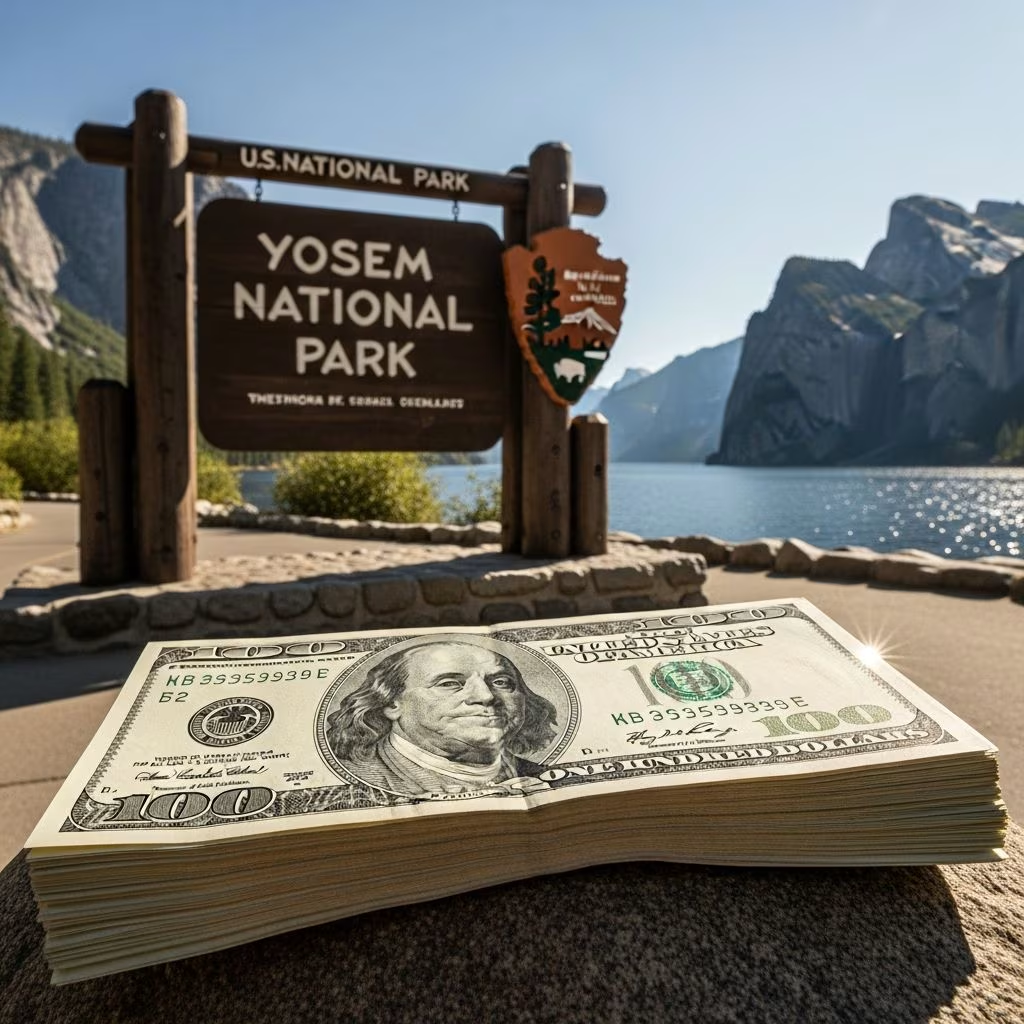
The National Park Service introduces a $100 per-person fee for non-US visitors at top parks like Yellowstone and Yosemite, effective Jan 1, 2026, alongside a $250 annual pass for internationals.
 Travel Essentials
Beginning January 1, 2026, the U.S. National Park Service (NPS) will implement a significant change in entry policies, targeting non-U.S. residents with an additional $100 fee per person aged 16 and older at 11 of the country’s most popular national parks. This move, rooted in a 2017 executive order, aims to boost revenue for park maintenance amid rising visitor numbers and infrastructure needs.
The foundation for these fees traces back to President Trump’s 2017 Executive Order, “Making Federal Lands Healthy for Use and Enjoyment,” which instructed the Department of the Interior to devise strategies for increasing entrance fees, particularly from nonresidents, to fund improvements in federal recreational areas. Years in development, the policy now formalizes a tiered pricing structure to address chronic underfunding while prioritizing domestic access.
Annual visitation to U.S. national parks exceeds 300 million, with international tourists comprising a substantial portion—around 10-15% at flagship sites. This influx strains roads, trails, restrooms, and visitor centers, prompting the need for dedicated funding streams.
The surcharge applies exclusively to 11 high-traffic parks, selected for their popularity and revenue potential:
Non-U.S. residents must pay the park’s standard entrance fee—typically $35 per vehicle or $20-35 per person—plus the $100 nonresident surcharge per individual aged 16+. Children under 16 remain exempt. This per-person charge applies regardless of group size or vehicle type.
| Park | Standard Vehicle Fee | Standard Per-Person Fee | Total for Nonresident (1 Adult, Vehicle) |
|---|---|---|---|
| Yellowstone | $35 | $20 | $135 |
| Yosemite | $35 | $20 | $135 |
| Grand Canyon | $35 | $20 | $135 |
| Zion | $35 | $20 | $135 |
| Glacier | $35 | $20 | $135 |
Note: Fees are approximate; actual costs may vary by season or entry method. Table illustrates single-adult vehicle entry post-2026.
A major update hits the iconic America the Beautiful pass. U.S. residents retain the $80 price for unlimited access to all fee-charging federal sites, covering the passholder, passengers in a private vehicle, or up to four adults at per-person sites.
Nonresidents, however, face a new $250 tier. This pass provides the same coverage: entire vehicle/two motorcycles or passholder plus three adults. Pre-2026 passes, including those bought by internationals, honor original terms—no retroactive surcharges.
Traditionally, NPS designates 4-6 fee-free days annually for events like Martin Luther King Jr. Day or National Public Lands Day, waiving fees for all. From 2026, these benefits extend only to U.S. residents with ID verification. International visitors pay full fees, including the $100 surcharge, even on these dates.
This exclusion aims to incentivize domestic tourism while directing savings toward nonresident revenue.
International visitors, drawn to bucket-list parks like Yellowstone’s geysers or Yosemite’s waterfalls, may rethink plans. A family of four could face $400+ in surcharges alone, atop standard fees and travel costs. Budget travelers from Europe, Asia, and Latin America—key demographics—might pivot to free-entry sites or neighboring countries’ parks.
Yet, parks’ global allure persists. Marketing America’s wonders as premium experiences could sustain high-end tourism, with surcharges funding upgrades like better shuttles and sustainable trails.
NPS estimates the fees could generate tens of millions annually, earmarked for visitor services: deferred maintenance tops $20 billion system-wide. Priority projects include:
All revenue stays park-specific, complying with executive directives for direct enhancements.
Domestic travelers benefit from stable pricing and exclusive free days, potentially easing overcrowding at icons.
Fees take effect January 1, 2026, with enforcement via electronic payments, credit cards, or on-site kiosks. Proof of residency (passport, visa) required for nonresidents; U.S. citizens show driver’s license or ID. Refunds unavailable post-entry.
Challenges may arise: staffing for verification, multilingual signage, and appeals from tourism boards. NPS commits to phased rollout with public input.
Eleven parks: Acadia, Bryce Canyon, Everglades, Glacier, Grand Canyon, Grand Teton, Rocky Mountain, Sequoia & Kings Canyon, Yellowstone, Yosemite, Zion.
No, only those 16+.
$250, covering vehicle or four adults.
Yes, they cover fees per original terms.
No, starting 2026—U.S. residents only.
For infrastructure like roads, trails, and facilities.
Despite hikes, U.S. parks offer unparalleled beauty—from Zion’s slot canyons to Everglades’ mangroves. Budget accordingly: calculate surcharges, prioritize passes, and explore beyond the top 11 (over 400 sites total). Sustainable practices ensure these treasures endure for future generations.
