

 Travel Essentials
 Travel Essentials

New U.S. rules demand international students make social media public for visa vetting, screening for hostility or threats. Learn preparation tips and impacts.
 Travel Essentials
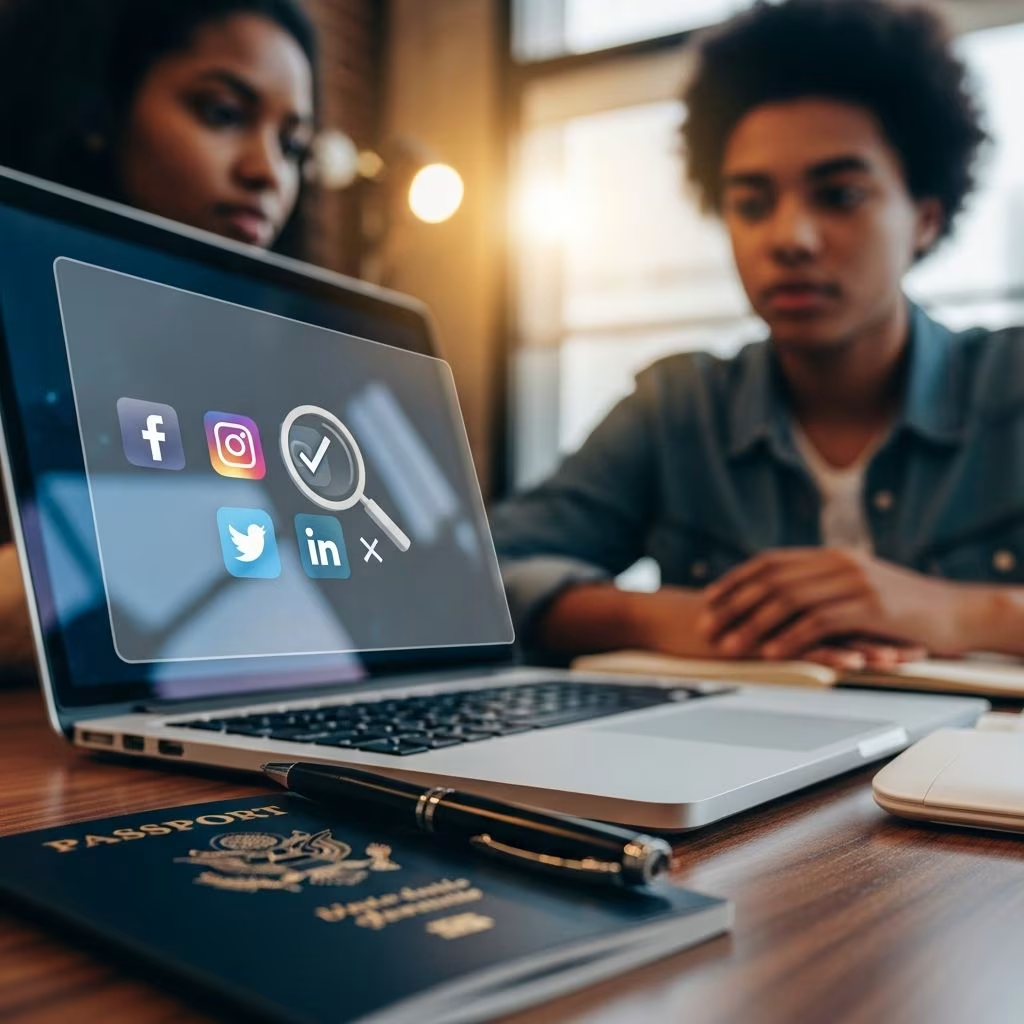
International students pursuing education in the United States now face intensified scrutiny of their digital lives as part of the visa application process. Starting in June 2025, the U.S. State Department mandated that applicants for F, M, and J visas adjust their social media privacy settings to public, allowing consular officers to conduct thorough online presence reviews. This measure aims to identify potential national security risks by examining public posts, interactions, and affiliations over the past five years.
Social media screening for visa applicants traces back to 2014, when initial checks focused on publicly available content. By 2019, DS-160 forms required listing social media handles from the prior five years. The 2025 policy marks a significant escalation: applicants must not only disclose accounts but ensure full public access during interviews. A temporary halt in new student visa interviews from May 27 to June 18, 2025, preceded this rollout, signaling the policy’s gravity.
Under the guidance issued via an internal State Department cable on June 18, 2025, officers perform “comprehensive and thorough vetting” using search engines and online resources. They document findings with detailed notes and screenshots to preserve evidence.
This policy targets nonimmigrant student and exchange visitor visas:
Both new applicants and those seeking renewals or changes of status must comply. The review extends beyond major platforms like Instagram and X (formerly Twitter) to include TikTok, LinkedIn, and any online databases.
Consular officers search for indicators of risk, including:
Refusal to make accounts public may be interpreted as an attempt to conceal activity, leading to visa denial.
| Content Type | Potential Red Flag | Example |
|---|---|---|
| Political Posts | Hostility to U.S. values | Calls to overthrow U.S. government |
| Terrorism Support | Affiliation with groups like Hamas | Public endorsements or shares |
| Hate Speech | Antisemitic or violent rhetoric | Harassment targeting groups |
| Activism | Overseas protests against U.S. policy | Protests with anti-American signs |
Officers evaluate the “totality” of evidence, but vague terms like “hostility” allow discretion, potentially affecting lawful speech such as policy critiques or pro-Palestinian views.
Applicants should anticipate instructions at embassies to verify public access on-site.
While official statistics post-2025 are emerging, the pause in interviews suggests administrative delays. Critics argue the policy could deter talent, as students weigh free speech against opportunities. Supporters, including the State Department, frame every visa as a national security decision.
Financial proof, academic records, and interview performance remain primary factors, with social media as a supporting tool for identity verification and risk assessment.
Those with controversial online histories should:
Pro-Palestinian activists or those from high-scrutiny countries may face elevated hurdles due to exampled concerns like Hamas support.
The Trump Administration positions this as essential vetting, expanding on 2025 announcements for other categories like H-1B. It builds on post-2019 frameworks amid rising global tensions.
It may be seen as hiding activity, likely resulting in denial.
Yes, all F, M, J applicants, including renewals.
Typically five years, per DS-160 requirements.
Yes, but officers may use archives or screenshots; act promptly.
No, focus is on public content.
As of 2026, expect ongoing refinements. Students should prioritize clean digital footprints, treating social media as an extension of their visa application. Proactive preparation enhances approval odds in this security-focused era.
