

 Travel Essentials
 Travel Essentials

Explore which countries face U.S. entry restrictions, exemption categories, and visa implications for international travelers.
 Travel Essentials
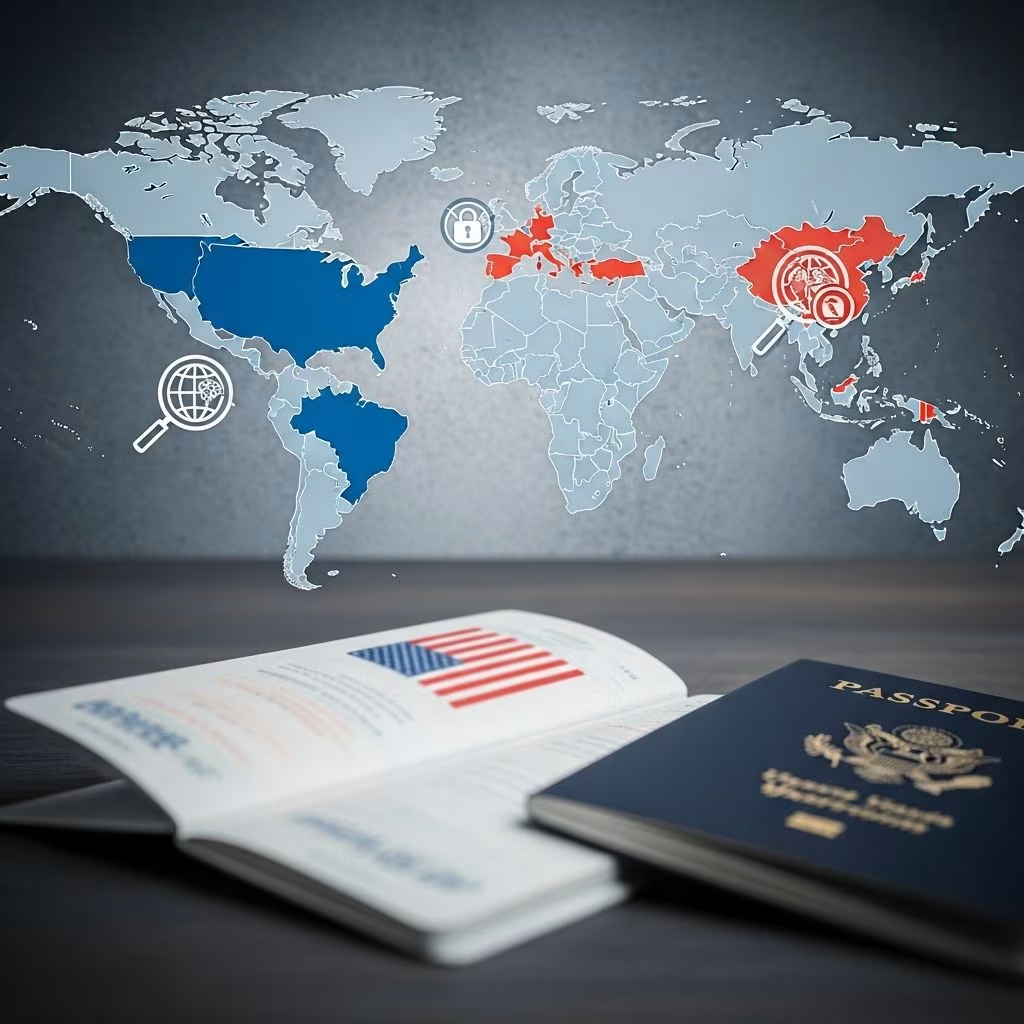
The United States maintains a complex system of entry restrictions affecting citizens from numerous countries. As of 2026, these restrictions span multiple categories, from complete entry bans to partial limitations on specific visa types. Understanding which countries are affected and how restrictions apply is essential for international travelers, businesses, and educational institutions planning engagements with the U.S.
Travel restrictions have evolved significantly, with the most recent expansions occurring in late 2025 and early 2026. The restriction framework encompasses three primary categories: full entry bans, partial restrictions, and immigrant visa suspensions. Each category carries different implications for travelers depending on their nationality and intended purpose of visit.
The restrictions were implemented citing national security concerns and the need to strengthen vetting procedures for incoming travelers. The administration has emphasized that these measures aim to protect U.S. security while maintaining diplomatic relationships with affected nations through engagement on security and immigration standards.
A complete entry ban represents the most severe restriction category. Citizens of these nations face barriers to entering the United States across all visa categories, though limited exceptions exist in specific circumstances. The following 19 countries currently face full entry restrictions:
Citizens of these nations cannot obtain new visas or renew existing ones for entry into the United States. However, certain humanitarian and security-related exceptions apply. For instance, Afghan nationals may qualify for Special Immigrant Visas, while Iranian citizens facing ethnic or religious persecution may access immigrant visa pathways through established exemption procedures.
Partial restrictions represent a middle ground between complete bans and unrestricted entry. Under these policies, nationals from affected countries can access only specific visa categories. The partial restriction list includes 20 countries where citizens are prohibited from obtaining B-1, B-2, B-1/B-2, F, M, and J visas—categories typically used for business travel, tourism, academic studies, and cultural exchanges.
Nationals from these countries may still qualify for employment-based visas such as H-1B (specialty occupations) and O-1 (individuals with extraordinary ability) categories. This distinction allows for continued professional mobility while limiting general tourism and short-term travel.
The 20 countries subject to partial restrictions are:
Beyond full and partial travel bans, the United States has suspended immigrant visa processing for nationals of a larger group of countries. This suspension affects individuals seeking permanent residency and impacts family reunification processes, employment-based immigration, and diversity visa programs. The immigrant visa suspension list encompasses over 80 countries, significantly affecting long-term immigration pathways.
Unlike full travel bans, immigrant visa suspensions permit temporary visits through non-immigrant visas in many cases. However, they effectively close pathways to permanent U.S. residency for nationals of affected countries, creating substantial barriers for those seeking to establish long-term residence.
The restriction framework includes provisions for exemptions and waivers in specific situations. These exemptions recognize the need for humanitarian considerations, critical business operations, and national interests that may override general restrictions.
Individuals with credible claims of bona fide relationships to U.S. entities or persons may qualify for exemptions. This category includes family relationships, employer sponsorship, educational enrollments, and organizational affiliations. Most employer-sponsored foreign nationals qualify for exemptions under this provision, allowing skilled workers to enter despite country-level restrictions.
Foreign nationals with existing or prospective student status generally are not impacted by travel restrictions. This exemption recognizes the importance of academic exchange and ensures educational institutions can continue recruiting international talent.
Certain visa categories maintain exemptions from restrictions. These include Special Immigrant Visas for Afghan and Iraqi nationals who supported U.S. military operations, as well as visas for individuals fleeing persecution based on ethnicity or religion.
The Visa Waiver Program (VWP) permits citizens of approximately 40 countries to enter the United States without visas for tourism and business purposes. However, even VWP participants face restrictions if they have traveled to designated restricted countries. VWP citizens who have visited North Korea, Iran, Iraq, Libya, Somalia, Sudan, Syria, or Yemen within a specified period lose their waiver eligibility and must obtain traditional visas.
VWP countries—including most European nations, Australia, New Zealand, Japan, South Korea, and others—maintain streamlined entry processes. However, this privileged status carries the condition that travelers must not have recently visited countries designated as security concerns.
Understanding the evolution of restrictions provides context for current policies. The initial proclamation issued in June 2025 restricted entry from 12 countries and partially restricted 7 others. This baseline established the framework for security-focused entry management.
In December 2025, the administration announced a significant expansion, adding seven countries to the full ban list and implementing partial restrictions on additional nations. This expansion took effect January 1, 2026, bringing the total affected countries to 39. The December expansion followed specific security incidents that prompted a review of vetting procedures across affected regions.
The administration has cited multiple justifications for maintaining and expanding restrictions. These include inadequate security screening infrastructure in certain countries, limited cooperation with U.S. vetting procedures, and specific security concerns identified through intelligence assessments.
The framework emphasizes that restrictions are not permanent prohibitions but conditions that countries can address through compliance with U.S. security and immigration standards. The State Department has been directed to engage affected countries on implementing enhanced screening, vetting, and security cooperation measures that could eventually lead to restriction removal.
Companies with international operations must navigate restrictions affecting employee travel and recruitment. Partial restrictions prohibit general business visas but permit specialized employment categories, requiring careful visa category selection for affected nationals.
Families separated across restricted countries face substantial barriers to immigration and reunion. Immigrant visa suspensions particularly affect this category, as family sponsorship pathways are limited for nationals of suspended countries.
While student exemptions exist, the broader visa environment affects recruitment and international academic cooperation. Universities must inform prospective students about restrictions and available exemption pathways.
Yes. While citizens of fully banned countries cannot obtain standard visas, certain exemptions apply based on individual circumstances. Afghan nationals seeking Special Immigrant status and Iranian nationals facing persecution represent exceptions to full bans.
Emergency humanitarian waivers exist but are granted on a case-by-case basis. Nationals from partially restricted countries must demonstrate extraordinary circumstances warranting exception from standard restrictions.
Entry eligibility is determined by the passport presented. Dual citizens can enter using a passport from an unrestricted country, though misrepresenting citizenship carries legal consequences.
Exemption claims require documentation establishing genuine relationships, such as employment letters, family documentation, or educational enrollment confirmations. Requirements vary based on relationship type.
Restrictions are implemented through presidential proclamations and cannot be directly appealed through immigration channels. However, individual cases may be reviewed for exemption eligibility through appropriate consular procedures.
The restriction framework remains subject to adjustment based on security assessments and international developments. The administration’s emphasis on engagement with affected countries suggests that restrictions could be modified if countries implement requested security and immigration improvements.
Travelers and organizations should monitor official State Department announcements and consular guidance for updates, as the restriction landscape may evolve with changing security conditions and diplomatic developments.
