

 Travel Essentials
 Travel Essentials

U.S. warns Americans of deadly bear attacks in Japan, with 13 deaths and 200+ injuries since April, mainly in Hokkaido and Akita. Learn prevention strategies and local responses.
 Travel Essentials
The U.S. State Department has issued an uncommon wildlife alert for American travelers in Japan, highlighting a dramatic increase in bear attacks across northern regions. Since April 2025, bears have caused at least 13 human deaths—the highest toll since records began in 2006—and injured more than 200 others, prompting closures of parks, deployments of troops, and new hunting laws.
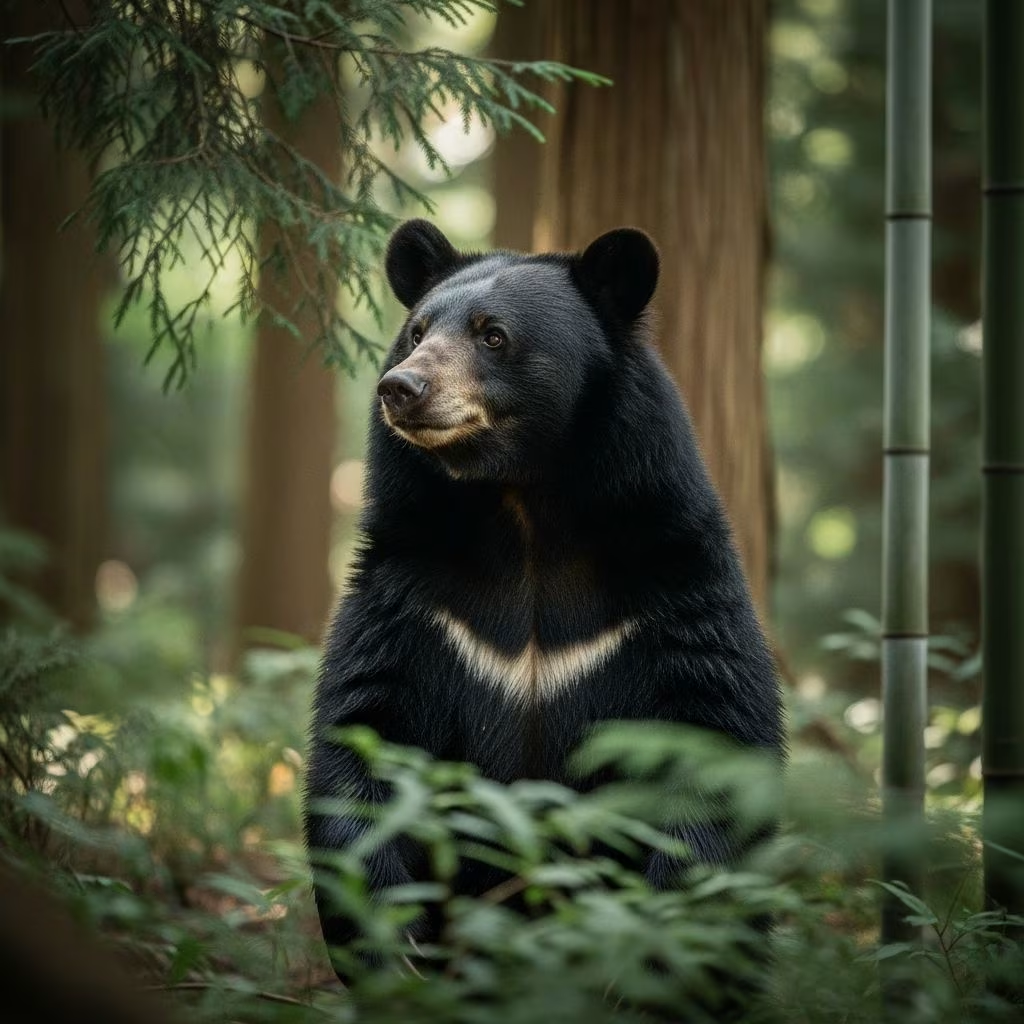
Bears in Japan, primarily the Ussuri brown bear (also known as the Hokkaido brown bear), are venturing closer to human settlements due to a combination of environmental pressures. As autumn approaches hibernation, these animals ramp up foraging for food like acorns, berries, and nuts. Crop failures from recent weather anomalies have pushed them into urban fringes, including near schools, supermarkets, and even airports.
Northern prefectures like Hokkaido and Akita bear the brunt, with sightings in populated zones surging. In Sapporo City, a bear appeared in Maruyama Park next to the U.S. Consulate General, leading to a two-week closure. Similar incidents have occurred in residential areas, historic villages, and tourist hotspots, elevating risks for visitors exploring rural trails or UNESCO sites.
The U.S. Embassy in Tokyo’s alert specifies heightened vigilance in Hokkaido, Akita, and Sapporo. Key recommendations include avoiding bear-sighted areas, especially when alone, staying alert to surroundings, and promptly reporting sightings to local authorities. Enrolling in the Smart Traveler Enrollment Program (STEP) is urged for real-time security updates.
Japan’s government has escalated measures: troops from the Self-Defense Forces patrol with bear spray and shields to capture animals; drones emitting barking sounds deter bears in central regions like Hita City; and a September 2025 wildlife law amendment allows emergency civilian hunting. Police in some areas are authorized to shoot bears posing immediate threats. Local resources include Hokkaido Prefecture’s English site and Akita’s portals for updates.
Other nations, including the UK and China, have echoed similar advisories, underscoring the crisis’s scale.
Japan’s bears are not inherently aggressive but act defensively when startled, hungry, or protecting cubs. Peak activity aligns with pre-hibernation bulking in October, explaining seven deaths that month alone. Unlike grizzlies in North America, Ussuri bears adapt to forested edges near farms, increasing overlap with humans.
To minimize risks, follow proven strategies endorsed by wildlife experts and embassies:
| Scenario | Do’s | Don’ts |
|---|---|---|
| Preventing Encounters | Travel in groups, make noise with bells or voices, stick to marked paths. | Walk alone at dawn/dusk, leave food unattended, approach cubs. |
| Bear Sighting | Back away slowly, speak calmly, report to police (dial 110). | Run, climb trees (bears climb well), turn your back. |
| Direct Attack | Make yourself big, yell, use spray if available; fight back if charged. | Play dead (ineffective for these bears), feed the animal. |
Bear bells, popular in Japan, ring continuously to alert animals. Apps like those from local prefectures provide real-time sighting maps. Carry ID and emergency contacts.
Japan’s inbound tourism, booming post-pandemic, faces challenges in bear-heavy zones. Historic villages like UNESCO-listed sites now post warnings and distribute bells, yet a Spanish tourist was recently attacked. Airports like Iwate Hanamaki report intrusions, disrupting flights. Closures affect seasonal events, hiking, and onsen visits, but urban Tokyo and southern areas remain unaffected—Japan’s overall advisory stays at Level 1 (normal precautions).
Locals adapt with community patrols and electric fencing around farms. Tour operators offer guided bear-aware hikes, turning crisis into eco-education.
| Region | Fatalities (Recent Peak) | Main Causes | Responses |
|---|---|---|---|
| Japan (2025) | 13 deaths, 220+ injuries | Food scarcity, urbanization | Troops, drones, hunting laws |
| USA (Alaska/Yellowstone) | 1-2/year avg. | Tourism overlap | Bear spray mandates, closures |
| Russia (Far East) | Variable, high in some years | Similar Ussuri bears | Culls, awareness campaigns |
Japan’s spike outpaces typical years (5 deaths in 2023-2024 fiscal), signaling a need for sustained habitat management.
Experts advocate crop insurance for farmers, expanded forests, and public education. Japan’s Environment Ministry tracks via statistics, aiming to reduce human-bear conflicts through non-lethal tech like GPS collars. Travelers contribute by respecting “no feeding” signs and supporting conservation NGOs.
Climate shifts may exacerbate issues, urging international collaboration on wildlife corridors.
Yes, risks are localized to northern rural areas; major cities are unaffected. Follow alerts.
Stop, assess, back away without running. Use noise deterrents.
Check policies—many include wildlife incidents; medical evacuations are key.
Enroll in STEP, monitor embassy sites, use local apps.
Primarily fall pre-hibernation hunger drives incursions.
By heeding these guidelines, travelers can enjoy Japan’s natural beauty responsibly amid this unusual wildlife surge.
