

 Travel Essentials
 Travel Essentials

Comprehensive guide to gorilla trekking in Uganda: parks, best times, permits, trek details, gear, rules, and tips for Bwindi and Mgahinga.
 Travel Essentials
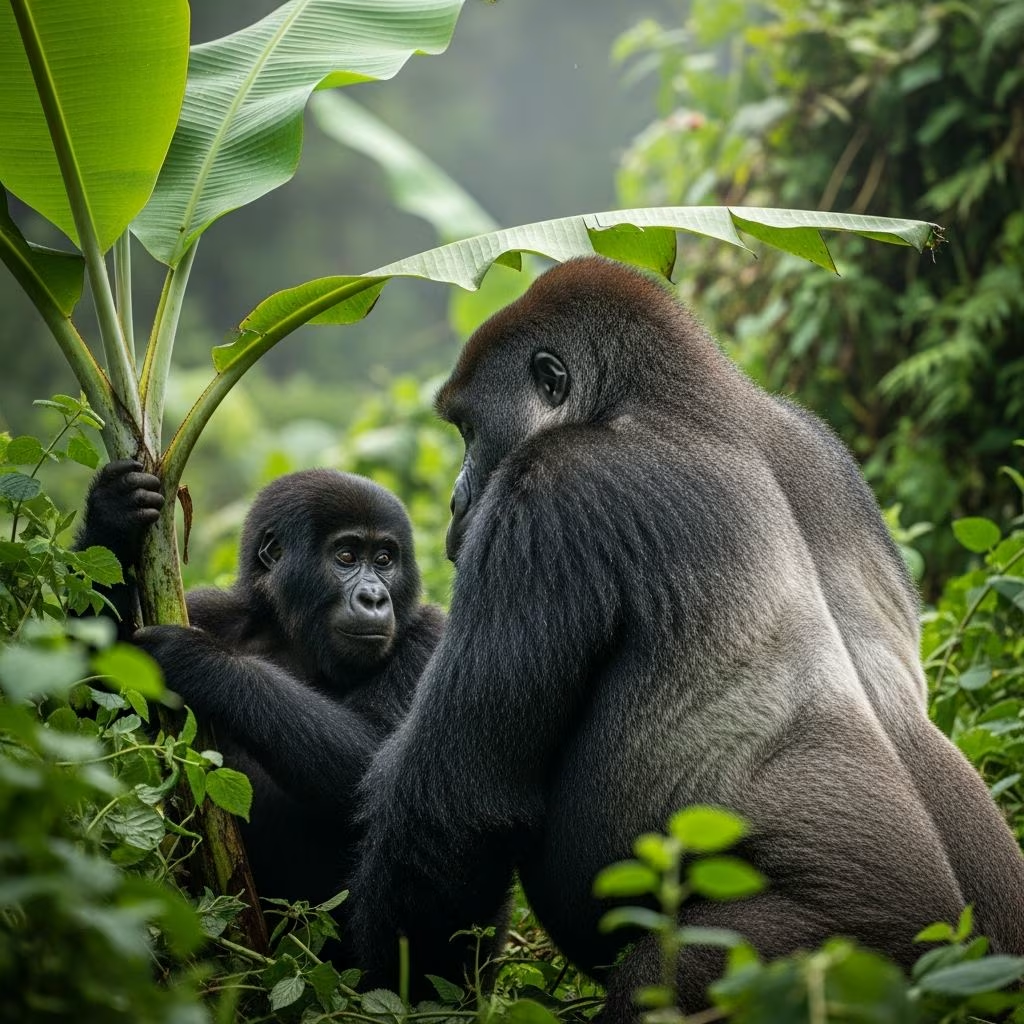
Mountain gorilla trekking in Uganda stands out as one of the world’s most profound wildlife experiences, allowing close observations of these endangered primates in their natural habitat. Home to over half the global population of mountain gorillas, Uganda’s protected forests offer daily encounters with habituated families under expert guidance.
Uganda hosts gorilla trekking in two key national parks: Bwindi Impenetrable National Park and Mgahinga Gorilla National Park. Bwindi dominates as the primary destination, sheltering the majority of habituated groups across multiple sectors, while Mgahinga provides a more remote alternative near the Rwanda border.
This UNESCO World Heritage site sprawls across steep, forested hills in southwestern Uganda, boasting around 11 fully habituated gorilla families accessible from four distinct trailheads: Buhoma, Ruhija, Rushaga, and Nkuringo. Each sector offers unique terrain and family dynamics, catering to varying fitness levels. Buhoma provides gentler slopes ideal for beginners, Ruhija features bird-rich mid-altitude paths, Rushaga hosts larger families in rugged valleys, and Nkuringo challenges with steep descents near the Congolese border.
Daily treks launch from park headquarters, limited to eight visitors per family to minimize stress on the gorillas. Trackers monitor families from dawn, radioing locations to guides for efficient hikes.
Nestled among the Virunga Volcanoes, this smaller park protects two habituated gorilla families and golden monkeys. Treks here involve steeper, more isolated paths up volcanic slopes, often lasting longer due to the gorillas’ elusive movements. It’s perfect for combining with Rwanda itineraries or seeking solitude away from Bwindi’s crowds.
Gorilla trekking operates year-round, but dry periods from June to September and December to February yield clearer paths and higher success rates. Rainy seasons (March-May, October-November) bring slippery trails and lowland gorilla movements, potentially shortening hikes but increasing mud challenges. Always prepare for rain regardless of season.
| Season | Months | Pros | Cons |
|---|---|---|---|
| Dry | Jun-Sep, Dec-Feb | Drier trails, better visibility | Higher permit demand |
| Wet | Mar-May, Oct-Nov | Fewer crowds, possible shorter treks | Muddy, slippery paths |
Permits, priced around $800 per person (confirm current rates), are mandatory and issued by the Uganda Wildlife Authority (UWA). Bwindi allocates 152 daily across its families; Mgahinga offers fewer. Book 3-6 months ahead via UWA offices, authorized agents, or tour operators, especially for peak seasons. Foreign non-residents pay full price; East Africans receive discounts.
Treks range from 45 minutes to 7 hours, averaging 2-6 hours over steep, vegetated terrain at altitudes up to 2,500m. Expect mud, roots, and inclines; porters (tip $10-20) carry gear, allowing focus on the hike. Fitness is key—no age minimum, but heart conditions or poor mobility may disqualify.
Briefings at headquarters cover etiquette and safety. Guides lead groups of up to eight, with one hour of gorilla observation at 7m distance.
Appropriate gear ensures comfort and safety amid variable weather.
Porters handle heavy loads, freeing hands for photography and balance.
Strict protocols safeguard gorilla health and habituation:
Violations risk permit revocation and fines. Trackers and rangers enforce compliance.
Pre-trek Batwa cultural performances introduce the forests’ Indigenous heritage. Post-trek certificates commemorate the experience. Combine with chimpanzee tracking, golden monkey hikes in Mgahinga, or Big Five safaris in Queen Elizabeth National Park.
Lodges range from luxury (Sanctuary Gorilla Forest Camp) to budget camps near trailheads. Fly into Kigali or Entebbe, then road transfer (6-9 hours to Bwindi). Guided packages simplify permits and transport.
| Sector | Luxury Options | Mid-Range | Budget |
|---|---|---|---|
| Buhoma | Buhoma Lodge | Engabi Lodge | Bwindi View Bandas |
| Ruhija | Twin Lakes Safari Lodge | Ruhija Gorilla Resort | Community Bandas |
Opt for Buhoma’s easier trails; hire porters. Consult a doctor for strenuous activity clearance.
Minimum age 15 for standard treks; habituation experiences may allow younger with restrictions.
Yes, under UWA guidance; gorillas are peaceful unless provoked.
Reserve early via UWA or tours; shoulder seasons offer better availability.
4-hour observation with researchers in select groups (Rushaga/Ruhija), limited to 4 people, higher cost.
Permit fees fund anti-poaching, community projects, and habitat protection, supporting over 1,000 gorillas’ recovery from near-extinction.
