

 Travel Essentials
 Travel Essentials

Uganda faces a severe road safety crisis with fatality rates nearly 60% above global averages. Explore systemic challenges and solutions.
 Travel Essentials
Uganda faces one of the most alarming road safety crises in East Africa, with statistics that demand immediate attention and comprehensive intervention. The country records approximately 10 deaths per day on its roads, translating to roughly 3,650 fatalities annually, with an estimated 12,589 crashes reported across the nation. In 2016, Uganda’s road traffic fatality rate stood at 29 deaths per 100,000 people, significantly exceeding the global average of 18.2 deaths per 100,000 people—a disparity of approximately 59 percent above international norms.
Pedestrians constitute a particularly vulnerable population, accounting for 40 percent of road traffic fatalities and 25 percent of serious injuries annually. This disproportionate impact on vulnerable road users reflects broader systemic failures in transportation planning and enforcement mechanisms across the country.
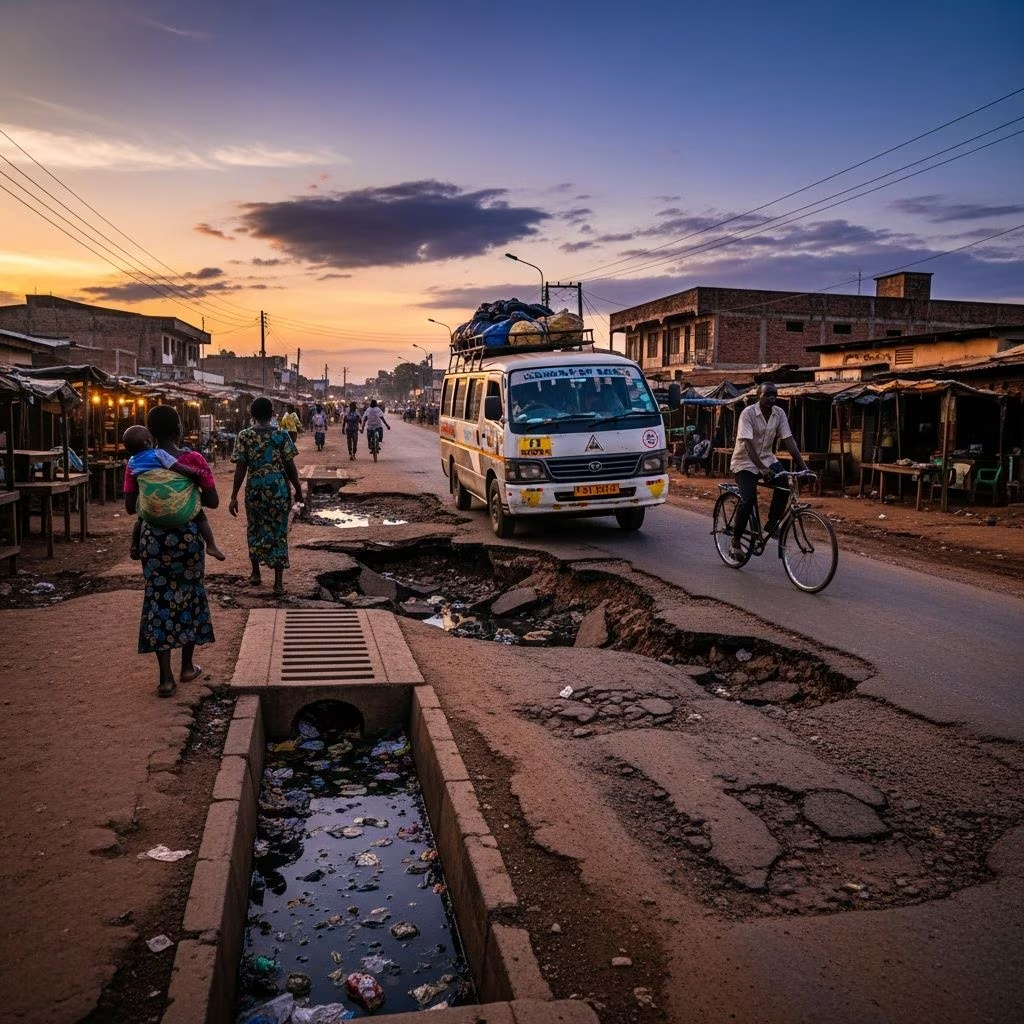
At the foundation of Uganda’s road safety problem lies deteriorating and inadequately designed infrastructure. The majority of Uganda’s road network consists of single-carriageway routes without medians, many featuring steep shoulders and limited overtaking opportunities. These design characteristics directly contribute to head-on collision incidents, which remain among the most fatal types of crashes.
Beyond basic roadway configuration, Uganda’s roads suffer from multiple compounding factors:
The lack of investment in modern road infrastructure maintenance has created conditions where vehicles cannot be operated safely at posted speed limits. Many sections deteriorate into severe disrepair, requiring drivers to reduce speeds substantially below legal limits or risk accidents.
While Uganda possesses a legal framework for road safety management, including the Traffic and Road Safety Act of 1998, the National Road Safety Policy, and the Non-Motorized Transport Policy, implementation has been severely constrained by inadequate resources and weak institutional commitment. The National Road Safety Council, positioned within the Ministry of Works and Transport, remains structurally underfunded, with road safety allocations consistently remaining below 1 percent of the transport budget.
This funding shortfall has resulted in declining road safety capacity over several years, with weak leadership failing to prioritize intervention programs effectively. Uganda lacks an updated monitoring and evaluation framework required by the African Action Plan for the Decade of Action for Road Safety, nor does the country maintain a comprehensive national road safety strategy with regular assessment mechanisms.
The driver licensing system represents another critical vulnerability in Uganda’s transportation safety structure. Driving standards in the country fall substantially below internationally accepted norms, with the driver licensing system—encompassing training, testing, and certification—requiring urgent improvement. Driver behavior emerges as a leading contributor to accidents, yet the regulatory mechanisms designed to ensure competency remain inadequately developed.
Current licensing processes fail to establish minimum safety standards, allowing individuals with insufficient training and knowledge to operate vehicles legally. This systematic gap in quality control perpetuates unsafe driving practices throughout the population.
Uganda has implemented several enforcement initiatives, most notably the Fika Salama operation launched in March 2016 through collaboration between the Ministry of Works and Transport, Uganda National Roads Authority, and the Uganda Police Force. This coordinated effort deployed integrated highway police and established 24-hour checkpoints to address rising fatalities.
However, enforcement activities have not yet achieved sustainable deterrence against dangerous behaviors including excessive speeding, alcohol-impaired driving, and non-seat-belt usage. The Directorate of Traffic and Road Safety within the Uganda Police Force oversees enforcement, yet police efforts remain largely based on roadside checks and speed management operations rather than comprehensive, evidence-based strategies.
A significant impediment to effective road safety improvement is Uganda’s poor crash data management system, which operates below internationally accepted standards. Without reliable, comprehensive data collection and analysis, policymakers cannot implement evidence-based interventions tailored to specific risk factors and geographic hotspots.
Uganda demonstrates notably low uptake of road safety research evidence compared to high-income countries, which actively implement evidence-based interventions to reduce traffic-related injuries and fatalities. This research-practice gap prevents the country from learning from global best practices or adapting proven strategies to local conditions.
| Factor Category | Description | Impact on Road Safety |
|---|---|---|
| Environmental Conditions | Murram (unpaved) roads with loose gravel; seasonal flooding and muddy conditions | Reduced traction; limited visibility; vehicle control challenges |
| Wildlife Hazards | Unpredictable animal crossings near national parks | Sudden collision risks; driver distraction |
| Speed Limit Compliance | Official limits of 80 km/h urban and 100 km/h highway, but inconsistent enforcement | Driver uncertainty; excessive speeds in hazardous conditions |
| Vehicle Inspection | Limited automated inspection centers with poor utilization rates | Unsafe vehicles remaining operational |
Pedestrian safety interventions in Uganda have historically been reactive rather than proactive, implemented primarily in response to fatal incidents at specific locations or following pressure from communities experiencing frequent crashes. While interventions such as pedestrian sidewalks, overpasses, and traffic calming mechanisms exist on paper, their systematic deployment across high-risk areas remains insufficient.
Schools, markets, and hospitals—areas with inherently high pedestrian volumes—have motivated localized safety improvements through traffic calming and enforcement efforts. However, these point solutions fail to address the nationwide pedestrian protection gap. The presence of external funding from international agencies and non-governmental organizations like the Uganda Red Cross Society has influenced implementation of certain measures, creating an inconsistent patchwork of protection rather than comprehensive coverage.
Uganda’s public road safety awareness programs remain suboptimal, with the government primarily championing an annual National Road Safety Week. Opportunities exist to strengthen child and youth safety programs substantially, which could contribute toward greater road safety consciousness across demographic groups. However, current awareness campaigns lack the intensity, consistency, and evidence-based design necessary to produce meaningful behavioral change at population scale.
Addressing Uganda’s road safety crisis requires multifaceted, coordinated action across several domains. Investment in road infrastructure modernization, particularly median construction, improved shoulder design, and pedestrian-dedicated facilities, should constitute a foundational priority. Road networks require maintenance programs ensuring surfaces remain in safe condition regardless of weather conditions.
Simultaneously, driver licensing reform must establish rigorous training standards, comprehensive testing protocols, and enforcement mechanisms ensuring only qualified individuals operate vehicles. The driver licensing system should incorporate regular refresher training and license renewal requirements contingent upon demonstrated competency.
Data collection and research infrastructure must be upgraded to international standards, enabling evidence-based policy development and program evaluation. Uganda should establish consistent mechanisms for monitoring and evaluating road safety interventions, incorporating findings into iterative policy refinement.
Traffic enforcement resources require substantial expansion beyond current capacity, supported by training programs ensuring police personnel apply consistent, fair, and effective enforcement strategies. Community engagement initiatives should complement enforcement efforts, building social norms that normalize safe driving practices.
Uganda’s road safety crisis represents a multifaceted challenge rooted in infrastructure deficiencies, institutional weaknesses, regulatory gaps, and insufficient resource allocation. The significantly elevated fatality rate—nearly 60 percent above global averages—demands urgent, comprehensive intervention across governance structures, physical infrastructure, human capital development, and behavioral change initiatives. International evidence demonstrates that coordinated approaches addressing multiple risk factors simultaneously produce measurable improvements in road safety outcomes. Uganda possesses the legal frameworks and policy foundations necessary for progress; the imperative now involves translating these frameworks into sustained implementation supported by adequate funding, political commitment, and evidence-based strategic planning.
