

 Travel Essentials
 Travel Essentials

Plan the perfect Canada road trip with top routes, vehicle tips, packing advice, safety basics, and budget-friendly ways to explore the country.
 Travel Essentials
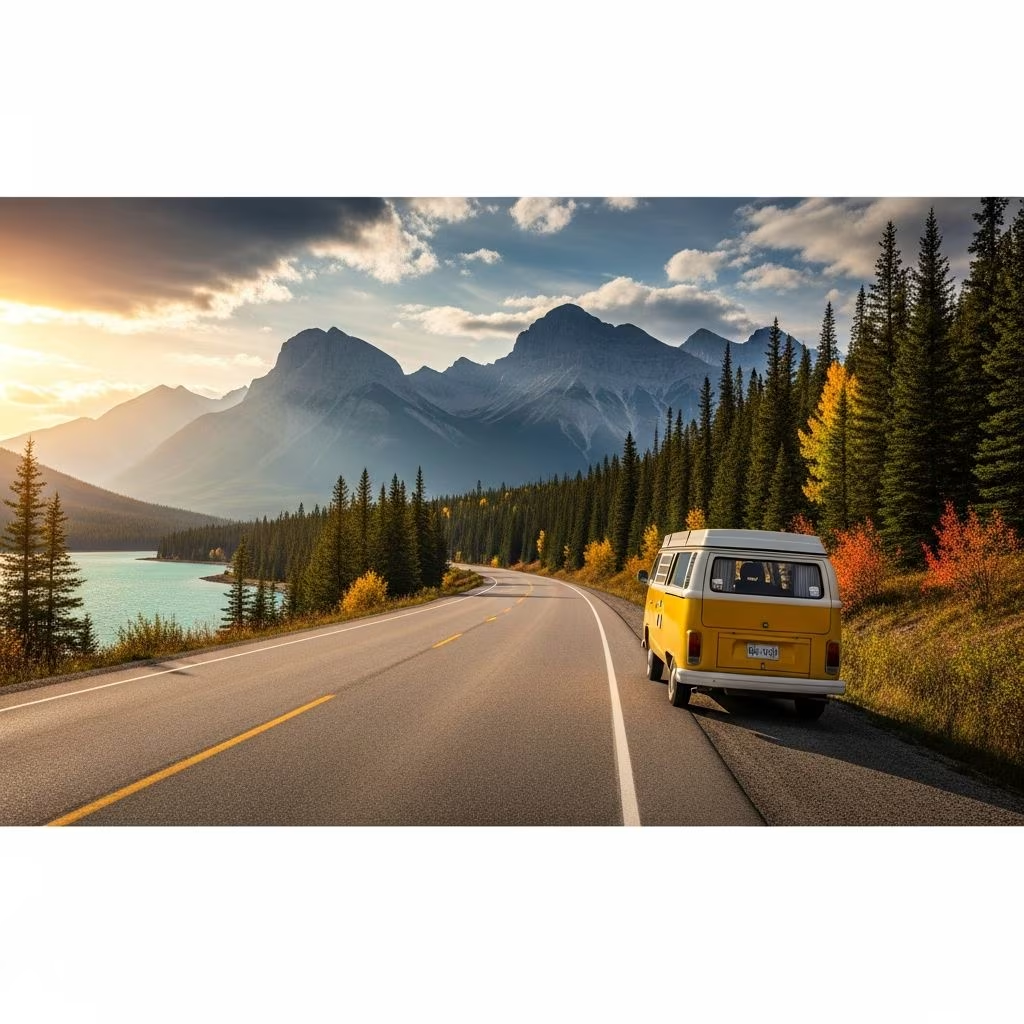
Embark on a journey through Canada’s diverse landscapes, from towering Rocky Mountains to rugged Atlantic shores. Road tripping offers flexibility to discover national parks, vibrant cities, and remote wilderness at your own pace. With proper planning, this adventure reveals the country’s raw beauty and cultural richness.
Canada spans over 9.9 million square kilometers, making road trips ideal for experiencing its variety. Drive through glacier-fed lakes in Alberta, vine-covered valleys in British Columbia, and colorful fishing villages in Newfoundland. Unlike flights, roads allow spontaneous stops at roadside diners, hiking trails, and viewpoints. Expect long distances—coast-to-coast driving takes about 100 hours without stops—but rewards include unparalleled scenery and freedom.
Families, couples, and solo travelers find value in customizable itineraries. Summer brings mild weather for outdoor activities, while winter offers snowy spectacles in the Rockies. Budget travelers save by camping, picnicking, and avoiding urban hotels.
Canada’s highways connect iconic destinations. Select routes based on time, season, and interests. Here’s a curated selection of standout paths.
Start in Vancouver, ferry to Vancouver Island for Tofino’s surf beaches, then head inland. Drive the Sea-to-Sky Highway to Whistler for mountain biking or skiing. Continue to Banff and Jasper National Parks via the Icefields Parkway, a 230 km engineering marvel with turquoise lakes like Lake Louise and Peyto. Loop back through Kananaskis for hiking amid peaks. Duration: 7-14 days. Best May-October.
For the ultimate challenge, trace Trans-Canada Highway 1 from Victoria, BC, to St. John’s, NL—over 7,800 km. Key segments include BC’s Okanagan wine region, Alberta prairies, Manitoba’s lakes, Ontario’s Bruce Peninsula with shipwrecks, Quebec’s maritime charm, and Newfoundland’s cliffs. Allow 3-8 weeks; ferries link islands. Highlights: Calgary Stampede, Toronto’s CN Tower, Cabot Trail in Nova Scotia.
| Segment | Distance | Drive Time | Top Stops |
|---|---|---|---|
| BC to Alberta | 900 km | 9-12 hrs | Kelowna, Revelstoke |
| Ontario | 1,500 km | 18 hrs | Tobermory, Toronto |
| Maritimes | 2,000 km | 25 hrs | Prince Edward Island, Cape Breton |
Focus on the Atlantic with a 1-2 week loop from Montreal. Drive Cabot Trail’s hairpin turns amid ocean vistas, visit PEI’s red sands, and explore Gros Morne National Park’s fjords. Ferries connect provinces efficiently.
Select a reliable vehicle suited to terrain. Sedans work for highways; SUVs or trucks handle gravel roads in parks. Rent from airports like Calgary or Vancouver for one-way options. Check tires, brakes, fluids, and battery before departure—remote areas lack services.
Electric vehicles? Charging stations grow along Trans-Canada, but plan with apps like PlugShare. Campers enable off-grid freedom, as in coast-to-coast overland trips.
Pack layers: Canada’s weather shifts rapidly. Waterproof jackets, sturdy boots, and insect repellent are non-negotiable. Bring a cooler for picnics, reusable water bottles, and a first-aid kit with bear spray for parks.
Minimize luggage—use compression bags. Tech: Offline maps (Gaia GPS), power banks, portable Wi-Fi for spotty service. Food: Nuts, jerky, fresh produce from roadside stands.
Obey speed limits (100-110 km/h highways); fines are steep. Watch for wildlife—brake for moose, deer. Drive daylight hours to avoid fatigue; switch drivers every 2 hours.
Border crossings? U.S. detours like Minneapolis to Toronto save time (21 vs 25 hours). Ferries require bookings; BC Ferries has summer waits. Apps: DriveBC for conditions, GasBuddy for fuel.
Mix camping in national parks (book via Parks Canada), motels, and lodges. Iconic stays: Fairmont Banff Springs, seaside B&Bs in Newfoundland. Campgrounds offer fire pits and stars; glamping sites provide comfort.
Estimate CAD 0.15-0.25/km for gas, plus campsites ($20-50/night), food ($50/day/person). Parks passes: Discovery Pass $150/vehicle/year. Total for 2-week Rockies: $2,000-4,000/couple.
| Category | Daily Cost (CAD) |
|---|---|
| Fuel | 50-100 |
| Food | 40-80 |
| Lodging | 30-150 |
| Attractions | 20-50 |
Share itinerary with contacts; carry satellite communicator in backcountry. Weather apps alert to blizzards, floods. Wildlife: Store food securely, travel in groups. Health: Pharmacies stock basics; hospitals in major towns.
Emergency: Dial 911. Roadside assistance via CAA. For families, child seats mandatory.
Peak summer (June-August): Crowds, book ahead. Shoulder (May, September): Fewer people, fall colors. Winter: Chains required, ice roads in north. Avoid holidays like Canada Day.
Quirky detours: World’s largest roadside attractions, local festivals.
Tread lightly: Stick to trails, pack out trash. Support local eateries, Indigenous-owned tours. Fuel-efficient driving reduces emissions.
Minimum 3 weeks; ideally 1-2 months for enjoyment.
No for main highways; yes for gravel park roads.
Vancouver or Calgary for west; Toronto for east.
Yes, many parks allow leashed pets; check rules.
$100-200/day including all expenses.
Road tripping Canada builds memories amid endless horizons. Plan meticulously, drive safely, and embrace detours for true discovery.
