

 Travel Essentials
 Travel Essentials

Comprehensive guide to Cyprus road trips featuring coastal routes, mountain villages, historical sites, and natural wonders for independent travelers.
 Travel Essentials
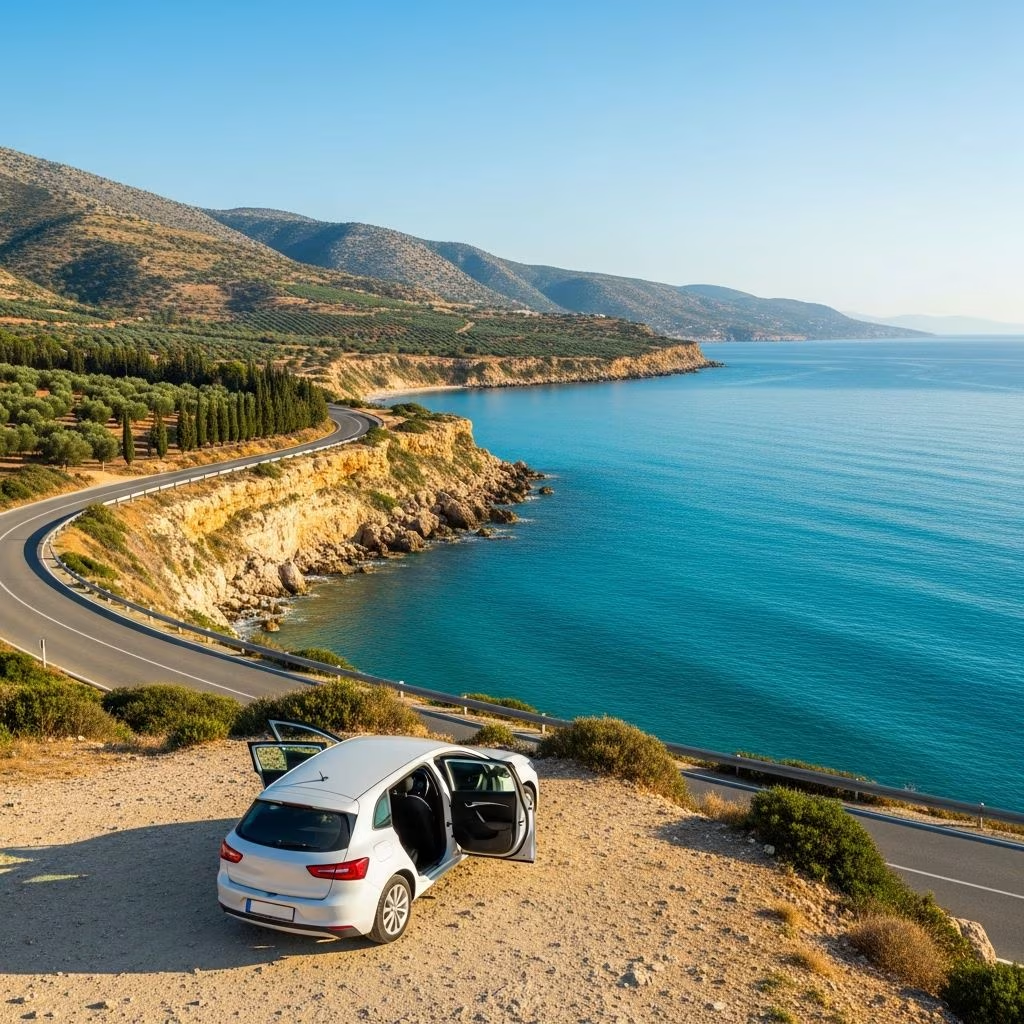
Cyprus, nestled in the eastern Mediterranean, offers one of Europe’s most rewarding road trip experiences. This island destination combines ancient history, natural landscapes, and coastal beauty in surprisingly compact distances, making it ideal for travelers seeking automotive adventures. The combination of Mediterranean coasts, scenic mountain regions, and charming traditional villages creates a diverse backdrop for exploration by car. Unlike larger European destinations requiring extensive driving times, Cyprus compresses extraordinary variety into manageable daily routes, allowing visitors to transition from pristine beaches to historic mountain settlements within hours.
The island’s geography presents unique advantages for self-guided travel. Cyprus spans approximately 225 kilometers from north to south, enabling travelers to accomplish meaningful ground coverage daily without exhausting journeys. The road infrastructure accommodates various vehicle types, from compact sedans to four-wheel-drive vehicles, depending on intended destinations and activity levels. The Mediterranean climate ensures year-round driving conditions, though summer months present intense heat and crowded tourist routes, while shoulder seasons offer optimal combinations of accessibility and tranquility.
Cyprus remains administratively divided by a United Nations Buffer Zone, affecting travel patterns and accessible regions. Most visitors concentrate exploration in the Republic of Cyprus territory, accessing the island via Larnaca International Airport, positioned conveniently for initiating southbound or westbound journeys. Understanding this geography shapes route planning and accommodation selection strategies.
The coastal perimeter provides an introductory route showcasing Cyprus’s maritime identity. Beginning from Larnaca, travelers can explore Finikoudes Beach, a sandy crescent combining relaxation accessibility with urban convenience. The southern coast route introduces increasingly dramatic seascapes, progressing toward limestone formations and hidden coves.
Between Larnaca and Limassol, the Governor’s Beach sector offers distinctive pale sand formations and shallow waters, appealing to visitors prioritizing tranquility over resort amenities. The Akrotiri Peninsula route introduces military-historical context alongside environmental significance, with coastal pathways revealing layered historical narratives spanning centuries.
The western coastline presents escalating visual drama. Aphrodite’s Rock (Petra tou Romiou) commands attention as a legendary landmark combining mythological resonance with tangible geological presence. The rock formation’s positioning near crystalline waters creates photographic opportunities and swimming access, though seasonal currents require attention to posted warnings.
The Lara Peninsula represents a frontier-like destination requiring elevated vehicle capability and moderate physical effort. This wild expanse hosts endangered sea turtle nesting grounds, creating conservation-tourism intersections. Accessible beaches extend seemingly endlessly, though four-wheel-drive vehicles provide superior access to optimal vantage points and parking arrangements.
The Troodos Mountains occupy Cyprus’s geographic and experiential center, offering dramatic contrasts to coastal environments. This highland region preserves traditional village culture, featuring white-stone architecture, narrow cobbled pathways, and centuries-old ecclesiastical structures. The elevation shift produces cooler temperatures, verdant vegetation, and atmospheric clarity rarely encountered at sea level.
The circuit encompasses multiple villages, each contributing distinctive characteristics. Kalopanayiotis captivates through its church architecture and riverside setting. Pedoulas maintains traditional settlements largely unchanged by contemporary development pressures. Pano Platres functions as an informal mountain hub, offering accommodation options and dining establishments catering to visitors. These interconnected communities host historic monasteries, including Kykkos Monastery, among Cyprus’s most significant religious sites.
Additional mountain routes introduce Laneia, Lofou, and Omodos, each revealing localized character and artisanal traditions. Wine production connects several communities, with cooperative establishments offering tastings and cultural insights into Cypriot viticulture practices. The mountain terrain generally accommodates standard vehicles, though winding roads require attentive driving and reward careful attention with panoramic vistas.
Cape Greco National Park represents one of Cyprus’s most accessible protected environments, combining dramatic geology with recreational diversity. Rocky peninsulas extend into crystalline waters, creating formations housing sea caves and marine habitats. The water clarity accommodates snorkeling and mask use, enabling observers to encounter colorful fish species and potentially sea turtles. Hiking and biking trails navigate clifftop terrain, providing activity options beyond aquatic engagement.
The Akamas Forest National Park encompasses more expansive territory, featuring gorges, valleys, and coastal cliffs accessible through multiple activity modalities. Beyond standard driving routes, the park accommodates ATV tours, hiking expeditions, and boat excursions. The Blue Lagoon represents the park’s most celebrated feature, distinguished by exceptional water clarity and distinctive turquoise coloration that frequently exceeds photographic expectations.
Avakas Gorge presents an intermediate challenge combining driving and hiking components. The approach route transitions from paved roads to unpaved surfaces, requiring vehicles with adequate ground clearance and driver confidence. The circular hiking route necessitates approximately two hours of hiking in each direction, traversing moderate terrain involving rock climbing and careful footwork on slippery stone surfaces. The reward encompasses dramatic geological formations and vistas justifying physical exertion.
Cyprus’s layered historical narratives emerge through archaeological sites and medieval structures distributed across the island. Limassol Castle represents medieval fortification architecture, originally constructed during Crusader-era occupation and subsequently modified through successive imperial administrations. The castle’s waterfront positioning provides orientation context and photographic settings.
Kolossi Castle extends historical experience beyond Limassol, presenting crusader fortification architecture and associations with historical wine production traditions. The structure’s preservation enables interior exploration and understanding of medieval defensive strategies and domestic arrangements.
Paphos Archaeological Park encompasses Greco-Roman period settlements, early Christian churches, and Byzantine structures, creating temporal depth accessible through pedestrian exploration. The Tombs of the Kings presents elaborate burial architecture reflecting Ptolemaic period cultural practices, with underground chambers and decorative elements preserved across millennia.
Nicosia (Lefkosia) functions as the island’s administrative center, offering urban historical experiences distinct from coastal and mountain environments. The medieval Venetian Walls circumscribe the Old Town, with fortified gates providing entry points and orientation markers. Multiple religious structures, ranging from mosques to churches, document the island’s cultural layering and religious diversity.
Day One: Larnaca arrival and immediate southern exploration, establishing accommodation and introducing coastal perspectives.
Day Two: Ayia Napa peninsula investigation, combining beach access with Blue Lagoon boat tours and sea cave exploration.
Day Three: Westbound progression through Limassol toward Paphos, incorporating Troodos Mountains detour or remaining on coastal trajectory based on preferences and time allocation.
Day Four: Paphos archaeological and historical immersion, combining site visitation with coastal pathway exploration.
Day Five: Avakas Gorge hiking combined with winery visitation, concluding itinerary with inland adventure experiences before return journeys.
Extended timeframes enable deeper regional engagement. Initial days emphasize Larnaca-based exploration, including Turkish Quarter visitation and salt lake investigation. Subsequent progression incorporates Nicosia’s divided city complexity and northern mountain castle exploration, including Buffavento and Kantara fortifications. The itinerary extends to Girne (Kyrenia) coastal settlements, returning southward through Troodos regions before concluding in Paphos with archaeological immersion and western peninsula exploration.
Vehicle selection influences accessible experiences. Standard sedans accommodate most major routes and attractions, providing fuel efficiency and comfortable city maneuvering. Four-wheel-drive vehicles enable remote beaches, unpaved mountain approaches, and frontier-like peninsula exploration. Rental agencies typically offer competitive rates and insurance options protecting renters against unexpected damage scenarios.
Seasonal timing affects driving conditions and tourist density. Summer months (July-August) combine intense heat and peak tourism, creating congestion at popular destinations and challenging driving conditions during afternoon hours. Shoulder seasons (April-May, September-October) offer optimal combinations of weather moderation and reduced crowding. Winter driving (November-February) rarely encounters snow at lower elevations but introduces occasional rainfall affecting road conditions.
Fuel availability poses minimal concerns, with petrol stations distributed throughout populated areas and along major highways. Payment methods typically include cash and credit cards, though informal establishments may prefer direct payment. Dining establishments cluster near tourist destinations and urban centers, though village restaurants offer authentic Cypriot cuisine at favorable price points.
Cyprus accommodations range from luxury resort facilities to family-operated guesthouses, enabling budget customization. Strategic accommodation placement optimizes daily driving routes. Coastal base camps facilitate multiple-day regional explorations, while mountain village guesthouses provide mountain circuit hubs. Nicosia urban positioning serves northern exploration effectively, though limited beach access requires specific interest justification.
International Driving Permit documentation, combined with home country licenses, satisfies rental agency requirements and legal compliance. Most agencies require minimum age thresholds (typically 25 years) and valid payment methods for insurance and deposit arrangements.
Most major attractions accommodate standard sedans successfully. Lara Peninsula and certain mountain routes benefit from elevated ground clearance, though experienced drivers navigate challenging terrain with appropriate caution and reduced speeds.
Snorkeling, sea cave exploration, and boat excursions frequently connect with driving routes, particularly at Blue Lagoon, Cape Greco, and western peninsula locations. Rental shops near major attractions provide equipment and guided tour arrangements.
The UN Buffer Zone restricts direct north-south transit in most sectors. Travelers accessing northern regions require specific border crossings, with Ledra Street in Nicosia providing pedestrian crossing opportunities. Vehicle travel crossing remains restricted for foreign-registered vehicles without special permits.
Cyprus road trips synthesize Mediterranean coastal beauty, mountain village authenticity, and historical depth into self-directed travel experiences. The island’s compact geography enables ambitious coverage within constrained timeframes, while diverse attractions accommodate varying interests and activity preferences. Whether prioritizing archaeological exploration, natural environment engagement, or simple coastal relaxation, Cyprus’s varied landscapes and accessible infrastructure support fulfilling automotive adventures.
