

 Travel Essentials
 Travel Essentials

Comprehensive travel guide covering Copenhagen, regional attractions, outdoor activities, and essential information for visiting Denmark.
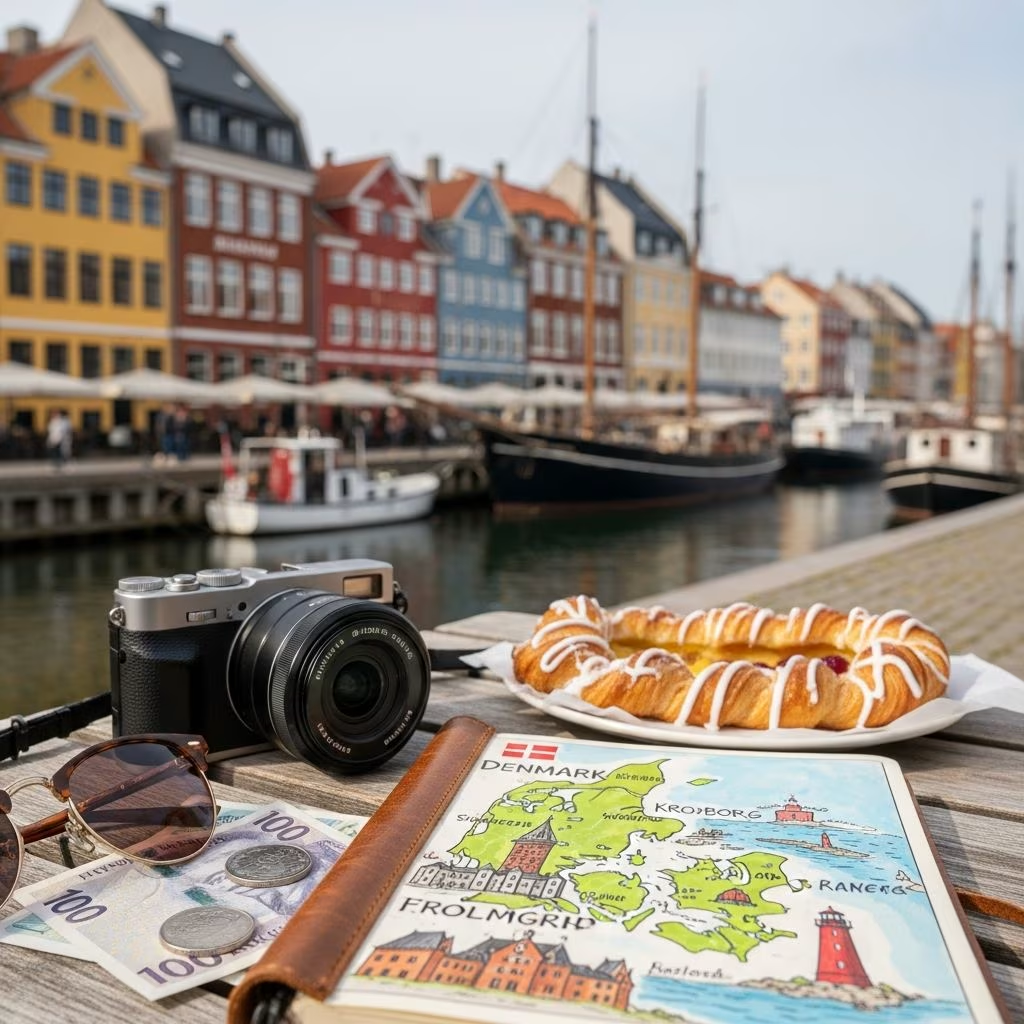 Travel Essentials
Denmark, a small Nordic nation with a population of approximately 5.9 million people, has become an increasingly popular destination for travelers seeking authentic European experiences combined with exceptional design, culinary innovation, and cultural richness. Despite its modest geographic size, Denmark punches above its weight in terms of cultural significance and tourist appeal, attracting visitors from around the globe who wish to experience the Danish concept of “hygge”—a uniquely Danish term describing coziness, warmth, and contentment.
Denmark serves as an ideal entry point to Scandinavian exploration. The nation’s strategic location makes it accessible from various European hubs, and its well-developed infrastructure ensures comfortable travel for visitors of all experience levels. Unlike some destinations that require extensive planning, Denmark welcomes spontaneous travelers while rewarding those who venture beyond typical tourist circuits. The country’s commitment to sustainability, progressive policies, and innovative culinary scene have positioned it as a leader in modern European tourism.
The Danish people consistently rank among the world’s happiest populations, and this contentment permeates every aspect of visitor experience. From the architectural beauty of Copenhagen to the peaceful countryside villages, Denmark offers a compelling blend of urban sophistication and rural tranquility.
Copenhagen, Denmark’s vibrant capital and largest city, demands at least three to four days of exploration to appreciate fully. This metropolitan hub seamlessly blends historic charm with contemporary innovation, making it one of Europe’s most dynamic capitals.
Copenhagen’s museum scene extends far beyond traditional history exhibitions. The Cisternerne stands as a unique venue located within an underground cistern, hosting innovative art exhibitions and cultural events. The Experimentarium provides interactive science experiences, making it particularly valuable for family travelers. For those interested in design and material culture, Copenhagen offers numerous specialized museums showcasing everything from Danish furniture design to applied arts.
Beyond major attractions, Copenhagen’s neighborhoods each possess distinct character. The Strøget pedestrian district offers exceptional shopping and people-watching opportunities. Freetown Christiania, established on a former military base, presents an alternative community experience with its own governance structure and vibrant artistic culture. The neighborhood of Vesterbro has transformed from a working-class district into a trendy area filled with vintage shops, hip cafes, and street art.
Denmark’s second-largest city, Aarhus, offers a compelling alternative to Copenhagen for travelers seeking authentic Danish culture without overwhelming crowds. Located on the Jutland Peninsula, this college town buzzes with youthful energy and creative industries.
The ARoS art museum ranks among Europe’s most impressive art institutions, featuring a striking rainbow rooftop platform that provides panoramic city views. Den Gamle By, an open-air museum, preserves 75 historic buildings spanning from the 18th to 20th centuries, offering visitors tangible connection to daily life across generations. Tivoli Friheden amusement park provides entertainment options, while Mols Bjerge National Park near Aarhus showcases an Ice Age landscape with Bronze Age burial mounds and excellent hiking trails.
Serving as Denmark’s capital from 960 to 1536, Roskilde maintains exceptional historical importance. The Viking Ship Museum houses five original 1,000-year-old vessels, representing remarkable archaeological achievements. The Roskilde Cathedral, designated as a UNESCO World Heritage Site, functions as Denmark’s primary royal cathedral with stunning 17th-century architecture. RAGNAROCK museum provides contemporary perspective on Danish culture through rock and pop music history.
Roskilde hosts significant cultural events, including the annual Roskilde Festival in June, recognized as one of Europe’s largest music festivals. The Lysfest light festival in January transforms the city with illuminated installations and artistic performances.
Odense, located on Funen Island, offers cultural experiences centered on its most famous resident, Hans Christian Andersen. The author’s childhood home provides biographical context and historical insights. Funen Village open-air museum complements this experience by showcasing traditional Danish rural life. Svendborg, another Funen town, features Naturama wildlife museum with interactive exhibits and the Forsorgs museum, housed in a former poorhouse and providing insight into Danish welfare history.
Denmark’s five national parks each provide distinct natural experiences and outdoor opportunities:
Several exceptional destinations lie within easy reach of Copenhagen. Frederiksborg Castle in Hillerød, often called the “Danish Versailles,” showcases Renaissance architecture and royal Danish heritage. The Louisiana Art Museum in Humlebæk offers world-class contemporary art exhibitions set within landscaped coastal grounds. Kronborg Castle in Helsingør, internationally recognized as the setting for Shakespeare’s Hamlet, combines historical significance with architectural grandeur.
Dyrehaven, or The Deer Park, constructed in 1669 as royal hunting grounds, spans over 11 kilometers and now functions as a UNESCO World Heritage Site. Visitors can cycle, hike, or horseback ride among over 2,000 deer inhabiting the park. The Hermitage, a royal hunting lodge from the 1730s, offers guided tours providing historical context.
Denmark’s culinary reputation extends far beyond stereotypical Nordic cuisine. The New Nordic Cuisine movement, which emphasizes local, seasonal ingredients and traditional preparation methods, has positioned Denmark among the world’s gastronomic destinations. Copenhagen particularly has become a hotbed of innovative dining, with numerous Michelin-starred restaurants showcasing Danish creativity.
Beyond fine dining, Copenhagen offers exceptional coffee culture, casual eateries serving traditional smørrebrød (open-faced sandwiches), and diverse international cuisine reflecting the city’s multicultural demographics. Local food markets provide opportunities to sample Danish cheeses, fresh produce, and artisanal products.
Denmark boasts exceptional public transportation infrastructure. Trains connect major cities efficiently, while Copenhagen’s metro and bus systems provide convenient urban mobility. Bicycles represent the most iconic transportation method, with dedicated cycling lanes throughout cities and rental services widely available. Car rentals offer flexibility for regional exploration, though driving in Copenhagen itself presents challenges due to traffic congestion and limited parking.
Denmark offers diverse lodging choices across price ranges. Copenhagen provides luxury hotels, boutique properties, budget hostels, and Airbnb accommodations. Regional destinations offer similar variety, often at reduced rates. Booking accommodations in advance, particularly during summer months and around major festivals, ensures better selection and pricing.
Denmark uses the Danish Krone (DKK). As a Nordic country, Denmark is relatively expensive compared to many European destinations, though visitors traveling during off-season or dining at non-touristy establishments can manage reasonable budgets. Museum admissions typically range from 100-200 DKK, while restaurant meals vary significantly based on establishment type.
Unlike some countries, tipping in Denmark is neither mandatory nor expected. Service charges are typically included in restaurant bills, and staff receive fair wages independent of tips. While visitors may tip for exceptional service, Danes do not consider it obligatory or culturally significant.
Understanding Danish culture enhances travel experiences significantly. The concept of hygge permeates Danish life, representing more than simple coziness—it embodies a philosophical approach emphasizing togetherness, comfort, and life enjoyment. Danish design principles, emphasizing minimalism, functionality, and aesthetic beauty, manifest throughout architecture, furnishings, and public spaces.
The Danish people value directness in communication, punctuality, and environmental consciousness. Respect for personal space and quiet demeanor in public transportation characterizes social norms. Photography etiquette, particularly in alternative communities like Christiania, warrants sensitivity and respect for residents’ privacy preferences.
Summer months (June-August) offer extended daylight, warm weather, and fully operational attractions, but attract peak tourist crowds. Spring (April-May) and fall (September-October) provide pleasant weather with fewer visitors. Winter (November-March) features shorter days and cold temperatures, yet offers atmospheric experiences and holiday celebrations. Christmas markets and New Year festivities make winter visits increasingly popular.
Late spring through early fall (May-September) offers optimal weather and extended daylight. However, each season provides distinct advantages, from summer festivals to winter holiday markets.
A minimum of five to seven days allows adequate time for Copenhagen exploration and at least one regional destination. Extended visits enable deeper engagement with multiple regions and natural areas.
Denmark ranks among Europe’s more expensive destinations. Budget accommodation and dining at local establishments rather than tourist areas can reduce expenses significantly.
Public transportation and bicycles suffice for most travelers. Car rentals become valuable only for extensive regional exploration beyond major city centers.
Danish is the official language. However, English is widely spoken, particularly among younger generations and in tourist areas, making communication straightforward for English-speaking visitors.
