


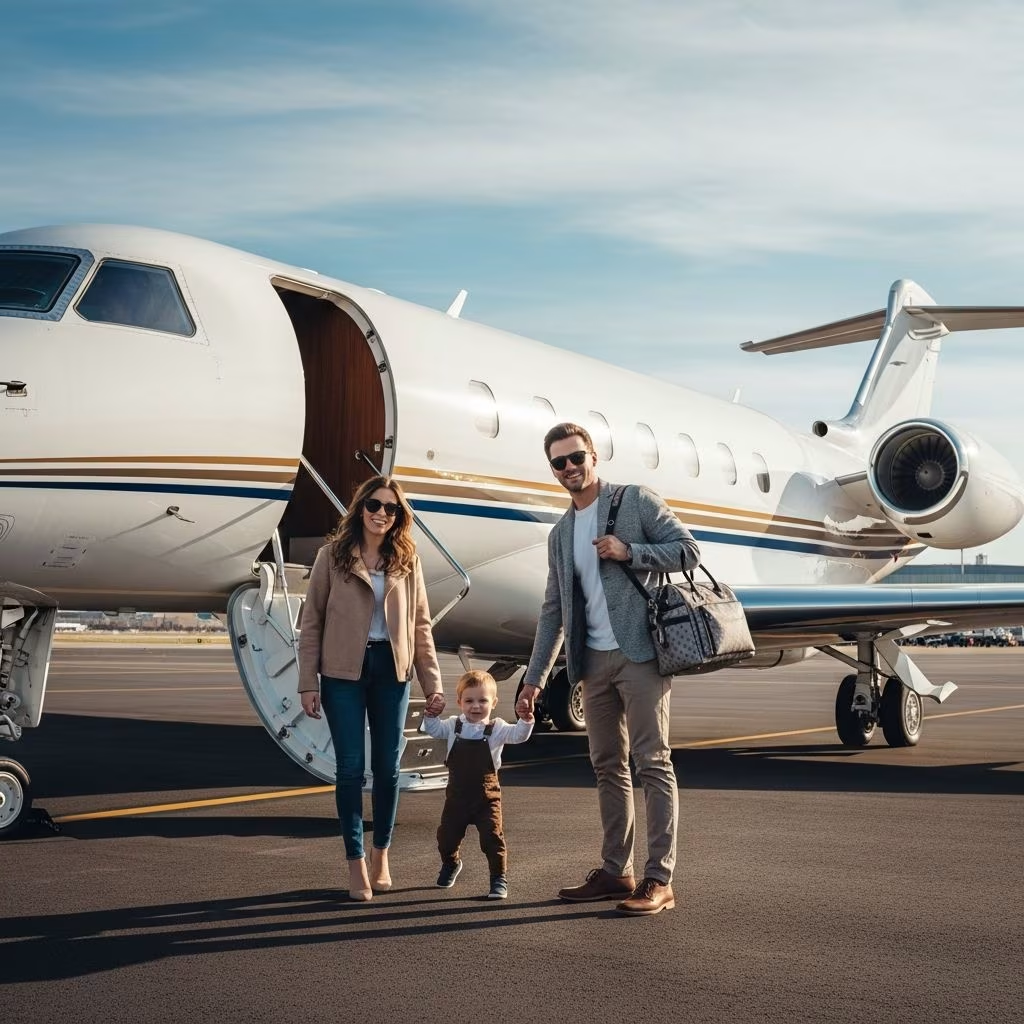
Traveling the world with a young child might sound daunting, but with the right preparation and mindset, it can transform into one of the most rewarding experiences for your family. As parents who have crisscrossed continents with our toddler on numerous long-haul flights, we’ve honed a set of practical strategies that turn potential chaos into joyful exploration. This guide dives deep into every aspect of family travel, helping you plan, pack, fly, and thrive abroad with little ones in tow.
Building the Foundation: Why Travel Early with Toddlers
Starting family adventures when children are still toddlers offers unique advantages. Young kids adapt quickly to new environments without the rigid expectations older children might have. They haven’t yet developed deep-seated fears of the unknown, making them surprisingly resilient explorers.
According to the World Health Organization, early exposure to diverse settings can boost cognitive development and emotional resilience in children under five.1 Our own journeys—from bustling Asian markets to serene European countrysides—have shown how toddlers blossom when immersed in culture, picking up languages through osmosis and forming memories that last a lifetime.
However, success hinges on proactive planning. Begin by aligning travel with your child’s natural rhythms and family dynamics to ensure everyone returns refreshed rather than exhausted.
Mastering the Pre-Flight Preparation Phase
The weeks leading up to departure are crucial for setting a positive tone. Start by involving your toddler in the excitement: show them pictures of your destination, practice simple phrases, and read books about airplanes and faraway places. This builds anticipation and reduces anxiety.
Documentation and Logistics Essentials
- Passports and Visas: Apply months in advance. Children’s passports need parental consent forms if traveling with one parent.
- Travel Insurance: Opt for policies covering medical evacuations and trip cancellations, vital for families per U.S. State Department guidelines.2
- Flight Booking: Choose airlines with family perks like bassinet seats or priority boarding. Aim for red-eye flights to leverage sleep schedules.
Create a digital folder with scans of all documents, accessible offline via apps like Google Drive. We’ve avoided countless headaches this way during unexpected delays.
Health and Safety Checklists
Consult your pediatrician 4-6 weeks prior for destination-specific vaccines and medications. Pack a robust health kit including fever reducers, motion sickness remedies, and electrolyte packets. The Centers for Disease Control and Prevention emphasizes hand sanitizers and masks for crowded airports.3
| Item | Quantity | Purpose |
|---|---|---|
| Children’s Ibuprofen | 2 bottles | Fever/pain relief |
| Thermometer | 1 | Temperature checks |
| Band-Aids & Antiseptic | Ample | Minor injuries |
| Prescription Meds | Double dose | Unexpected extensions |
Packing Like a Pro for Toddler Adventures
Overpacking leads to stress; underpacking spells disaster. Focus on versatile, lightweight items that serve multiple purposes. Use packing cubes to organize by category: clothes, toiletries, snacks, and entertainment.
Clothing and Gear Strategy
Rule of thumb: one outfit per day plus two extras. Prioritize mix-and-match pieces in neutral colors that layer for varying climates. Skip bulky strollers for baby carriers—ergonomic ones like the Ergobaby distribute weight evenly for long walks.
- Must-haves: Quick-dry underwear, merino wool base layers, waterproof jackets.
- Skip: Toys with small parts, excessive diapers (buy locally).
For flights over 8 hours, pack a ‘survival bag’ in your carry-on: changes of clothes for everyone, spill-proof snacks, and noise-canceling headphones sized for kids.
Snack and Nutrition Hacks
Airline food often disappoints picky eaters. Stock pouches, crackers, fruit bars, and lollipops for ear pressure. Research local supermarkets upon arrival to restock—international brands like Gerber are widely available.
Conquering Long-Haul Flights with Toddlers
The flight is the ultimate test. Our strategy: Treat it like an extended playdate in the sky. Pre-board to settle in calmly, then dim lights and initiate bedtime routines.
In-Flight Entertainment and Comfort
Download apps like YouTube Kids and Netflix shows beforehand. Bring mess-free activities: sticker books, magnetic drawing boards, and pipe cleaners for creative fun. Window seats provide natural distractions with cloud-gazing.
Pro tip: Nurse or bottle-feed during takeoff and landing to ease ear popping. Walk the aisles periodically to burn energy, and use airline bassinets for under-2s if available.
Sleep Optimization Techniques
Mimic home sleep conditions with black-out eye masks, white noise apps, and familiar loveys. We’ve achieved 6+ hours of sleep on 12-hour flights by syncing with time zones pre-departure—gradually shifting bedtimes.
Navigating Airports and Layovers Efficiently
Airports can overwhelm little ones. Use family lanes at security, and scout play areas via apps like Airport Play. During layovers, prioritize quiet gates or hotel day rooms over chaotic food courts.
- Amsterdam Schiphol: Free kids’ zones with slides.
- Singapore Changi: Butterfly garden and movie theaters.
For multi-leg trips, book connections with 3+ hours buffer to accommodate delays.
Destination-Specific Family Strategies
Every locale demands tailored approaches. In Europe, leverage efficient trains and free museum entry for under-4s. Asia shines with street food adventures and baby-friendly temples.
Accommodation Choices
Favor Airbnb apartments over hotels for kitchens and space. Look for ‘family rooms’ with cribs and soundproofing. Platforms like Booking.com filter for high chairs and playground proximity.
Daily Routines Abroad
Maintain loose schedules: morning outings when crowds are thin, nap times in shaded parks, evenings for relaxed dinners. Embrace siestas in hot climates—toddlers thrive on this rhythm.
Overcoming Common Travel Challenges
Jet lag hits hard; combat it with light exposure and melatonin (consult doctor). Meltdowns? Validate feelings, then distract with games. Digestive issues? Probiotics and hydration are lifesavers.
Budgeting tip: Use points for flights, eat local, and skip tourist traps. Apps like Rome2Rio optimize transport costs.
Long-Term Benefits of Toddler Travel
Beyond immediate joys, these trips foster adaptability, cultural empathy, and family bonds. Studies from the American Academy of Pediatrics link travel to enhanced social skills.4 Our toddler now greets strangers in three languages and savors global cuisines.
Frequently Asked Questions
Is it safe to fly with a toddler internationally?
Yes, with proper precautions. Airlines require children under 2 to be lap-held or in approved seats; FAA data shows flying safer than driving.5
How do I handle time zone changes?
Pre-adjust schedules by 1 hour daily. Upon arrival, stay awake until local bedtime.
What if my child gets sick abroad?
Carry comprehensive insurance and know nearby clinics via apps like PatientWiki.
Best age to start international travel?
6-18 months: Mobile but not yet willful.
Budget tips for family trips?
Off-peak travel, credit card rewards, homestays.
References
- Early Childhood Development — World Health Organization. 2023-05-15. https://www.who.int/health-topics/early-childhood-development
- Travel Insurance Recommendations — U.S. Department of State. 2025-01-10. https://travel.state.gov/content/travel/en/international-travel/before-you-go/your-health-abroad.html
- Travel Health Notices — Centers for Disease Control and Prevention. 2026-03-20. https://wwwnc.cdc.gov/travel
- Travel and Child Development — American Academy of Pediatrics. 2024-07-01. https://publications.aap.org/pediatrics/article/154/1/e2024060580/197013
- Aviation Safety Statistics — Federal Aviation Administration. 2025-11-12. https://www.faa.gov/data_research/safety

