

 Travel Essentials
 Travel Essentials

Uncover the wonders of Uluru-Kata Tjuta National Park: ancient landscapes, Anangu heritage, top hikes, best times to visit, and essential planning advice for an unforgettable outback adventure.
 Travel Essentials
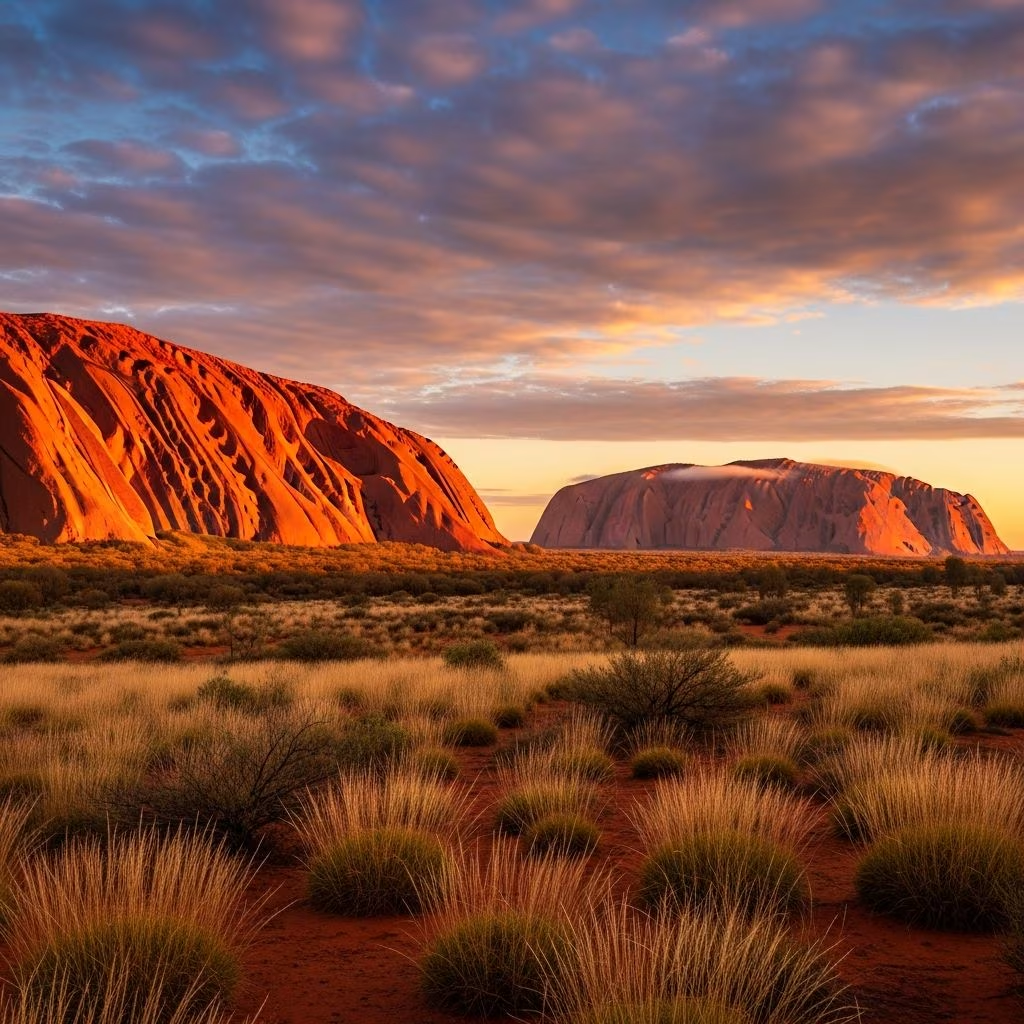
The vast desert landscape of Australia’s Red Centre cradles two of the world’s most striking geological wonders: the monolithic Uluru and the domed cluster of Kata Tjuta. Rising dramatically from the flat plains, these sacred sites in Uluru-Kata Tjuta National Park draw millions to witness their shifting colors at dawn and dusk while immersing in profound cultural narratives tied to the Anangu people.
Uluru, often called Ayers Rock, stands 348 meters tall and spans 3.6 kilometers around its base, formed over 500 million years ago from sandstone layers thrust upward and eroded over eons. Nearby, Kata Tjuta—meaning ‘many heads’ in the local Pitjantjatjara language—comprises 36 colossal domes stretching more than 20 kilometers, showcasing a different erosional story with its conglomerate rock composition.
Beyond geology, this 1,300-square-kilometer park holds immense spiritual value for the Anangu Traditional Owners. Recognized as a UNESCO World Heritage Area for both natural and cultural merits, it embodies Tjukurpa—Anangu law, stories, and connection to country. Visitors are urged to respect closures, stay on paths, and avoid climbing, honoring Anangu wishes since the 1985 land handback. The park’s biodiversity thrives too, supporting over 400 plant species, 20 native mammals, 200 birds, and 70 reptiles adapted to arid conditions.
Reaching this remote gem requires forethought. Most fly into Ayers Rock Airport (AYQ) near Yulara, the sole accommodation hub 20 minutes from park gates—no camping or stays inside the park. Rental cars offer flexibility for self-exploration, while shuttles or tours suit those preferring guidance.
A Parks Pass is mandatory: $38 AUD for three days (extendable to five for free), bought online or at entry, scanned per visit. Park hours align with sunrise to sunset, varying seasonally—check apps or signs. Pack ample water (at least one liter per hour hiking), sunscreen, hats, and sturdy shoes; temperatures soar above 40°C in summer (December-February) but dip to 20s in winter (June-August), the ideal visiting window.
Uluru’s base reveals its grandeur up close. The full 10km Base Walk circles the rock in 3-4 hours on flat terrain, passing sacred sites, caves with ancient art, and the Mutitjulu Waterhole where seasonal cascades stain the rock purple. Start from Mala or Kuniya carparks; clockwise from Mala is popular.
Shorter options abound for all fitness levels:
These shaded paths showcase changing light on the rock’s iron-rich surface, glowing from ochre to fiery red.
Just 50km west, Kata Tjuta captivates with its intimate valleys. The signature Valley of the Winds (7.4km loop, 3-4 hours, moderate): Winds between towering domes to lookouts like Karingana (2.8km one-way) and the full circuit’s dune vantage. Steep sections challenge but reward with solitude and scale.
Easier: Walpa Gorge Walk (2.6km return, 1 hour): Follows a sandy path flanked by sheer walls to a swampy amphitheater, vibrant post-rain. Both offer dune-top sunset views rivaling Uluru’s.
| Trail | Distance | Duration | Difficulty | Highlights |
|---|---|---|---|---|
| Uluru Base Walk | 10km loop | 3-4 hrs | Easy | Cultural sites, waterhole |
| Mala Walk | 2km return | 1.5 hrs | Easy | Rock art, ranger talks |
| Valley of the Winds | 7.4km loop | 3-4 hrs | Moderate | Dome vistas, lookouts |
| Walpa Gorge | 2.6km return | 1 hr | Easy | Gorge walls, serenity |
No visit skips the light shows. Uluru’s Sunrise Viewing Area frames the rock’s silhouette igniting gold to crimson; arrive 30 minutes early. Kata Tjuta’s dune spot or sunrise platform offers expansive dome panoramas. Sunset mirrors this: Uluru’s viewing area packs crowds, but Kata Tjuta’s quieter dune delivers intimacy. Pro tip: Combine with walks for fewer people.
The award-winning Cultural Centre, near park entry, is your portal to Anangu worldviews. Exhibits detail Tjukurpa creation stories, bush foods, and art; watch painters at work and browse authentic souvenirs. Free programs include bush tucker demos and performances—check schedules daily (8am-5pm). It grounds your trip in respect and understanding.
Add Kuniya Walk, Walpa Gorge, and ranger talks for depth.
$38 AUD for 3 days (adults), extendable to 5 free.
No—permanently closed since 2019 to honor Anangu beliefs.
Winter (May-Sep) for cooler temps; avoid summer heat.
Yes, free rangers plus paid options with cultural focus.
Yulara Resort: Options from budget to 5-star.
Park rangers highlight species like red kangaroos, thorny devils, and spinifex hopping-mice. Over 200 birds include wedge-tailed eagles; night drives spot bilbies. Plants like desert oaks and grevilleas sustain life—learn via centre displays.
This synthesis draws from official and expert guides, emphasizing sustainable tourism.
