

 Travel Essentials
 Travel Essentials

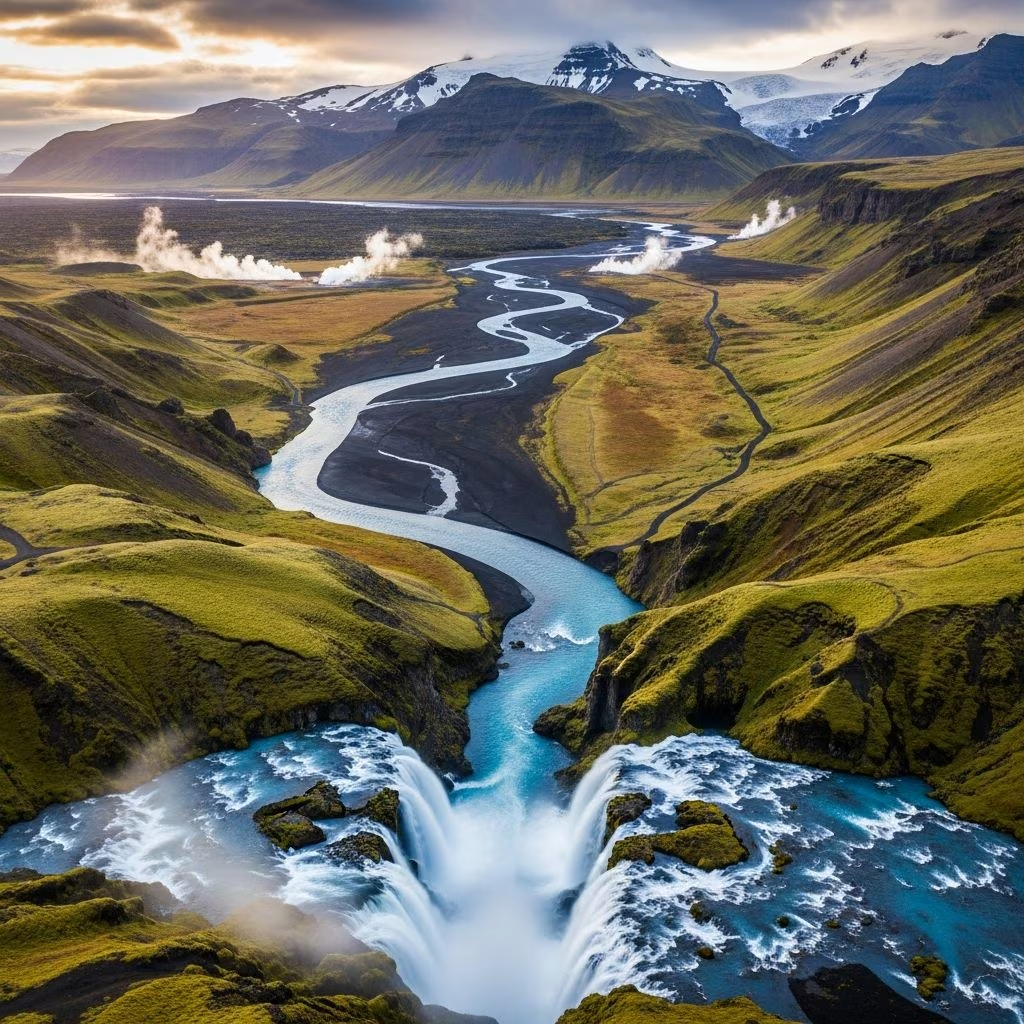
Explore Iceland's most stunning natural attractions including waterfalls, geysers, glaciers, and geothermal features that showcase the island's unique geological wonders.
 Travel Essentials
Iceland stands as one of Earth’s most geologically active and visually dramatic regions, shaped by millennia of volcanic activity, glacial erosion, and tectonic movement. The island’s landscape encompasses a remarkable diversity of natural phenomena—from thundering waterfalls plunging into deep canyons to geothermal fields where hot springs bubble from the earth and massive ice caps dominate the horizon. For travelers seeking authentic encounters with nature’s power and beauty, Iceland offers unparalleled opportunities to witness geological processes in real-time.
The Golden Circle represents Iceland’s most accessible introduction to the country’s natural wonders, a roughly 300-kilometer loop that can be completed as a day excursion from Reykjavik. This legendary route connects three major attractions that exemplify Iceland’s geological significance and natural grandeur, making it an essential starting point for visitors exploring the island’s environmental treasures.
Approximately 45 minutes northeast of Reykjavik, Thingvellir National Park commands attention as both a geological marvel and historical landmark of immense importance. The site occupies a unique position along the Mid-Atlantic Ridge, where the North American and Eurasian tectonic plates converge and gradually separate. This geological phenomenon creates visible rift valleys and distinctive fault lines that visitors can observe while exploring the park’s extensive trail system.
Beyond its geological significance, Thingvellir holds profound cultural meaning for Iceland. The park shelters Althingi, the world’s oldest existing parliament, founded in 930 CE when Icelandic chieftains gathered at this location to establish governance structures. Today, visitors can walk through this historical landscape while appreciating both its natural beauty and cultural heritage. The combination of dramatic volcanic terrain, crystalline waters of Thingvallavatn lake, and verdant lowlands creates memorable hiking opportunities throughout the 29-square-kilometer protected area.
The name Gullfoss translates to “golden falls,” a reference to the radiant quality of sunlight reflecting off its turbulent waters. This spectacular two-tiered waterfall drops 105 feet through two distinct cascades into the deep Gullfossgjúfur canyon, creating one of Iceland’s most photographed natural features. The sheer volume of water—estimated at 140 cubic meters per second during summer—produces a powerful roar audible from considerable distances and generates enormous plumes of mist on calm days.
Gullfoss occupies a practical position along the Golden Circle route, featuring readily accessible parking facilities, interpretive signage, and visitor amenities. Multiple viewing platforms at varying elevations provide different perspectives of the falls, from intimate close-range views where mist soaks visitors to distant panoramic vistas capturing the full scale of this natural spectacle. The surrounding Hvítá River valley offers additional exploration opportunities for those seeking to extend their visit beyond the main waterfall viewpoints.
Situated within the geothermal Haukadalur Valley, the Geysir geothermal area represents one of Iceland’s most geologically active zones, where subterranean heat transforms water into spectacular eruptions. The region contains numerous geysers and hot springs, with Strokkur serving as the primary attraction due to its reliable and frequent eruptions occurring approximately every 5–10 minutes, propelling water to heights of 20 meters or more.
The Great Geysir, which lends its name to all similar geological features worldwide, erupts less frequently than Strokkur but maintains significant cultural importance as the original inspiration for the term “geyser.” Visitors can safely approach the geothermal features via established boardwalks, observing the colorful mineral-rich pools, steaming vents, and the constantly active Strokkur as it builds pressure and releases its thermal payload. The geothermal landscape extends throughout the valley, revealing multiple smaller hot springs and heated ground that create an otherworldly environment.
Iceland’s reputation as the waterfall capital of the world extends far beyond the Golden Circle route. The country’s abundant precipitation, combined with steep terrain and glacial meltwater sources, creates numerous spectacular cascades throughout the landscape.
Seljalandsfoss distinguishes itself through a unique feature that sets it apart from most other Icelandic waterfalls—visitors can walk behind the falling water, experiencing the cascade from within its own mist and creating distinctive photographic opportunities. Located in southern Iceland relatively close to Skógafoss, Seljalandsfoss remains easily accessible despite moderate crowds, with well-maintained parking and approach trails. The approximately 65-meter waterfall drops from a hanging valley into a churning plunge pool below, with the accessible cave-like passage behind the water creating memorable encounters with this natural feature.
Skógafoss represents another essential waterfall experience in southern Iceland, featuring an impressive 60-meter drop characterized by tremendous force and volume. The waterfall’s misty spray frequently creates rainbows visible from various vantage points, particularly during sunny weather when light refracts through the water droplets. A short hiking trail provides access to viewpoints at multiple elevations, and adventurous visitors can access areas above the falls through more demanding scrambling terrain that reveals the Skóga River’s full course through the landscape.
Iceland’s waterfall catalog extends to numerous other remarkable sites, each with distinct characteristics. Dettifoss in northern Iceland stands as Europe’s most powerful waterfall by volume, creating a visceral experience of nature’s raw force. Hraunfossar cascades emerge from lava fields where water flows beneath the surface before erupting at multiple points, creating a series of picturesque falls. Godafoss, named “Waterfall of the Gods,” occupies a dramatic location in northern Iceland accessible from the city of Akureyri, serving as both a natural wonder and cultural landmark.
Iceland’s glacier systems represent the largest ice masses in the Northern Hemisphere outside the Arctic regions, covering approximately 11% of the island’s surface. These frozen landscapes continuously evolve through melting, advancing, and retreating cycles that reshape the terrain beneath them.
Vatnajökull National Park encompasses Europe’s most extensive national park territory, protecting an area larger than many European nations. The park contains Vatnajökull Glacier, Europe’s largest glacier by volume, along with numerous outlet glaciers, geothermal features, and distinctive landscapes shaped by glacial and volcanic processes. Within the park boundaries, visitors encounter diverse environments ranging from ice-carved valleys to volcanic plains and geothermal hot springs.
Located within Vatnajökull National Park, Skaftafell Nature Reserve showcases remarkable environmental diversity within a relatively compact area. The reserve features verdant valleys supporting birch forests and grazing lands, black volcanic sand plains, and cascading glacial streams beneath towering ice formations. The iconic Svartifoss Waterfall at Skaftafell drops 20 meters over distinctive black basalt columns, creating a visually striking scene that has influenced Icelandic architecture, most notably inspiring the design of Hallgrímskirkja church in Reykjavik.
Multiple hiking trails originate from Skaftafell, ranging from leisurely valley walks to challenging routes ascending onto Vatnajökull Glacier itself. These paths provide opportunities for experiencing the landscape’s environmental diversity while maintaining varying difficulty levels to accommodate different fitness and experience levels.
Jökulsárlón Glacier Lagoon represents one of Iceland’s most photographed locations, where icebergs calved from Breiðamerkurjökull Glacier float in a proglacial lake before washing onto adjacent black sand beaches. The lagoon’s size and ice volume have increased substantially over recent decades as the glacier continues retreating, expanding the water body and creating more dramatic visual landscapes. Visitors can observe the glacial landscape from shoreline vantage points or take guided boat tours to navigate among the floating ice formations.
Iceland’s position above a geothermal hotspot creates numerous opportunities for experiencing heated waters and unique thermal landscapes. Beyond traditional tourist facilities, visitors can discover more intimate natural hot springs and geothermal areas.
The Blue Lagoon, located relatively close to Keflavik Airport near Reykjavik, has become one of Iceland’s most visited attractions despite its partially engineered nature. The lagoon fills with geothermally heated wastewater from a nearby power plant, creating a milky blue pool surrounded by dramatic dark lava fields. While not entirely natural, the Blue Lagoon represents the successful integration of industrial facilities with recreational opportunities, allowing visitors to bathe in mineral-rich waters while appreciating the Eldvorp geothermic craters that provide the heat source.
Reykjadalur, meaning “hot river,” offers a more natural geothermal experience accessible through a moderate-level hiking trail. The approximately one-hour journey takes visitors through varied terrain where steam rises from volcanic earth and hot springs feed a naturally heated stream. At the trail’s end, visitors discover a free natural hot spring where they can bathe surrounded by pristine Icelandic landscape, creating an authentic experience of the country’s geothermal character without commercial infrastructure.
Iceland’s northern regions contain distinctive landscapes and natural phenomena that differ from the more-visited southern areas, offering explorers a sense of remoteness and discovery.
The city of Akureyri, known as the capital of northern Iceland, sits at the base of Eyjafjörður fjord and provides an excellent base for exploring the region’s natural attractions. The surrounding fjord system features dramatic mountain scenery, accessible hiking terrain, and numerous small fishing villages. Whale-watching excursions operate from Akureyri during summer months, providing opportunities to observe marine life in the rich northern waters.
Hornstrandir Nature Reserve exemplifies remote Icelandic wilderness, located in the northwestern corner of the country and accessible only by boat from Ísafjörður. The reserve encompasses uninhabited terrain that has remained sparsely populated since the 1950s, featuring towering sea cliffs reaching heights of 1,640 feet, carpeted in green vegetation that creates dramatic contrasts against surrounding seas. Wildlife viewing opportunities include encounters with elusive Arctic foxes, seabirds, and occasional marine mammals. The reserve’s isolation and challenging access preserve its pristine character, making it destination primarily for dedicated wilderness travelers.
Located in northern Iceland, Ásbyrgi Canyon presents a distinctive horseshoe-shaped formation created by glacial and water erosion, though Norse mythology attributes its creation to Sleipnir, Odin’s eight-legged horse. The canyon stretches 3.5 kilometers in length and approximately 1 kilometer in width, with cliffs towering up to 100 meters. Inside the canyon walls, a rare birch forest grows among lush vegetation, providing habitat for local flora and fauna.
Beyond waterfalls and geysers, Iceland’s landscape features distinctive peaks and coastal formations that contribute to its visual drama.
Rising 463 meters on the Snæfellsnes Peninsula near Grundarfjörður, Kirkjufell stands as Iceland’s most recognizable and photographed mountain. The distinctive conical peak achieves iconic status through its perfect symmetry, prominent visibility from multiple angles, and proximity to Kirkjufellsfoss waterfall, which creates an ideal compositional foreground. The mountain gained additional cultural prominence through appearances in popular television productions, attracting photographers seeking to recreate iconic imagery.
Kirkjufellsfoss Waterfall, situated directly below the mountain, combines water, rock formations, and mountain backdrop into single photogenic composition. During winter months, this location becomes particularly sought-after for Northern Lights photography, as the aurora overhead complements the waterfall and mountain silhouette.
The Snæfellsnes Peninsula west of Reykjavik showcases remarkable environmental diversity within a relatively compact region, ranging from mountains and glaciers to coastal black sand beaches and fishing villages. The peninsula supports significant cultural and literary importance within Icelandic heritage, inspiring local authors and remaining central to Icelandic identity.
Summer months from June through August provide optimal conditions with extended daylight, accessible trails, and comfortable temperatures. However, this peak season brings significant crowds to popular locations. Shoulder seasons (May-June and September) offer fewer visitors while maintaining generally good weather. Winter presents challenges through snow and ice but rewards visitors with Northern Lights opportunities and unique winter landscapes.
Most major attractions feature established viewing areas and safety infrastructure protecting visitors from dangerous zones. However, Iceland’s natural features remain inherently powerful, and visitors should respect all warning signs and barriers. Approaching areas without proper precautions risks serious injury or death from falling rocks, thermal burns, or slipping on wet surfaces.
Visiting during shoulder seasons reduces crowds significantly compared to peak summer. Exploring less-famous attractions beyond the Golden Circle provides more solitude. Northern regions and western areas attract fewer visitors than the popular south coast route. Early morning departures to major attractions provide temporary respite from peak crowd times.
