

 Travel Essentials
 Travel Essentials

Explore Kenya's best driving routes from wildlife reserves to mountain vistas, with practical tips for planning your ultimate African road trip.
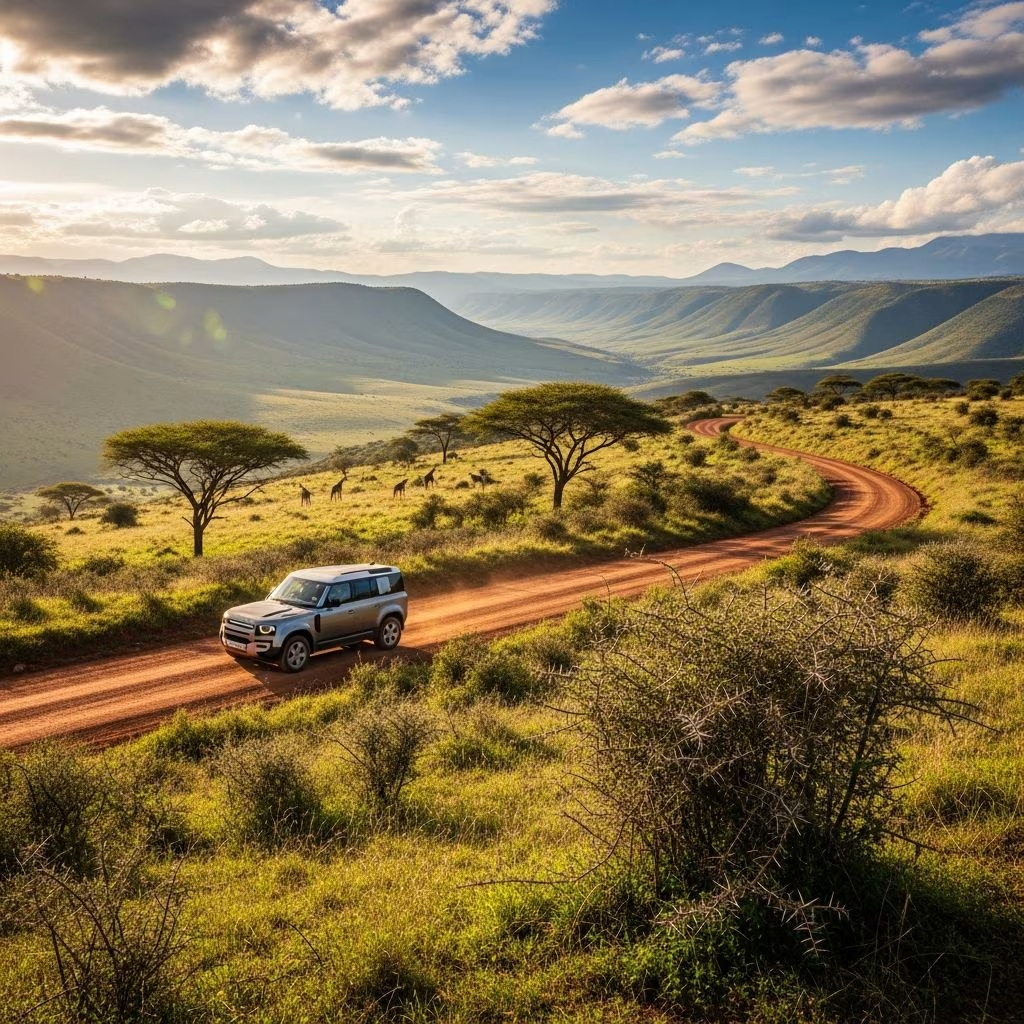 Travel Essentials
Kenya’s expansive landscapes offer some of Africa’s most rewarding driving experiences, where every journey combines natural wonder with cultural discovery. From the iconic savannas to the dramatic rift valleys and coastal highways, self-drive road trips through Kenya allow travelers to explore at their own pace while connecting with the country’s remarkable diversity. Whether you’re seeking wildlife encounters, mountainous terrain, or cultural immersion, Kenya’s well-developed road network provides access to destinations that few tourists experience beyond organized tours.
Before embarking on any Kenyan road adventure, understanding the country’s infrastructure and practical considerations is essential. Kenya maintains a mix of well-maintained tarmac highways connecting major cities and rougher tracks leading to remote parks and conservancies. The main north-south corridor from Nairobi remains reliable for standard vehicles, while venturing into northern regions or off-the-beaten-path areas typically requires four-wheel-drive vehicles.
Distances in Kenya can be deceptive due to road conditions. A journey that appears short on a map may require significantly more time on mixed-surface routes. Most travelers find that averaging 40-60 kilometers per hour across varied terrain provides realistic timing for journey planning. Vehicle rentals are widely available in Nairobi, with companies offering everything from economical sedans to rugged SUVs equipped for unpaved routes. Fuel availability is generally reliable along main highways, though remote regions may have limited options, making it prudent to carry extra fuel supplies.
One of Kenya’s most accessible and visually striking driving routes follows the Great Rift Valley, a geological marvel that creates some of East Africa’s most dramatic scenery. This circuit, typically covering 220-280 kilometers depending on specific stops, connects several lakes and volcanic formations that have shaped Kenya’s landscape for millions of years.
Starting from Nairobi, the journey progresses westward toward the high country, passing through agricultural regions and entering the rift zone marked by steep escarpments and expansive views. The route often includes stops at Lake Nakuru, known for its flamingo populations and rhino sanctuary, before continuing to the tea-growing highlands around Kericho. This region showcases Kenya’s agricultural diversity, with vast terraced hillsides producing some of the world’s finest tea.
Key highlights along this corridor include:
Kenya’s southern road network provides access to one of Africa’s most iconic features: Mount Kilimanjaro’s snow-capped peaks, visible from Kenyan territory despite the mountain’s location in Tanzania. This route, spanning approximately 240 kilometers from Nairobi, combines dramatic mountain scenery with expansive wildlife viewing in one of Kenya’s most visited national parks.
The journey heads south through Kajiado District, a region known for its Maasai heritage and traditional pastoral communities. The landscape gradually transforms from agricultural zones into semi-arid savanna, with the terrain becoming increasingly sparse as the route progresses toward the park. This transition zone offers authentic glimpses of contemporary Maasai life, with traditional markets and roadside settlements where visitors can purchase local crafts and experience genuine cultural exchange.
Amboseli National Park forms the centerpiece of this route, offering unobstructed views of Kilimanjaro, particularly during early morning hours when the peak emerges above cloud cover. The park’s ecosystem centers around underground aquifers that create seasonal swamps and waterholes, attracting concentrations of elephants, zebras, wildebeest, and numerous bird species. The park’s open plains landscape allows for extensive game viewing from vehicle-accessible tracks, making self-drive exploration particularly rewarding.
Major stopping points include:
For adventurous drivers seeking less-traveled routes, Kenya’s northern regions offer extraordinary landscapes and genuine cultural experiences. This driving circuit covers approximately 400-500 kilometers and requires four-wheel-drive vehicles, as routes often transition between tarmac and challenging unpaved terrain. The journey takes travelers through semi-arid regions, forested highlands, and pristine conservancies where wildlife encounters feel truly remote and uncontaminated by mass tourism.
The route typically progresses northward from the central highlands, ascending through forested zones before descending into the arid northern plains. This varied topography creates distinct ecosystems, each supporting specialized wildlife populations adapted to specific environmental conditions. The Samburu region, characterized by acacia woodlands and seasonal river valleys, represents one of Kenya’s most distinctive landscapes, with unique wildlife species and distinct cultural traditions.
Essential destinations on this northern circuit include:
The Masai Mara represents Kenya’s most celebrated wildlife destination, accessible via a five-hour drive from Nairobi through varied terrain. This route, approximately 280 kilometers in length, traverses the country’s most famous game reserve, where open plains and river ecosystems support some of Africa’s highest wildlife concentrations. The Masai Mara has gained international recognition for hosting the Great Migration, when millions of wildebeest and zebras move between Tanzania and Kenya in search of seasonal grazing.
The drive itself provides an introduction to Kenya’s diverse landscapes, moving from Nairobi’s urban environment through agricultural zones before reaching the elevated highlands and finally descending into the vast Mara plains. This route serves as an ideal foundation for multi-day exploration within the reserve, where self-drive safaris allow independent travelers to create personalized wildlife viewing itineraries.
The Masai Mara experience extends beyond wildlife viewing to include cultural interactions with the Maasai people, who maintain traditional pastoral practices throughout the region. Visits to Maasai villages provide opportunities to experience authentic traditional life, learn about indigenous knowledge systems, and support local communities through cultural tourism activities.
Kenya road trips vary significantly in duration and scope, accommodating everything from weekend excursions to comprehensive multi-week journeys. A basic 2-week itinerary typically combines 3-4 major destinations with sufficient time at each location for thorough exploration. This timeframe allows for a mix of driving days and stationary exploration while maintaining reasonable daily travel distances.
| Trip Duration | Recommended Destinations | Total Distance | Ideal Pace |
|---|---|---|---|
| 4-5 days | Nairobi → Hell’s Gate → Lake Naivasha → Masai Mara | 350 km | Quick overview of major parks |
| 7-10 days | Add Lake Nakuru and northern conservancies to basic circuit | 600-800 km | Moderate pace with extended park time |
| 2-3 weeks | Complete circuit including remote northern reserves and southern parks | 1,200-1,800 km | Leisurely exploration with cultural engagement |
| 4+ weeks | Extended journey covering all major regions plus coastal destinations | 2,000+ km | In-depth exploration with flexibility for detours |
Successful self-drive road trips in Kenya require thoughtful preparation addressing both practical and safety dimensions. Vehicle maintenance becomes critically important when traveling through remote regions where emergency services may be limited. Before departing Nairobi, ensure comprehensive vehicle inspection including tire condition, fluid levels, battery function, and brake system integrity. Carry essential spare parts including extra tires, fan belts, and basic tools for minor repairs.
Documentation requirements include a valid international driving permit along with your home country license, vehicle registration documents, and comprehensive insurance coverage. Most vehicle rental agencies require credit card guarantees and advance booking deposits, particularly for four-wheel-drive vehicles destined for remote areas.
Accommodation planning significantly influences trip quality and logistics. Kenya offers accommodation options ranging from budget campsites to luxury lodges at virtually every destination. Booking accommodations in advance provides security and often results in better rates, particularly during peak tourism seasons. Many travelers prefer a mix of lodge stays and camping experiences, allowing flexibility while maintaining comfort levels.
Safety guidelines include traveling during daylight hours whenever possible, avoiding travel after dark when visibility becomes limited and wildlife behavior patterns shift. Maintain awareness of local conditions and security situations, particularly in remote northern regions. Keep communication devices charged, carry sufficient drinking water and emergency supplies, and inform others of your intended route and expected arrival times at destinations.
Kenya’s climate patterns significantly influence road conditions and wildlife viewing opportunities throughout the year. The dry seasons, occurring from June through October and January through February, provide the most favorable driving conditions with improved visibility and more concentrated wildlife viewing as animals congregate around remaining water sources.
The rainy seasons, typically November-December and March-May, transform the landscape into lush green terrain but can create challenging road conditions, particularly on unpaved routes where mud and erosion may cause temporary closures. However, these wetter periods offer advantages including fewer tourists, dramatic wildlife photography opportunities as animals are more active in cooler conditions, and significantly reduced accommodation costs.
For main highway routes, a standard sedan works adequately, though four-wheel-drive vehicles provide superior comfort and access to remote regions. Most serious safari road trips utilize SUVs or dedicated safari vehicles for better ground clearance and visibility.
Yes, most Kenyan national parks and conservancies permit self-drive exploration. However, hiring a professional guide familiar with wildlife behavior and tracking skills significantly enhances the experience and increases sighting opportunities.
Major highways connecting significant cities maintain good safety records, though travelers should remain vigilant regarding road conditions, wildlife crossings, and occasional bandit activity in remote regions. Travel during daylight hours and use established routes whenever possible.
Costs vary dramatically based on accommodation choices, vehicle rental options, fuel prices, and activity selections. Budget estimates range from $100-200 daily for independent travelers using basic accommodations to $400-600 daily for mid-range comfort or $800+ for luxury experiences.
An international driving permit and valid passport are essential. Some activities like visiting certain conservancies may require advance permits. Vehicle rental agreements typically include park entry documentation.
Kenya’s road trip opportunities present unmatched possibilities for independent exploration of Africa’s most dynamic country. Whether you choose well-established circuits or venture into remote wilderness regions, the combination of spectacular natural landscapes, extraordinary wildlife, and vibrant cultural experiences creates memories that transcend typical tourism experiences. The freedom of self-drive travel allows deep engagement with Kenya’s diverse environments while maintaining flexibility to follow unexpected discoveries and pursue personal interests without constraint.
