

 Travel Essentials
 Travel Essentials

Explore Malawi's most captivating road trip routes connecting wildlife reserves, mountain landscapes, and lakeside communities for unforgettable African adventures.
 Travel Essentials
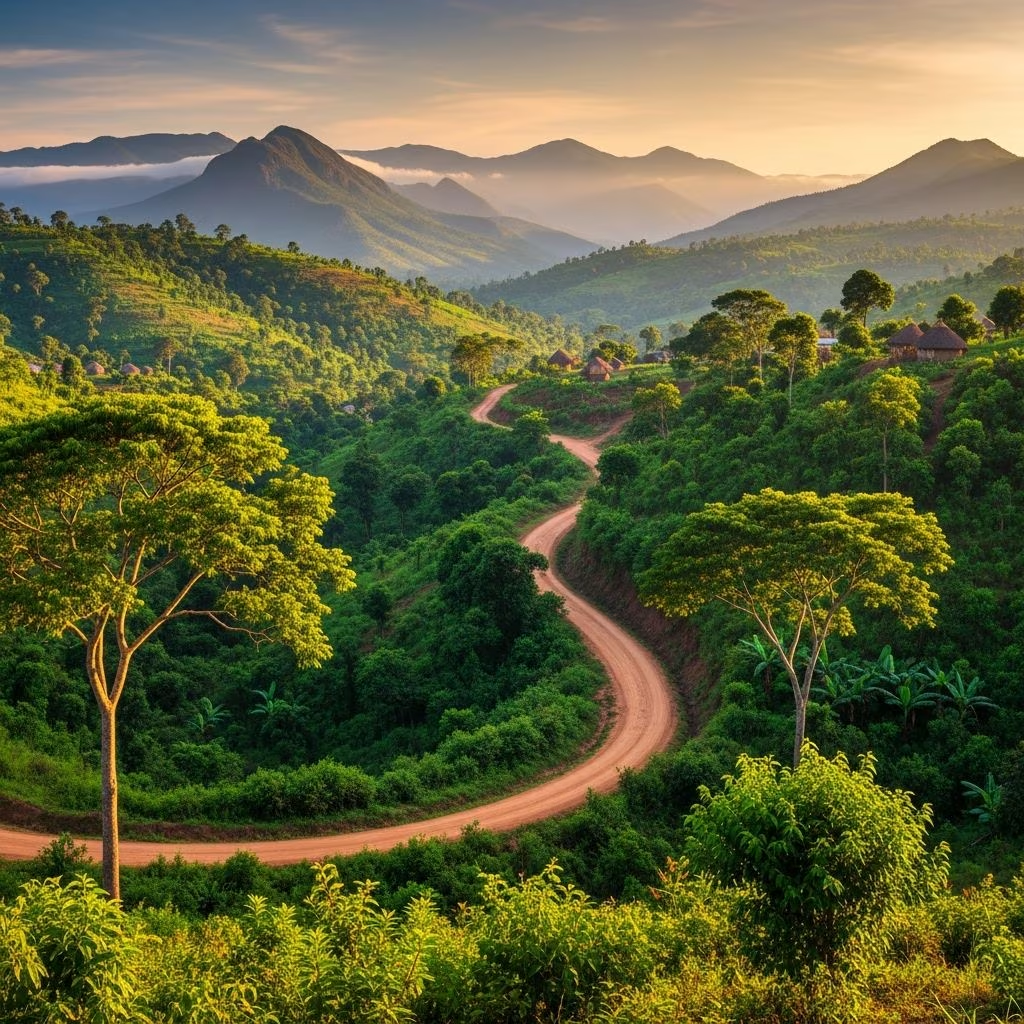
Malawi, often referred to as the Warm Heart of Africa, offers travelers an extraordinary opportunity to explore diverse landscapes through self-guided road journeys. Unlike heavily trafficked tourist destinations, Malawi remains relatively undiscovered, presenting adventurers with authentic encounters across mountains, national parks, and tranquil waterfront communities. Whether you seek wildlife encounters, mountaineering challenges, or peaceful lakeside retreats, the country’s network of accessible routes delivers memorable experiences for every traveler type.
Before embarking on a Malawian road adventure, understanding the country’s transportation landscape is essential. Malawi’s compact size—roughly equivalent to the state of Pennsylvania—makes it remarkably efficient for self-drive exploration. The primary highway network connects major population centers and tourist destinations, though secondary routes often consist of graded dirt roads requiring patience and careful navigation.
The capital city of Lilongwe serves as the natural departure point for most itineraries, offering car rental facilities and supplies for longer journeys. Travel times between destinations vary considerably; what appears as a short distance on maps may require several hours of driving due to road conditions. During the rainy season (November through March), certain routes become impassable, making dry-season travel (May through October) optimal for self-drive expeditions.
The journey northward from Lilongwe represents one of Malawi’s most rewarding multi-day driving experiences. This route traverses changing ecosystems, transitioning from central plateaus to pristine lakeshore environments. The approximately four-hour drive to Nkhotakota Wildlife Reserve introduces travelers to genuine wilderness encounters without the crowds typical of more famous African parks.
Nkhotakota Wildlife Reserve spans over 1,800 square kilometers of protected terrain where elephants roam freely, often approaching accommodation areas during evening hours. Self-drive safaris within the reserve combine game viewing with horseback riding opportunities and guided walking expeditions. The reserve’s unique position along Malawi’s interior provides distinct wildlife viewing compared to more accessible parks.
Continuing northward, Nkhata Bay emerges as a vibrant lakeside settlement offering respite from driving. The town’s colorful markets, traditional fishing communities, and water-based activities provide cultural immersion alongside recreational opportunities. From this strategic location, visitors can arrange boat excursions to nearby islands or continue driving along the scenic lakeshore to explore additional communities and beaches.
Southern Malawi harbors two remarkable mountain destinations accessible via well-established driving routes. Mount Mulanje commands attention as Malawi’s most imposing peak, rising to 3,002 meters above sea level. This massive granite formation dominates the southern landscape, visible from considerable distances and offering multiple trekking options for various fitness levels.
The drive to Mount Mulanje from central Malawi requires patience, particularly if traveling from Majete Wildlife Reserve. Road conditions vary significantly; the most direct routes traverse challenging terrain with sections requiring four-wheel-drive capability. However, the reward justifies the driving effort—rustic colonial-era tea estate accommodations provide comfortable base camps for exploring the mountain’s numerous peaks, plateaus, and cascading waterfalls.
Manchewe Waterfall represents one of Mount Mulanje’s most spectacular features, accessible through a hiking trail departing from nearby accommodations. The approximately two-hour round-trip journey to this impressive water feature offers refreshing swimming opportunities within the mountain’s cool microclimate, contrasting sharply with the warmer lowland temperatures.
Zomba Plateau, located east of Mount Mulanje, provides an alternative mountain experience emphasizing panoramic vistas and horseback riding rather than technical climbing. The plateau’s elevation creates temperate grassland conditions supporting unique ecological communities. Hairpin roads climb toward the summit, revealing progressively expansive views across the Shire Valley below.
Malawi’s protected wildlife areas connect through logical driving routes, allowing adventurers to design multi-park expeditions. Liwonde National Park, positioned along the Shire River in southeastern Malawi, functions as the country’s most established safari destination. The park’s accessibility from multiple directions makes it a flexible component of various road trip itineraries.
Water-based safari experiences distinguish Liwonde from typical game reserves. Travelers can pilot kayaks or join motorized boat excursions along the Shire River, observing hippos, crocodiles, elephants, and water birds from aquatic perspectives. Afternoon game drives explore terrestrial habitats, presenting opportunities for spotting lions, cheetahs, and black rhinoceroses—species increasingly rare across African wildlife reserves.
Majete Wildlife Reserve, located further south, operates as one of Africa’s most ambitious wildlife rehabilitation projects. The reserve now hosts all five members of the Big Five, alongside cheetahs, African wild dogs, and abundant bird species. The challenging final approach over corrugated roads serves as a buffer, limiting visitor numbers and preserving the wilderness atmosphere.
Nyika National Park, positioned in northern Malawi, offers mountain scenery complementing the wildlife-focused reserves. The park’s rolling highlands support leopard populations and unique montane vegetation. The remote location rewards adventurous drivers with solitude and authentic bush experiences rarely encountered in more developed tourist areas.
Lake Malawi, occupying nearly one-third of the country’s total area, creates natural corridors for coastal driving experiences. The western shoreline, accessible from the interior via multiple descent routes, connects small fishing villages, beach resorts, and island departure points.
Cape Maclear represents the lake’s most iconic destination, featuring white-sand beaches framed by granite mountains and overlooking the lake toward Domwe Island. The drive to Cape Maclear requires navigation through Monkey Bay, a small supply center, before following sandy tracks to the final destination. The scenic tension between arriving via dusty roads and discovering pristine beach environments creates memorable contrasts.
The sunset catamaran cruises departing from Cape Maclear provide water-based perspectives on the landscape after days of terrestrial exploration. These evening excursions often include visits to small islands and traditional fishing communities, offering cultural engagement alongside scenic enjoyment.
Mumbo Island, accessible via kayak or boat from Cape Maclear, offers overnight stays in exclusive accommodation without vehicular access. While not a driving destination itself, island excursions represent logical road trip extensions for travelers seeking specialized experiences.
Likoma Island, more remote than its southern counterparts, requires longer boat journeys but rewards visitors with serene environments and historical significance. The island maintains connections to 19th-century missionary efforts, visible through colonial structures and established communities.
Experienced road trip planners typically structure Malawian journeys around distinct geographic zones rather than attempting comprehensive country coverage. A two-week expedition might combine northern lake exploration with southern wildlife viewing and mountain experiences, utilizing strategic day-drive segments to connect locations.
Accommodation options range from basic campsites to comfortable lodges, with most establishments distributed intentionally along primary travel routes. Planning daily driving distances between three and five hours allows time for road conditions while preserving energy for evening activities. Morning departures maximize daylight for wildlife observation and photography.
Fuel availability varies significantly outside major towns; travelers must plan refueling stops carefully and carry spare fuel for remote route segments. Vehicle maintenance facilities concentrate in urban centers, making pre-journey mechanical inspections essential for remote exploration.
Malawi’s climate creates distinct seasonal variations affecting road conditions and wildlife visibility. The dry season (May through October) offers optimal driving conditions with firm roads and abundant wildlife gathered around water sources. Clear skies provide excellent photography opportunities and comfortable camping conditions.
The wet season (November through March) transforms landscapes into lush environments, though heavy rainfall renders secondary roads impassable. This period sees fewer visitors, creating more intimate wildlife encounters but requiring substantial route flexibility. Vehicle selection becomes critical—two-wheel-drive vehicles risk becoming stranded during heavy downpours.
The shoulder seasons (April and late October) present compromise options, combining improved road access with reasonable vegetation recovery and wildlife distribution.
Self-drive exploration in Malawi remains generally safe by African standards, with established tourist infrastructure and welcoming local populations. However, several practical considerations enhance journey safety and enjoyment:
Four-wheel-drive vehicles with high ground clearance navigate corrugated and rough roads most successfully. Standard sedans function adequately on primary routes but struggle during rainy seasons or when accessing remote attractions. High-clearance vehicles provide comfort and safety advantages substantially worth the rental premium.
Two weeks permits meaningful engagement with multiple regions—typically combining northern lake areas, central wildlife reserves, and southern mountains. Shorter week-long trips require geographic focus, selecting two to three destination clusters rather than attempting complete coverage.
Yes, though strategic planning enhances safety and enjoyment. Staying at established accommodations, maintaining regular communication schedules, and joining guided activities at key destinations provide social engagement and security assurances for independent travelers.
International driving permits, obtained through home country automobile associations, comply with Malawian legal requirements. Rental companies typically require comprehensive insurance, international documentation, and credit cards for vehicle deposit authorization.
Ten to fourteen-day expeditions balance comprehensive experience with manageable driving distances and varied activities. Shorter trips risk feeling rushed, while extended multi-week journeys may exceed typical vacation timeframes for many travelers.
Beyond established tourism circuits, adventurous drivers discover less-documented attractions offering authentic Malawian experiences. Small towns along driving routes often feature local markets, craft workshops, and community-based tourism initiatives providing employment while maintaining cultural integrity.
The Shire River basin extends beyond Liwonde National Park into accessible valleys offering bird watching, botanical interest, and photography opportunities. Secondary routes through these areas require patience but reward explorers with encounters rarely witnessed by typical tourists.
Chintheche and other central lake communities provide alternatives to more commercialized resort areas, offering glimpses into traditional fishing economies and emerging ecotourism initiatives. Supporting these smaller establishments encourages sustainable development benefiting local populations directly.
