


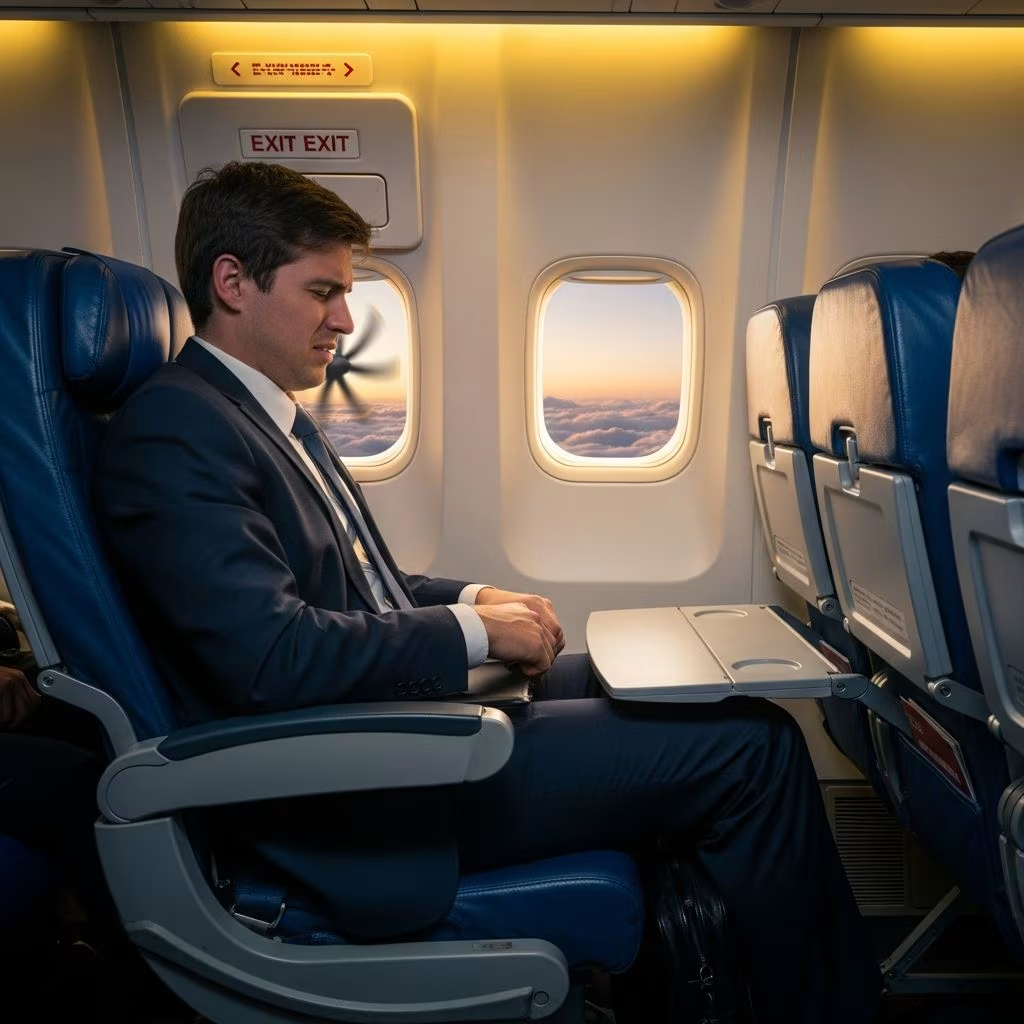
Air travel has transformed the world, making distant destinations accessible to millions. Yet, for many passengers, the journey itself remains a trial of endurance, particularly in economy class. Airlines constantly experiment with seating configurations to pack more people onboard, boosting revenue while squeezing every inch of space. Recent concepts have pushed boundaries, introducing designs that prioritize capacity over comfort, igniting fierce discussions among travelers, experts, and regulators.
The Push for Ultra-Dense Seating in Aviation
The aviation industry faces relentless pressure to reduce costs amid rising fuel prices, labor expenses, and competition from low-cost carriers. One strategy is maximizing seats per flight. Traditional economy seats offer about 17-18 inches of width, but new proposals aim for slimmer profiles, sometimes as narrow as 15 inches or less. This trend stems from non-recurring engineering fees and the need to offset aircraft manufacturing costs through higher passenger loads.
Historical context reveals a steady decline in seat pitch—the distance from one seatback to the next—from 35 inches in the 1970s to around 28-31 inches today on many carriers. Width has similarly contracted. These changes enable airlines to fit 10-abreast configurations on wide-body jets like the Boeing 777, up from the original 9-abreast design.
Examining Radical Seat Prototypes
Among the most talked-about innovations is a standing-style seat that positions passengers in a semi-reclined posture, with buttocks supported by a narrow perch and backrests angled sharply. Dubbed variations of ‘cheek-splitter’ by critics, these seats resemble saddle-like structures, forcing legs into a forward splay. The design claims to save space by reducing the seat’s footprint, potentially allowing 20% more passengers per row.
Visualizations show molded plastic units with minimal padding, integrated harnesses instead of full seatbelts, and shared armrests that barely accommodate an average adult elbow. Proponents argue it complies with FAA vertical separation standards for evacuation, as occupants remain upright enough for quick egress. However, real-world testing remains limited, with prototypes mostly showcased at industry expos rather than in passenger trials.
Technical Specifications and Comparisons
| Seat Type | Width (inches) | Pitch (inches) | Recline | Capacity Boost |
|---|---|---|---|---|
| Standard Economy | 17-18 | 30-32 | 3-5 inches | Baseline |
| Slimline Economy | 16-17 | 28-31 | 2-4 inches | +5-10% |
| Standing-Style Prototype | 14-15 | 23-25 | Minimal | +15-20% |
This table highlights how prototypes diverge from norms, trading luxury for density. Data drawn from industry reports underscores the trade-offs.
Passenger Experiences and Health Implications
Travelers who have encountered similar cramped setups report profound discomfort. Prolonged sitting in narrow seats leads to pressure on hips, numbness in legs, and exacerbated back pain. Medical professionals note risks of deep vein thrombosis (DVT) from immobility, with studies linking tight seating to higher clot formation rates.
- Musculoskeletal Strain: Narrow perches compress gluteal muscles, causing ‘dead butt syndrome’ or paresthesia.
- Circulation Issues: Splayed leg positions hinder blood flow, per ergonomics research.
- Psychological Toll: Claustrophobia and frustration amplify stress during long-haul flights.
Anecdotal accounts from beta testers describe the seats as ‘torture devices,’ with many unable to endure mock 2-hour flights without shifting constantly.
Airline Perspectives: Profit vs. Passenger Loyalty
Carriers like Ryanair and Spirit have pioneered ultra-low-cost models with minimal amenities, proving demand exists for cheap fares despite discomfort. Executives justify tight seating by pointing to load factors exceeding 90%, where fuller planes lower per-seat costs. One CEO remarked that passengers prioritize price over padding, citing surveys where fare savings trumped legroom.
Yet, backlash grows. Loyalty programs suffer as frequent flyers defect to premium economy or competitors. Data from the International Air Transport Association (IATA) shows comfort rankings influencing 40% of booking decisions among business travelers.
Regulatory Frameworks and Safety Debates
Federal Aviation Administration (FAA) rules mandate seats allow rapid evacuation, typically within 90 seconds for 440% capacity. Standing seats must prove equivalent performance. Europe’s EASA imposes anthropometric standards based on 95th percentile male dimensions, potentially blocking extreme designs.
Recent FAA approvals for 10-abreast 777s set precedents, but critics argue agencies lag innovation. A 2023 DOT report highlighted rising injury claims tied to cramped cabins.
Alternative Solutions for Better Air Travel
Beyond controversy, viable improvements emerge:
- Modular Seating: Adjustable widths via sliding panels, tested by Airbus.
- High-Density Premium: Lie-flat pods in economy-plus zones.
- Vertical Space Optimization: Staggered seating like Safran’s Adient concept.
- Passenger Advocacy: Groups like FlyersRights push for minimum standards legislation.
Technological aids, such as active posture-correcting cushions, offer interim relief.
Global Variations in Seating Standards
Not all regions embrace extremes. Asian carriers like Singapore Airlines maintain generous pitches, funding via fuel surcharges. U.S. low-cost airlines lead densification, while Middle Eastern hubs blend luxury economy with budget options. A comparative study by Cirium reveals average pitches: 31 inches North America, 32 inches Europe, 34 inches Asia-Pacific.
Future Outlook: Will Comfort Make a Comeback?
Sustainable aviation fuels and electric planes promise cost relief, possibly easing seating pressures. Consumer demand for wellness-focused travel grows, with 62% of millennials willing to pay 10-15% more for space, per Skift Research. Innovations like foldable seats for off-peak use could hybridize density and comfort.
Ultimately, market forces will decide. As one analyst notes, ‘Airlines ignore passenger fury at their peril—empty seats bankrupt faster than tight ones fill.’
Frequently Asked Questions (FAQs)
What is a cheek-splitter airplane seat?
A nickname for ultra-narrow, perch-style seats that minimally support the body, criticized for discomfort.
Are these seats approved for commercial flights?
Prototypes exist, but full certification requires rigorous FAA/EASA testing; none operate commercially yet.
How can I avoid cramped seats?
Book premium economy, select seats with extra legroom, or fly full-service carriers.
Do narrow seats increase health risks?
Yes, potentially raising DVT and strain risks; stay hydrated and move periodically.
Will airlines continue shrinking seats?
Likely for budget carriers, but premium demand may preserve spacious options.
References
- Federal Aviation Administration – Airplane Seat Design Requirements — FAA. 2024-06-15. https://www.faa.gov/regulations_policies/handbooks_manuals/aviation/phak
- International Air Transport Association – Passenger Seat Comfort Survey — IATA. 2025-03-10. https://www.iata.org/en/publications/store/passenger-experience-reports/
- Ergonomics in Aviation: Long-Haul Flight Health Risks — National Institutes of Health (PubMed). 2023-11-20. https://pubmed.ncbi.nlm.nih.gov/37589234/
- DOT Air Travel Consumer Report: Injury Claims Data — U.S. Department of Transportation. 2025-01-08. https://www.transportation.gov/airconsumer/air-travel-consumer-report
- Boeing 777 Seating Configurations Approved — Reuters. 2024-09-12. https://www.reuters.com/business/aerospace-defense/faa-approves-boeing-777-10-abreast-seating-2024-09-12/

