

 Travel Essentials
 Travel Essentials

Explore Umbria's rolling hills, medieval villages like Perugia and Assisi, natural wonders such as Marmore Falls, and wine trails in this peaceful Italian gem.
 Travel Essentials
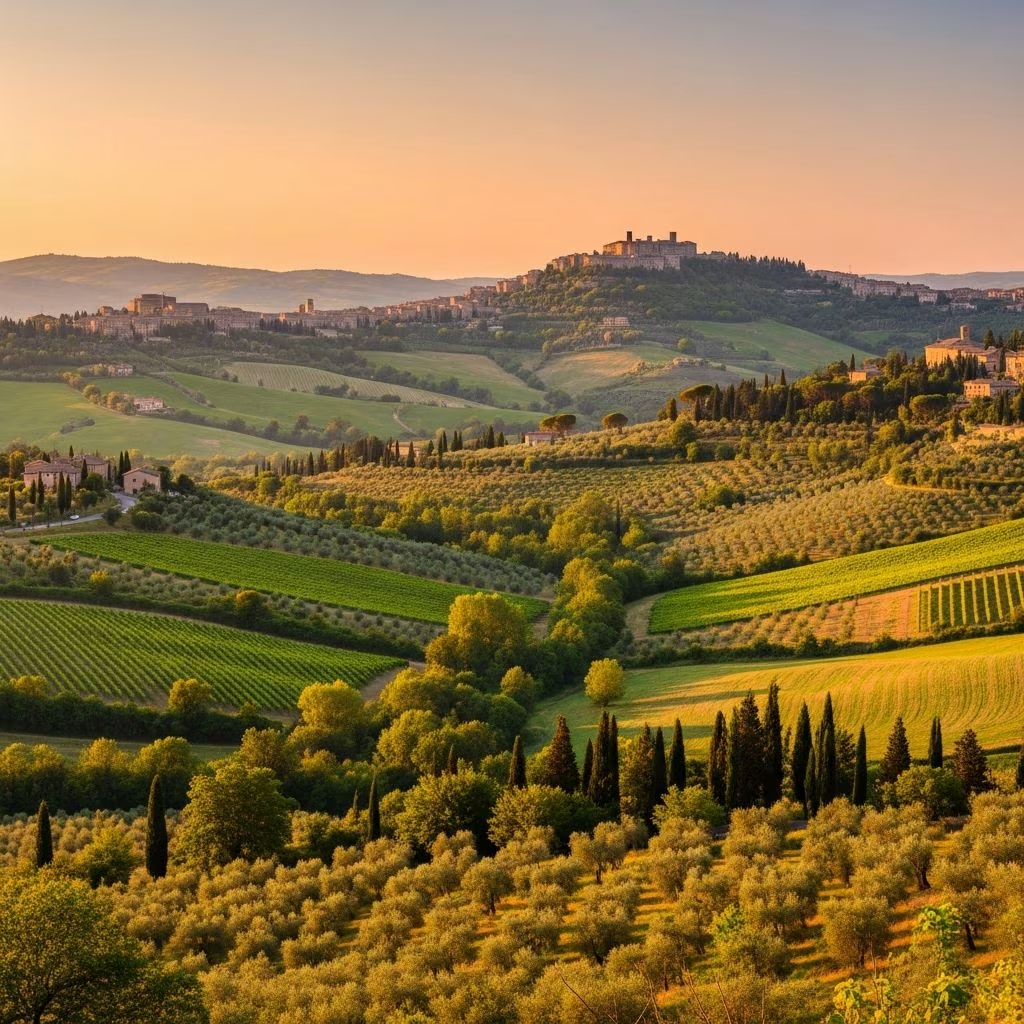
Umbria stands as a tranquil haven in central Italy, often overshadowed by its flashier neighbor Tuscany yet brimming with natural beauty, ancient history, and authentic experiences. Known as the Green Heart for its verdant hills, olive groves, and vineyards, this landlocked region invites travelers to slow down and savor its rhythms.
Unlike bustling tourist hotspots, Umbria offers a genuine slice of Italian life. Its gentle landscapes feature cypress-lined hills, sparkling lakes, and dramatic waterfalls, all dotted with medieval hilltop towns that seem frozen in time. Visitors find fewer crowds, allowing intimate encounters with locals during evening passeggiata strolls or at family-run trattorias.
The region’s accessibility—mere hours from Rome or Florence by car or train—makes it ideal for immersive escapes.
As Umbria’s lively hub, Perugia blends university energy with preserved medieval splendor. Corso Vannucci, the main artery, buzzes with cafes and shops, leading to Piazza IV Novembre and the Gothic Duomo. Ascend from Piazza Italia for panoramic valley views.
Art enthusiasts head to the Galleria Nazionale dell’Umbria in Palazzo dei Priori, housing masterpieces from the 13th to 19th centuries. Nearby, the Nobile Collegio del Cambio showcases intricate frescoes depicting the liberal arts.
For a unique craft experience, visit the Giuditta Brozzetti weaving atelier, where centuries-old looms produce hand-dyed textiles inspired by Renaissance patterns.
Perched on Mount Subasio, Assisi draws pilgrims and sightseers to the Basilica di San Francesco, a UNESCO site honoring St. Francis, the patron saint of animals and ecology. The lower church’s vivid frescoes by Giotto contrast with the serene upper basilica.
Other highlights include the Basilica di Santa Chiara and the Roman Temple of Minerva, now a church. Wander flower-lined alleys or join a guided tour encompassing St. Francis’s birthplace at Chiesa Nuova. Sunset terraces offer valley vistas perfect for Umbrian cuisine like roasted meats and local wines.
Umbria’s borgos reward with charm and solitude. Gubbio, one of Italy’s oldest towns, features a massive Roman theater and Palazzo dei Consoli museum. Ride the Funivia Colle Eletto, a chain of birdcage gondolas, to Monte Ingino’s basilica for sweeping vistas.
Orvieto, on volcanic tuff cliffs, boasts a stunning Gothic cathedral with Luca Signorelli’s frescoes in the Cappella Nuova. Underground caves reveal Etruscan history.
Todi overlooks valleys from its hilltop perch, famed for artisan ceramics and linens. Spello, the Flower Town, dazzles with June’s Infiorata flower carpets and Pinturicchio frescoes in Santa Maria Maggiore.
| Town | Key Attraction | Best For |
|---|---|---|
| Gubbio | Funivia Colle Eletto | Panoramic views & history |
| Orvieto | Duomo Cathedral | Art & architecture |
| Todi | Medieval piazza | Shopping & serenity |
| Spello | Infiorata festival | Flowers & mosaics |
Umbria’s outdoors shine at Cascate delle Marmore, Europe’s tallest man-made waterfall at 165 meters. Engineered by Romans, it roars when gates open, misting rainbows amid gorges. Hike trails or raft the River Nera nearby.
Lake Trasimeno, Italy’s largest inland lake, beckons for swimming, boating, or birdwatching at Passignano. Parco Nazionale dei Sibillini offers rugged hikes through wildflower meadows and Sibillini peaks.
Umbria’s cuisine emphasizes simplicity: porchetta (herb-roasted pork), strangozzi pasta with truffles, and lentils from Castelluccio. Norcia excels in salumi and cheeses; pair with Rubesco or Torgiano reds.
Olive oil tastings in groves near Spello highlight cold-pressed varieties. Wineries like Arnaldo Caprai showcase Sagrantino di Montefalco, a bold indigenous grape.
Tailor your trip with these plans.
Agriturismi dot the countryside for farm-fresh stays. Boutique hotels in Perugia offer urban vibe; convents in Assisi provide pilgrim charm.
Rent a car for flexibility; trains connect major towns from Rome (2 hours). Buses serve smaller spots.
Spring (April-June) and fall (September-October) bring mild weather and festivals like Gubbio’s Corsa dei Ceri (May candle race) or Spello’s Infiorata.
Summer suits lake swims but expect heat; winter offers truffle season and quiet hills.
Yes, its accessibility and authenticity make it perfect, especially paired with Rome.
5-7 days cover essentials; 10+ for deep dives.
Truffle-based pastas or porchetta, washed down with Sagrantino.
Limited; trains hit big towns, but hills favor driving.
Absolutely—nature parks, easy hikes, and festivals delight all ages.
