

 Travel Essentials
 Travel Essentials

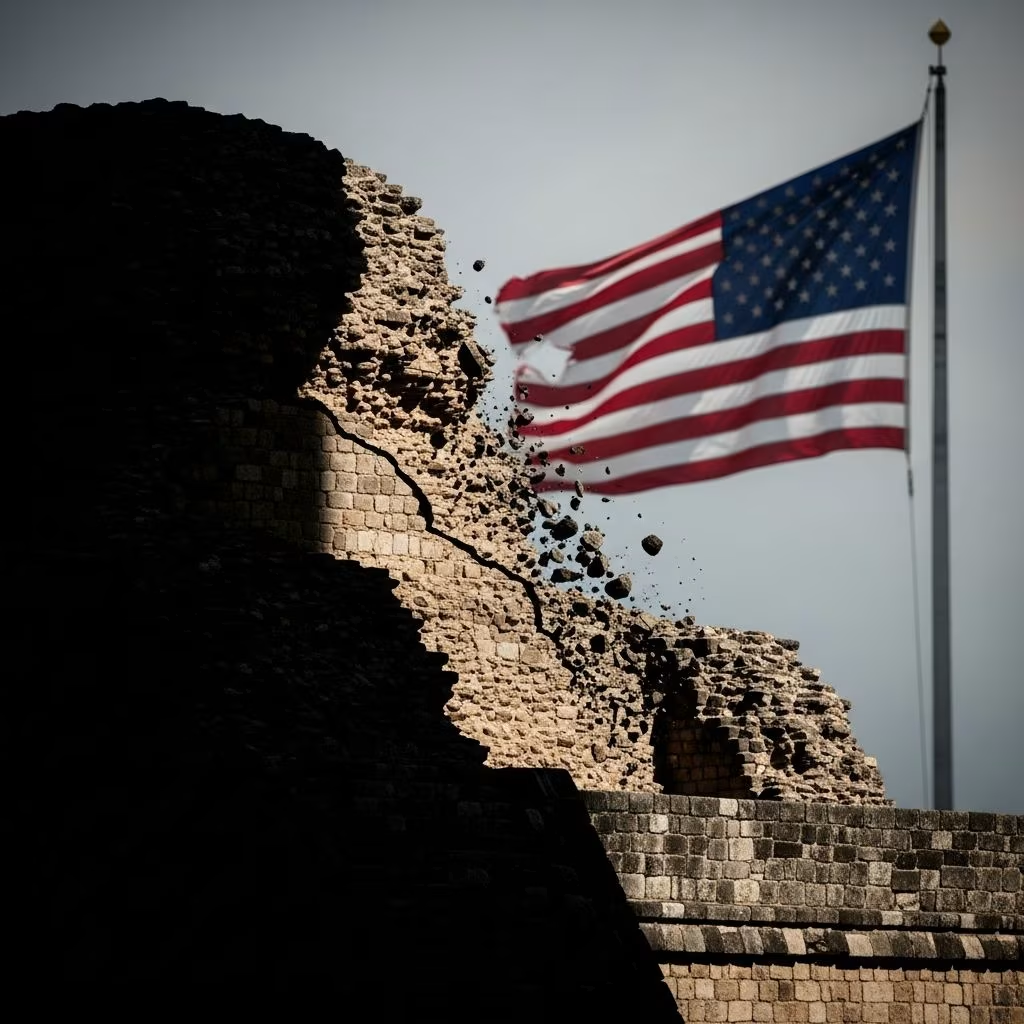
The US withdrawal from UNESCO in 2026 raises questions about its 26 World Heritage sites. Status remains intact, but funding and influence gaps emerge.
 Travel Essentials
The United States’ decision to withdraw from UNESCO, announced in July 2025 and effective December 31, 2026, marks the third such exit in the nation’s history. This move, driven by concerns over ideological alignments and foreign policy priorities, prompts critical questions about the future of America’s 26 World Heritage sites. While these designations endure independently, the departure carries tangible repercussions for preservation efforts, international collaboration, and cultural diplomacy.
America’s relationship with UNESCO has fluctuated dramatically. The US was a founding member in 1945, but withdrew in 1984 citing mismanagement and anti-Western bias. It rejoined in 2003, only to exit again in 2017 under the Trump administration over similar grievances, including perceived anti-Israel stances. The Biden era saw a 2023 return, motivated by countering China’s growing sway in global standards for education and technology. The 2025 announcement reflects renewed “America First” priorities, criticizing UNESCO’s emphasis on UN Sustainable Development Goals as misaligned with US interests.
Each withdrawal has followed patterns of unpaid dues—stemming from disputes like Palestine’s 2011 admission—and accusations of the agency promoting divisive agendas. Despite these cycles, the US has consistently ratified the 1972 World Heritage Convention separately in 1973, ensuring ongoing legal commitments to site protection.
The State Department cited UNESCO’s pursuit of “divisive social and cultural causes” and an overemphasis on globalist development agendas clashing with national priorities. Key irritants include the agency’s role in AI ethics, education frameworks, and cultural programs seen as ideologically driven. Financial burdens also factor in; the US, historically UNESCO’s top funder, accrued over $600 million in back dues by 2023, payments paused since 2011.
UNESCO Director-General Audrey Azoulay expressed regret, highlighting impacts on US communities pursuing heritage listings and partnerships.
A primary concern is the status of America’s iconic sites. Reassuringly, UNESCO World Heritage designations are tied to the sites themselves via the independent World Heritage Convention, not organizational membership. The 26 US sites—ranging from natural wonders to architectural marvels—retain their status post-withdrawal.
| Site Name | Type | Year Inscribed |
|---|---|---|
| Yellowstone National Park | Natural | 1978 |
| Statue of Liberty | Cultural | 1984 |
| Grand Canyon | Natural | 1979 |
| Frank Lloyd Wright Buildings | Cultural | 2019 |
| San Antonio Missions | Cultural | 2015 |
The National Park Service affirms continued nomination rights and preservation duties. Even during prior non-memberships, sites like Poverty Point (2014) and San Antonio Missions (2015) were added. The US plans observer status in select programs, including World Heritage and Biosphere Reserves, without voting or funding obligations.
Beyond designations, withdrawal curtails US influence. No voting in UNESCO bodies means diminished say in heritage priorities, AI education standards, and global cultural policies. Financially, America loses access to UNESCO grants, though it contributed little recently due to arrears.
Tourism promotion suffers too; UNESCO networks boost visibility for sites, drawing international visitors. Partnerships for data-sharing on marine conservation and biosphere management evaporate, potentially straining underfunded US agencies like the National Park Service, which faced 2025 cuts reducing staff by 25%.
Without UNESCO ties, US sites may encounter hurdles. Technical assistance, emergency aid for threats like climate change or disasters, and collaborative research diminish. The absence of US experts in global forums could erode American leadership in conservation best practices.
Budget strains amplify risks. Trump’s 2025 cuts compound UNESCO’s lost support, jeopardizing maintenance at parks already facing backlogs. Brookings analysts warn of a “void” in influence, fewer expert invitations, and weakened consensus on global challenges.
UNESCO loses a major voice and funder—roughly 8% of its budget—potentially scaling back programs in heritage, Holocaust education, and tech ethics. Critics argue this cedes ground to China, which has ramped up nominations and leadership roles during US absences.
Symbolically, the exit underscores America’s retreat from multilateralism, echoing withdrawals from WHO and Paris Accord. It signals to allies a diminished commitment to shared cultural stewardship.
Despite challenges, the US intends to pursue inscriptions. Revised tentative lists include Civil War battlefields and Native American sites. Frank Lloyd Wright’s architecture, deferred in 2016, eyes resubmission. Observer status preserves nomination eligibility sans committee seats.
Domestic funding and private partnerships may fill gaps, but sustained commitment is key to countering isolation.
UNESCO fosters soft power through shared heritage. US withdrawal hampers this, reducing platforms for promoting American values in education and science. In AI and workforce development, exclusion from shaping norms risks unaligned global standards.
US partners—states, tribes, nonprofits—lose avenues for Creative City bids and university chairs, stunting local initiatives.
No, designations persist under the separate World Heritage Convention ratified by the US.
Yes, as a Convention party, nominations continue despite non-membership.
Loss of UNESCO promotion may reduce international draw, impacting local economies.
Past exits cited bias, dues disputes, and policy misalignments; patterns repeat.
No direct UNESCO funds were flowing due to arrears, but expertise and networks are lost.
This withdrawal tests America’s balance between sovereignty and global cultural leadership. While sites endure, the full costs—influence, collaboration, and resources—unfold over time.
