

 Travel Essentials
 Travel Essentials

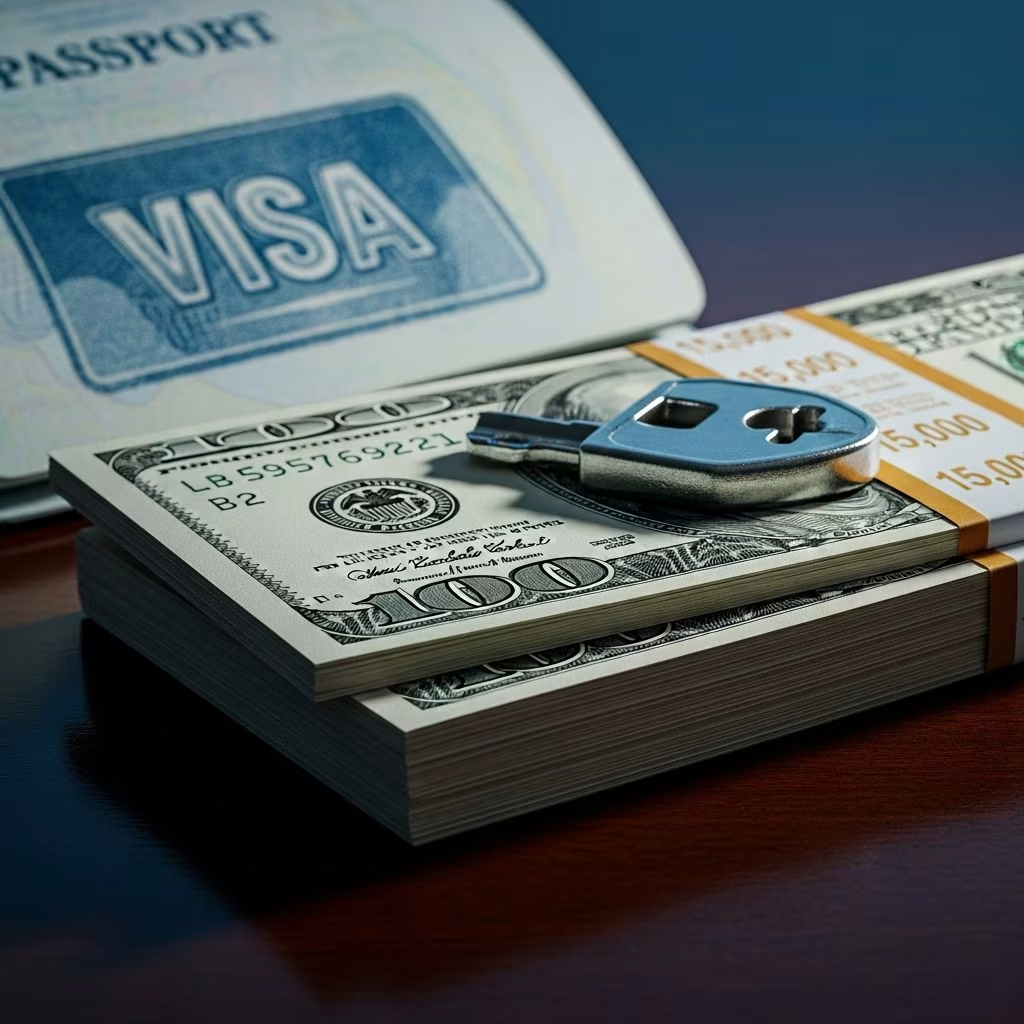
The US State Department launches a 12-month visa bond pilot for select nations, mandating $5K-$15K payments to ensure compliance and reduce overstays.
 Travel Essentials
The United States is rolling out a groundbreaking pilot program that could reshape international travel for visitors from certain countries. Under this initiative, applicants for popular B1 business and B2 tourist visas may need to post security bonds ranging from $5,000 to $15,000. Designed to tackle persistent visa overstay issues, the program targets nations with elevated non-compliance rates or inadequate passport security measures.
Visa overstays have long plagued US immigration enforcement, with thousands of visitors annually exceeding their authorized stay periods. Official data highlights countries where overstay rates exceed acceptable thresholds, prompting stricter entry controls. The Department of State announced this 12-month pilot via a Federal Register notice, set to commence 15 days post-publication.
This measure builds on prior Trump administration efforts to fortify borders, including expanded interview requirements for visa renewals. By requiring a financial guarantee, the US aims to deter violations and recover costs associated with enforcement actions against non-compliant travelers. Bonds are fully refundable upon successful completion of the visa terms, typically limited to 90 days for tourism or business purposes.
While the initial announcement withheld a definitive list, the State Department’s dedicated webpage now specifies nations subject to this rule. Travelers holding passports from these designated countries must post bonds if deemed eligible for B1/B2 visas otherwise. The selection criteria include high overstay statistics, weak document verification systems, and programs offering citizenship-by-investment without residency mandates.
This applies universally, regardless of the consulate location for the application. Consular officers assess risk at the interview stage, determining the exact bond tier.
Navigating the bond requirement demands preparation. Here’s a breakdown of the procedure:
Waivers remain possible for compelling cases, based on individual history and ties to home country. This flexibility prevents blanket discrimination while prioritizing compliance.
For middle-class families in affected developing nations, a $15,000 bond represents a formidable barrier. Critics contend it effectively prices out legitimate tourists and businesspeople, exacerbating inequalities in global mobility. Small business owners eyeing US markets or families planning vacations may find alternatives more feasible.
Tourism sectors in high-risk countries could suffer, as potential visitors opt for Europe or Asia. Airlines and hotels anticipate booking dips, prompting industry lobbying against expansion beyond the pilot phase. Conversely, proponents argue it protects American jobs and resources from abuse.
| Bond Amount | Risk Level | Typical Applicant Profile |
|---|---|---|
| $5,000 | Low | Strong travel history, stable employment | $10,000 | Medium | First-time US visitor |
| $15,000 | High | High overstay risk country, weak documentation |
Not all travelers fall under this net. Participants in the Visa Waiver Program (VWP), allowing 90-day stays without visas for 40+ nations, remain exempt. This safeguards low-risk allies like much of Europe and Japan. The pilot focuses solely on B1/B2 initially, though discussions hint at extensions to certain work visas.
Case-by-case waivers offer relief for diplomats, athletes, or those with exceptional circumstances. Applicants with prior US compliance or substantial home investments stand better chances. However, automatic disqualification applies to green card lottery hopefuls lacking valid, scannable passports.
This pilot aligns with a hardening stance on non-immigrant visas. Recent mandates for social media screenings on fiancé visas signal intensified scrutiny. The administration views bonds as a self-funding deterrent, shifting enforcement costs to potential violators rather than taxpayers.
Historically, similar bonding concepts appeared in 1980s legislation but faded amid feasibility concerns. Today’s digital payment systems and data analytics revive viability, with pilots testing scalability before permanence.
International responses vary. Affected governments decry it as discriminatory, urging multilateral dialogue. Travel associations like NAFSA warn of chilled educational exchanges, as student visas might follow suit. Legal challenges loom, questioning equal protection under US law.
Economically, the US tourism industry—generating billions annually—risks collateral damage. Yet, if overstays drop, long-term gains in trust and resources could justify the experiment. Monitoring metrics like refusal rates and actual refunds will dictate the program’s fate.
Citizens of listed high-risk countries applying for B1/B2 visas, as determined at interview.
Yes, fully refunded if you depart on time and comply with all terms.
Possible on merit, considering your background and history.
No, VWP travelers are exempt.
15 days after Federal Register publication; effective August 20 in some reports.
Currently B1/B2 only, but pilots may test work visas.
Prospective travelers should audit their finances early, securing liquid assets for potential bonds. Bolster applications with evidence of strong home ties: property deeds, job letters, family obligations. Consult immigration attorneys for waiver strategies, especially if from borderline countries.
Monitor State Department updates, as the country list evolves with overstay data. Alternatives like Canada or Mexico gain appeal for budget-conscious planners. Ultimately, this policy underscores a paradigm shift: travel as a privilege backed by accountability.
Stay informed to navigate these changes seamlessly, ensuring your American dream remains within reach.
