

 Travel Essentials
 Travel Essentials

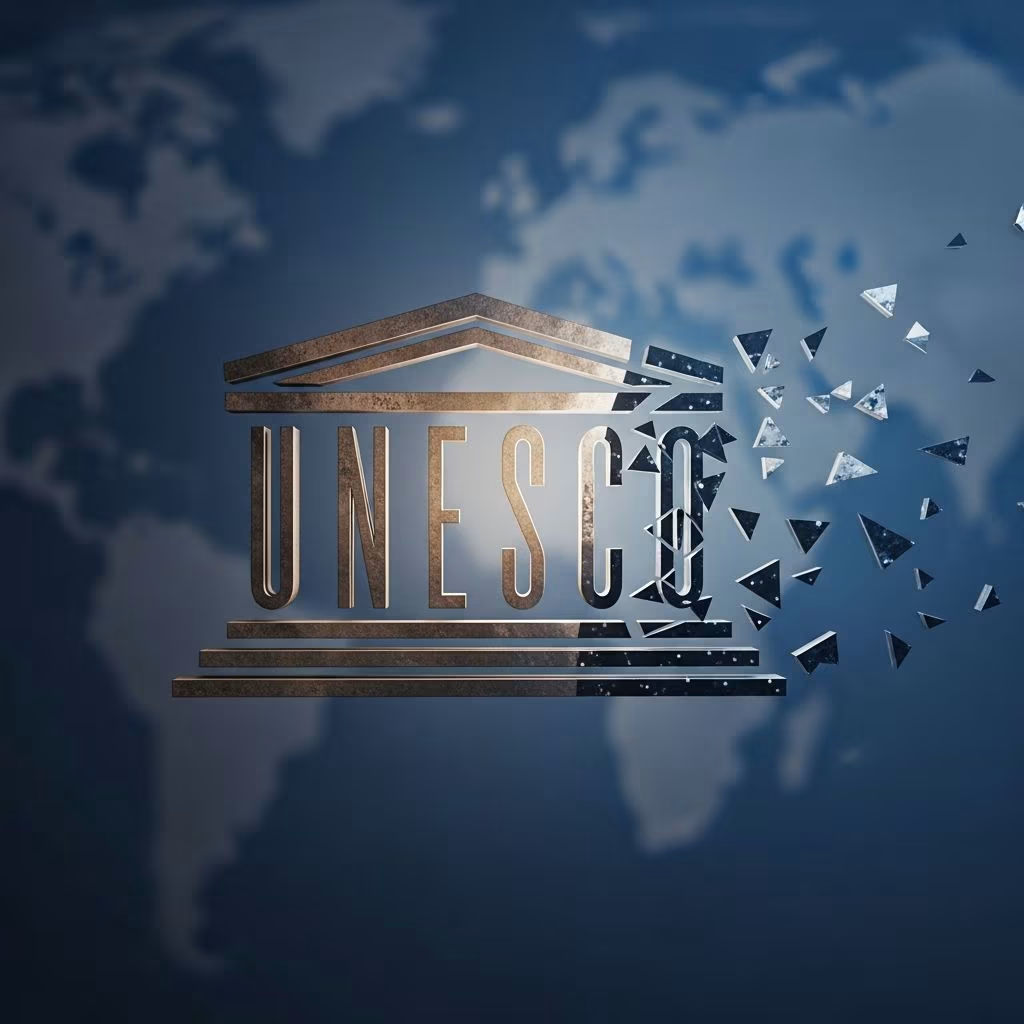
The US announced its third withdrawal from UNESCO on July 22, 2025, effective December 31, 2026, citing bias against Israel and divisive agendas. This move revives past tensions and impacts global cultural preservation.
 Travel Essentials
The United States’ decision to withdraw from UNESCO marks the third time this major power has stepped away from the United Nations Educational, Scientific and Cultural Organization. Announced on July 22, 2025, the exit will take effect on December 31, 2026, echoing previous departures under Presidents Reagan and Trump. This move underscores persistent frictions over perceived biases, financial burdens, and ideological divergences.
US engagement with UNESCO has long been turbulent. The organization’s founding in 1945 aimed to build peace through education, science, and culture after World War II. However, the US first withdrew in 1984 under President Ronald Reagan, citing politicization, mismanagement, and an anti-Western tilt driven by newly influential developing nations.
Rejoining in 2003 followed UNESCO reforms addressing US grievances like budget inefficiencies and overreach into issues such as press freedom and disarmament. Yet, tensions resurfaced. In 2011, UNESCO’s admission of Palestine as a member—enabled because the US Congress mandated withholding funds from UN bodies recognizing Palestinian statehood—strained relations further.
President Trump’s first term saw a second withdrawal in 2017, reversed by President Biden in 2023. The 2025 announcement under a returning Trump administration cites unchanged issues: bias against Israel and promotion of “divisive” causes.
| Withdrawal | President | Year Announced | Effective Date | Main Reasons |
|---|---|---|---|---|
| First | Ronald Reagan | 1983 | 1984 | Politicization, mismanagement, anti-Western bias |
| Second | Donald Trump | 2017 | 2018 | Anti-Israel bias, Palestine membership |
| Third | Donald Trump | 2025 | 2026 | Bias against Israel, divisive social causes |
The US State Department stated that “continued involvement in UNESCO is not in the national interest of the United States,” pointing to longstanding grievances. Primary accusations include:
UNESCO Director-General Audrey Azoulay expressed deep regret, noting the decision contradicts multilateralism and harms US partners seeking World Heritage status or other programs. She highlighted reforms since 2017, including advances in Holocaust education countering the US narrative.
UNESCO promotes international collaboration in three pillars: education, science, and culture. It maintains the World Heritage List, designating over 1,100 sites of outstanding universal value, from natural wonders like the Great Barrier Reef to cultural icons like the Pyramids of Giza.
Other initiatives include:
Without US participation, UNESCO loses not just funding—about 8% currently—but American expertise and influence in shaping agendas on emerging issues like AI in education.
UNESCO has weathered US absences before, implementing zero-nominal growth budgets post-1984 and 2017 to offset losses. The current withdrawal prompts similar adjustments, though Director Azoulay emphasized preparedness.
For the US, repercussions include:
This exit fits a pattern of US skepticism toward multilateral bodies under Trump, including past Paris Agreement and WHO withdrawals. It signals prioritization of national sovereignty over collective frameworks, potentially isolating the US from consensus-building on global challenges.
UNESCO initiatives proceed sans US input, but with fewer American voices, leading to skewed perspectives. Brookings analysts warn of a “sizable hole in the global consensus,” especially on fast-evolving topics like generative AI.
Historical precedent shows withdrawals can spur reforms—post-1984 changes paved re-entry in 2003—but repeated exits erode trust and long-term US leverage.
American communities pursuing UNESCO designations, such as UNESCO Chairs at universities or Creative City bids, face setbacks. Azoulay noted these partners suffer most.
Critics argue staying engaged allows influence; proponents say withdrawal pressures UNESCO toward accountability. The move aligns with congressional laws tying funds to Palestinian recognition, limiting flexibility.
Past cycles suggest possible return under future administrations, as with Biden’s 2023 rejoin. However, entrenched issues like Palestine’s status persist. UNESCO’s ongoing reforms and Azoulay’s multilateral push may invite reconsideration, but political will remains key.
Globally, this underscores challenges in sustaining international organizations amid rising nationalism.
UNESCO is a UN agency advancing education, science, culture, and communication for peace and sustainable development.
Reasons include perceived anti-Israel bias, politicization, mismanagement, and misalignment with US interests.
December 31, 2026, per UNESCO Constitution Article II(6).
Influence on global standards, heritage listings, and expertise-sharing in key fields.
Yes, in 2003 after the 1984 exit, and briefly in 2023 after 2017.
