

 Travel Essentials
 Travel Essentials

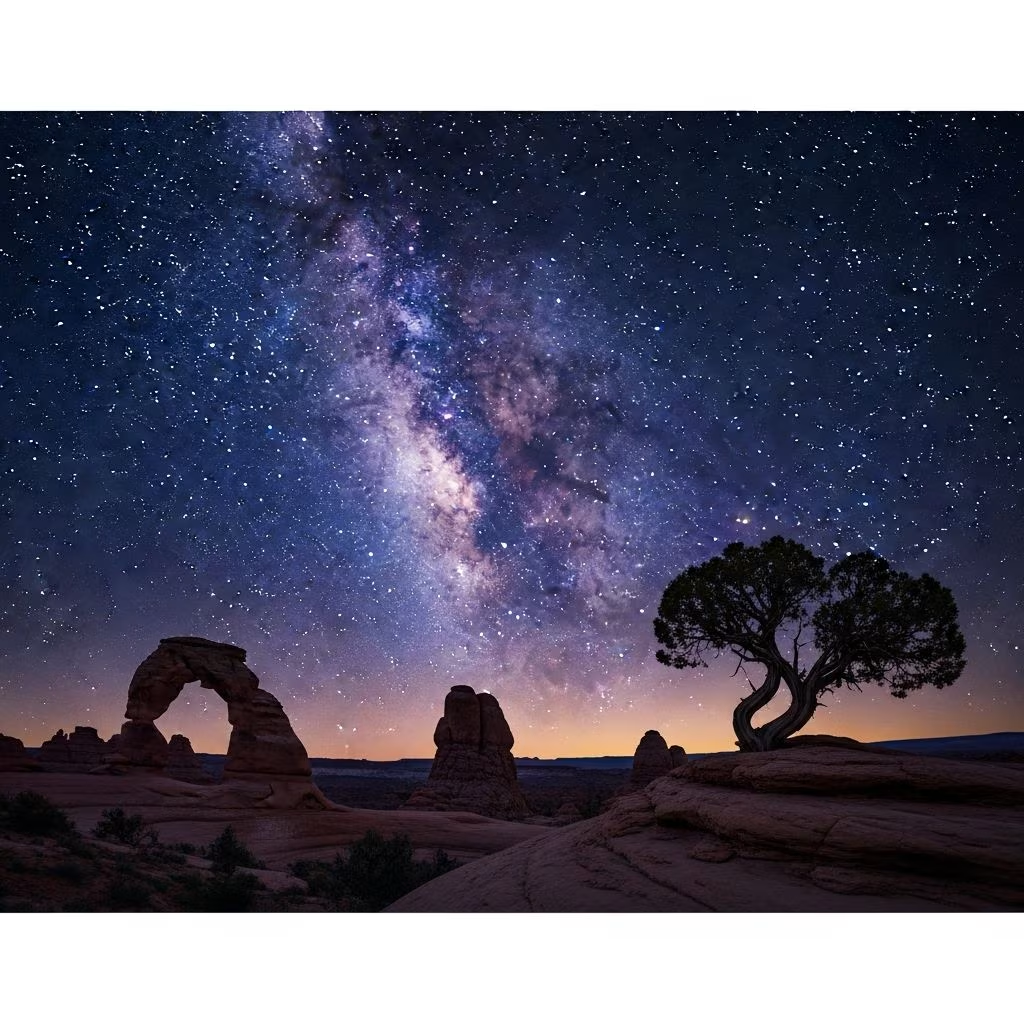
Utah boasts the highest number of Dark Sky certified sites globally, from national parks to communities, perfect for stargazing adventures amid stunning landscapes.
 Travel Essentials
Utah holds the distinction of having the greatest concentration of International Dark Sky Places on the planet, with over 28 certified locations that provide unparalleled opportunities for stargazing. These sites, recognized by DarkSky International, feature exceptionally low light pollution, allowing visitors to witness the Milky Way, meteor showers, and countless stars in their natural brilliance. From remote national monuments to state parks near urban areas, Utah’s diverse terrain enhances the celestial viewing experience.
The state’s vast open spaces, minimal population density in rural areas, and proactive policies against light pollution position Utah as a global leader. All five of Utah’s “Mighty 5” national parks—Arches, Bryce Canyon, Canyonlands, Capitol Reef, and Zion—are certified International Dark Sky Parks. Additionally, six national monuments, numerous state parks, and several communities like Moab, Torrey, and Castle Valley have earned this prestigious designation. This network accounts for about 13% of all Dark Sky Places worldwide, underscoring Utah’s commitment to nocturnal preservation.
Nearly 80% of Americans cannot see the Milky Way from their homes due to light pollution, making Utah’s protected skies a vital resource for astronomy education, tourism, and ecological balance. These designations require strict lighting ordinances, public outreach, and ongoing monitoring to maintain sky quality.
Beyond parks, Utah’s national monuments offer secluded stargazing. Hovenweep National Monument, certified in 2014 as a Gold-tier Dark Sky Park, combines Ancestral Puebloan ruins with the darkest skies possible, thanks to its isolation. Trails close at sunset, but the visitor center and campground are prime for night sky observation, with ranger-led programs in warmer months.
Dinosaur National Monument provides prehistoric vibes under magnificent dark skies, especially at Split Mountain Campground, where programs highlight ancient fossils and modern constellations. Rainbow Bridge National Monument, the first Dark Sky Sanctuary in the National Park Service (2018), rewards intrepid hikers with one of the tallest natural bridges and unspoiled nocturnal views.
Utah’s state parks bring world-class stargazing closer to population centers. East Canyon State Park, just 35 miles from Salt Lake City, uses surrounding mountains to block urban glow, hosting star parties with telescopes throughout the year. Its Rock Cliff Nature Area claims the park’s darkest skies.
Snow Canyon State Park recently joined as an International Dark Sky Destination, expanding options in southern Utah. Other notables include Dead Horse Point State Park near Moab and Edge of the Cedars State Park, each offering ranger events and minimal light pollution.
| Park Name | Distance from Major City | Key Features | Events |
|---|---|---|---|
| East Canyon | 35 miles from SLC | Mountain-blocked skies, lake views | Star parties year-round |
| Snow Canyon | Near St. George | Lava fields, red rock | Guided night programs |
| Dead Horse Point | Near Moab | Canyon overlooks | Ranger stargazing |
Towns like Moab (certified 2024), Torrey, Helper, Springdale, and Castle Valley have implemented lighting ordinances to protect skies while supporting tourism. Moab, gateway to Arches and Canyonlands, updated its ordinance in 2023 for even darker nights.
Under Canvas glamping sites lead in hospitality, with five Grand Circle locations and ULUM Moab as the world’s first DarkSky-certified resorts (starting 2023). These properties prioritize low-impact lighting and sky programs, blending luxury with astronomy.
To maximize your experience, visit during new moon phases for optimal darkness. Pack red flashlights to preserve night vision, dress in layers for high-desert chills, and check for ranger-led events via official park sites. Apps like Dark Sky Finder help locate Bortle Scale 1-2 skies (the darkest).
Combine stargazing with hiking, photography, or astrophotography workshops. Utah’s Dark Sky Month in April celebrates with statewide events, promoting stewardship. Tourism boosts rural economies, with these sites drawing eco-conscious travelers.
Dark skies sustain wildlife rhythms, from nocturnal pollinators to migrating birds, disrupted by artificial light. Culturally, Native American groups like the Ancestral Puebloans used stars for calendars, as seen at Hovenweep. Preservation efforts educate visitors on light pollution’s global threat.
Certification by DarkSky International requires excellent sky quality, lighting policies, and public programs to protect night skies.
Utah has 28 accredited sites, more than any other region worldwide.
Autumn and spring offer clear weather; avoid full moons for deepest darkness.
Yes, Under Canvas resorts are DarkSky-certified, plus campgrounds in parks.
Parks like East Canyon block urban light, providing accessible dark skies.
Utah’s initiatives set a model for balancing development and darkness. By supporting these places, visitors contribute to a legacy of pristine skies amid red rock wonders.
