

 Travel Essentials
 Travel Essentials

The 2026 ski season in Utah faced record warm temperatures and minimal snowfall, forcing resorts to close weeks earlier than anticipated and impacting the regional economy.
 Travel Essentials
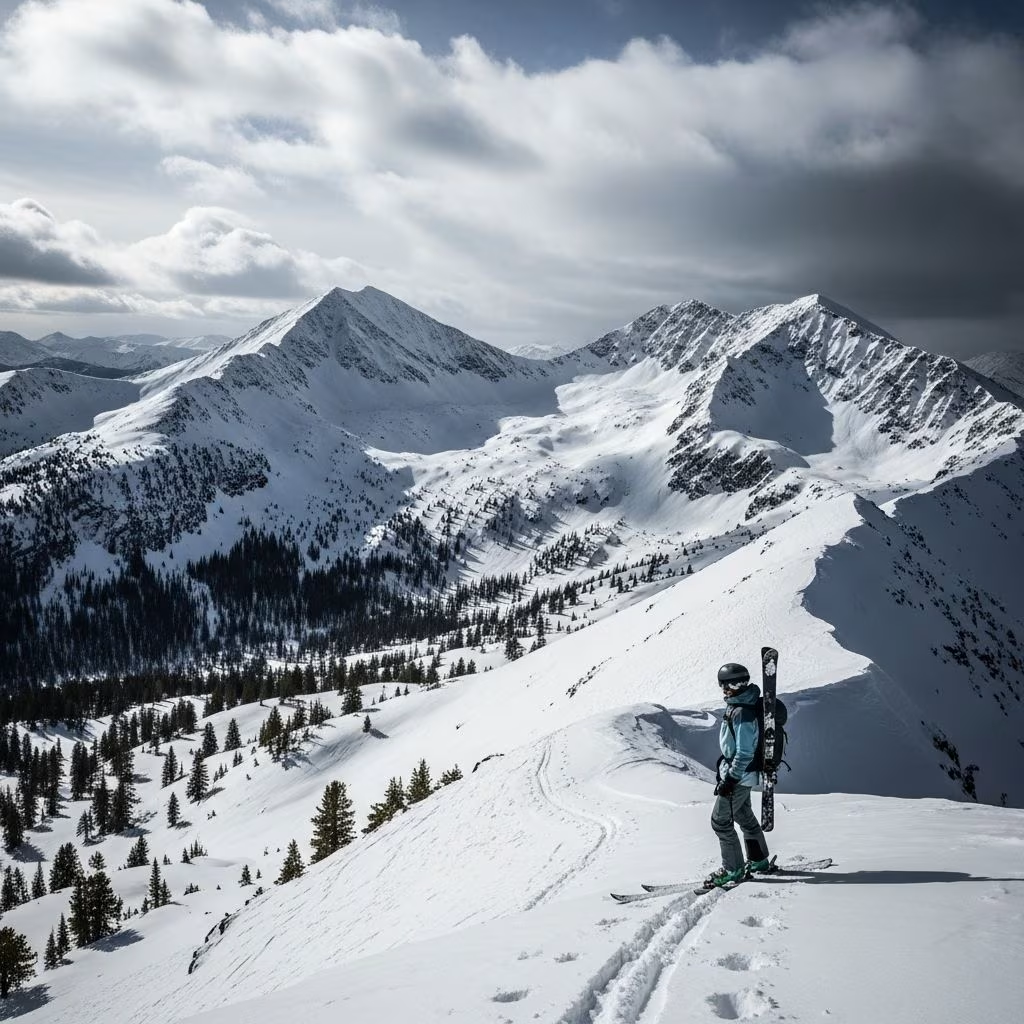
The 2025-26 winter season presented unprecedented challenges for ski resorts across Utah’s Wasatch Mountains. What typically marks the heart of the winter sports calendar unfolded quite differently this year, with warm temperatures and exceptionally low snowfall forcing resorts to make difficult operational decisions weeks ahead of their usual spring closures. This season has become a defining moment in the region’s skiing history, sparking conversations about climate patterns, resort management, and the future of winter tourism in the area.
The defining characteristic of the 2025-26 winter was the unusual warmth that persisted throughout the season. Unlike typical Utah winters where cold air masses dominate and maintain snow quality, this season experienced record-breaking temperatures that accelerated snowmelt and prevented the accumulation necessary to sustain extended operations. These warm conditions arrived earlier than expected and remained unusually persistent, creating challenging conditions that extended well beyond a few warm days in spring.
Resort operators faced a difficult reality: maintaining skiable terrain became increasingly challenging as base depths diminished rapidly. The combination of limited new snowfall and accelerated melting created slushy, deteriorating conditions that reduced the number of terrain options available to skiers and snowboarders. This situation forced resorts to make strategic decisions about which areas to keep open and when to cease operations entirely.
Quantifying the snowfall shortfall provides a sobering perspective on just how dramatic this season was. Deer Valley Resort, one of the premier ski destinations in North America, recorded just 144 inches of snowfall throughout the entire season—approximately half its historical average of 300 inches annually. This represents one of the lowest snowfall totals in the resort’s 44-year operational history.
The regional impact extended throughout the Wasatch Mountain range. While certain areas along Little Cottonwood Canyon received forecasted accumulations in early February, these isolated periods of snow production couldn’t offset the larger seasonal deficit. Resorts throughout northern Utah experienced similar challenges, with some facilities closing their operations earlier than any point in their modern histories.
The cascade of closures throughout March and early April 2026 revealed the extent of the season’s challenges:
This synchronized closure pattern differed markedly from typical seasons, where resorts gradually wind down over an extended period. The coordinated nature of these closures underscored how widespread and uniform the challenging conditions were across the entire Wasatch region.
Park City Mountain Village’s ski season lasted approximately 114 days at the base area before operations concluded. While this might seem like a reasonable duration, it represents a significant reduction compared to typical seasons that often extend toward 130+ days. More importantly, the number of terrain options available during the final weeks of operation shrank dramatically as conditions deteriorated.
Toward the end of operations, resorts in the Park City area maintained only minimal terrain. Limited runs such as High Meadow, portions of Saddleback, and select trails off Cocoapelli remained open. The skiing experience during these final weeks became progressively more challenging, with snow conditions described as increasingly mushy and conditions deteriorating more rapidly than typical spring patterns.
Beyond the skiing experience itself, the shortened season reverberated through the local economy. Park City’s municipal government documented economic softening during the ski season, directly attributable to the warm, dry weather conditions. Reduced visitor traffic, shortened operating seasons, and operational challenges at resorts translated into measurable economic impacts across hospitality, retail, and service sectors dependent on winter tourism.
The economic effects extended beyond direct resort operations. Hotels with reduced occupancy, restaurants and retail establishments serving fewer visitors, and service providers supporting the tourism infrastructure all experienced reduced business activity. This created a cascading economic effect that touched numerous businesses and employment opportunities throughout Park City and neighboring communities.
| Resort | 2026 Closure Date | Historical Context | Primary Reason |
|---|---|---|---|
| Deer Valley | March 28, 2026 | Second-earliest in 44-year history | Record warm temps, low snowfall |
| Snowbasin | Before March 28 | Among earliest closures on record | Insufficient base depths |
| Park City Mountain | April 5, 2026 | Significantly earlier than typical | Deteriorating conditions |
| Powder Mountain | March 28, 2026 | Earlier than average closing | Limited skiable terrain |
The 2025-26 season raises important questions about long-term trends and future seasons. While individual seasons vary naturally, the extremity of warm temperatures and snowfall deficit this year contributes to ongoing discussions about climate patterns and their implications for mountain resort operations.
Resort operators are likely to evaluate strategies for adaptation, including potential infrastructure investments, operational flexibility improvements, and seasonal planning adjustments. The financial impact of early closures creates incentives to develop resilience strategies for future seasons with similar weather patterns.
Deer Valley closed March 28, 2026, while Park City Mountain Village’s main base area ceased operations March 29, with Canyons Village closing April 5, 2026.
Deer Valley received 144 inches of snowfall, approximately half its typical 300-inch average. Early February forecasts for other areas projected 38-46 inches over a two-week period, but these isolated storms couldn’t offset the seasonal deficit.
For Deer Valley specifically, this was the second-worst closure date in 44 years, surpassed only by the March 15, 2020, COVID-related closure. Other resorts also experienced historically early closures, though exact historical comparisons vary by facility.
Park City’s municipal government documented noticeable economic softening during the ski season, with warm weather contributing to reduced visitor traffic and business activity.
Record warm temperatures persisted throughout the season, preventing normal snow accumulation and accelerating snowmelt. This created a compounding effect where the limited snowfall that did occur melted rapidly, leaving insufficient base depths.
