

 Travel Essentials
 Travel Essentials

Discover how to efficiently explore Valencia using its modern public transport network, from metro lines to eco-friendly buses and scenic cycling routes.
 Travel Essentials
Valencia offers visitors and residents a seamlessly integrated transportation network that combines modern infrastructure with convenient connectivity. Whether you’re exploring the historic old town, visiting the futuristic City of Arts and Sciences, or relaxing at the Mediterranean beaches, the city’s multi-modal transit system ensures you can reach any destination quickly and affordably. This comprehensive guide breaks down every transportation option available and provides practical strategies for choosing the best method for your journey.
Valencia’s transportation network represents a model of urban mobility, with six metro lines, four tram lines, and 60 bus routes operating in harmony. The beauty of this system lies in its integration: a single rechargeable card provides access to all modes of transport, eliminating the need to purchase separate tickets for different services. This unified approach makes planning multi-leg journeys straightforward and cost-effective.
The city divides its service area into four fare zones (A, B, C, and D), with Zone A covering the central city and immediate surroundings. Most tourist attractions and popular destinations fall within the Zone A or AB combination, making short-distance travel particularly affordable for visitors.
Metrovalencia, the local designation for the metro system, operates as a clean, air-conditioned, and dependable backbone for the city’s transportation infrastructure. The six metro lines (1, 2, 3, 5, 7, and 9) extend from the city center through residential neighborhoods and connect to surrounding municipalities. The tram network comprises four separate lines, offering distinct routes that often serve areas between metro stops or provide specialized connections.
The metro operates with impressive consistency, opening at 04:00 on weekdays and 05:00 on weekends, with service extending until 23:30 on weekdays and 00:30 on weekends. During peak hours, trains arrive every 5-10 minutes, ensuring minimal wait times for commuters and tourists alike. Off-peak service maintains regular intervals, though passengers should note that after 23:00, intervals may extend to approximately 40 minutes for certain zone combinations.
Three primary stations serve the historic city center: Xàtiva, Colón, and Alameda, accessible via metro lines 3, 5, and 9. For visitors heading to Ciudad de las Artes y Oceanogràfic (the architectural complex designed by Santiago Calatrava), tram line 10 provides direct access. The Jardín del Turia, a beloved green space following the course of a former riverbed, can be reached via lines 1, 2, 3, 5, 7, and 9, depending on which section you wish to explore.
Valencia’s airport sits just 25 minutes from the city center via public transit. Metro lines 3 and 5 operate direct connections between the airport terminal and the downtown area, making it unnecessary to arrange expensive taxi services or rental cars upon arrival. This accessibility encourages visitors to immediately begin using the public transport system, establishing familiarity before exploring the wider city.
Valencia’s beaches—including the popular Malvarrosa and Cabanyal—are easily accessible via dedicated transit routes. Tram lines 4, 6, and 8 provide direct service to these coastal destinations, with line 8 specifically serving La Malvarrosa and lines 4 and 6 connecting to Cabanyal. For those preferring bus transit, line 95 offers comprehensive coverage of major tourist attractions, including beach areas.
Valencia’s bus system extends transportation reach into neighborhoods that metro and tram lines don’t serve, creating a fine-mesh grid of connectivity. The EMT (Empressa Municipal de Transports) operates distinctive red buses throughout the city proper, while yellow Metrobuses serve villages and surrounding areas. With 52-60 identified routes, the bus network ensures virtually every district remains accessible.
Standard red buses operate from 06:00 to 23:00 daily. For those exploring Valencia’s vibrant nightlife, NitBus (night buses) continue service on weekends and days preceding public holidays, running until 2-3 AM. A significant sustainability initiative launched in 2024 introduced a fleet of electric and hybrid vehicles to the EMT network, reducing the environmental impact of urban transportation.
Valencia’s bus infrastructure incorporates modern conveniences: screens at stops display real-time countdown timers indicating arrival of the next bus, eliminating uncertainty about wait times and enabling better journey planning. This technological integration reflects the city’s commitment to user-friendly transit experiences.
Several ticket and pass options accommodate different travel patterns and visitor types:
Passengers must validate tickets before boarding metro trains and bus lines, keeping tickets until departure from the final station. Non-compliance incurs fines of €100 plus ticket cost, making ticket retention a financial safeguard rather than an inconvenience.
Valencia prioritizes accessible transportation across all modes. All metro stations feature adapted routes with ramps and elevators, with the single exception of València Sud station. Buses throughout the network incorporate electric ramps and dedicated wheelchair spaces, ensuring mobility-impaired visitors can navigate the city independently. This commitment to universal access reflects modern urban design principles and ensures transportation becomes a facilitator rather than barrier to exploration.
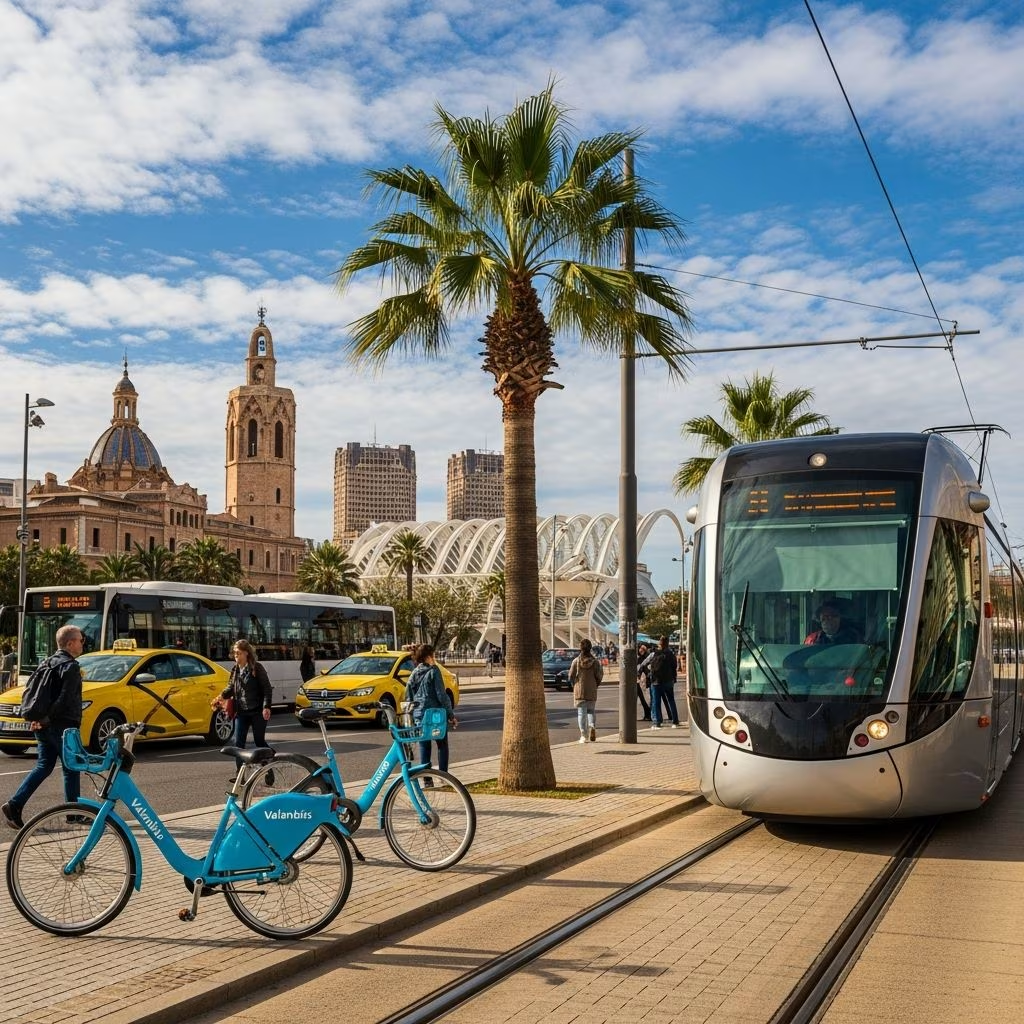
Beyond motorized transit, Valencia’s cycling infrastructure provides an alternative transportation mode perfectly suited to the flat terrain and pleasant climate. The Valenbisi bike-sharing system integrates with the Mobilis Card, allowing seamless transitions between cycling and public transit. Dedicated bike paths crisscross the city, with particularly scenic routes along the Jardín del Turia, transforming a former riverbed into a green corridor connecting neighborhoods.
Many districts reward pedestrian exploration. The historic old town contains narrow streets perfect for walking, while the City of Arts and Sciences features expansive plazas encouraging foot traffic. The Jardín del Turia provides a 9-kilometer walking and cycling path through the heart of the city, creating opportunities for active exploration while enjoying urban green space.
While taxis operate throughout Valencia, the comprehensive and affordable public transport system makes them unnecessary for most journeys. The integrated transit network offers superior value, faster travel through dedicated lanes and priority infrastructure, and eliminates parking concerns entirely.
Official Metrovalencia maps display all metro and tram lines with color coding, zone boundaries, and interchange stations clearly marked. Apps and websites provide real-time service updates, estimated arrival times, and journey planning assistance. Consulting timetables before planning trips—especially evening journeys—prevents frustrating delays when frequency decreases during off-peak hours.
The integrated system enables seamless transfers between all modes. Metro-to-bus or tram-to-bus transfers occur smoothly with single tickets covering the entire journey within time limits. Understanding zone boundaries helps passengers select optimal routes and minimize fare costs.
Metro lines 3 and 5 provide direct service in approximately 25 minutes, costing just €1.50 with a single journey ticket. This represents the fastest and most economical option.
Yes, the Mobilis Card provides integrated access to metro, tram, bus, and Valenbisi bicycle sharing, making it ideal for comprehensive city exploration.
NitBus operates on weekends and days before public holidays until 2-3 AM, ensuring safe, affordable transportation after standard bus service ends. Metro service extends until 00:30 on weekends.
Bus line 95 specifically connects major tourist destinations throughout the city, making it an excellent choice for first-time visitors or those preferring above-ground sightseeing.
Metro stations feature ramps and elevators (except València Sud), and all buses include electric ramps and dedicated wheelchair spaces, ensuring accessible travel throughout the network.
Valencia’s transportation system succeeds through thoughtful design and integration. By selecting appropriate transit modes for each journey, purchasing the most suitable payment option, and familiarizing yourself with key routes, you’ll navigate the city efficiently and affordably. The combination of metro speed for longer distances, buses for neighborhood access, trams for coastal travel, and cycling for local exploration creates a comprehensive mobility ecosystem. Whether you’re a first-time visitor spending a long weekend or a long-term resident establishing daily routines, Valencia’s transit infrastructure adapts to your needs while promoting sustainable urban living.
