

 Travel Essentials
 Travel Essentials

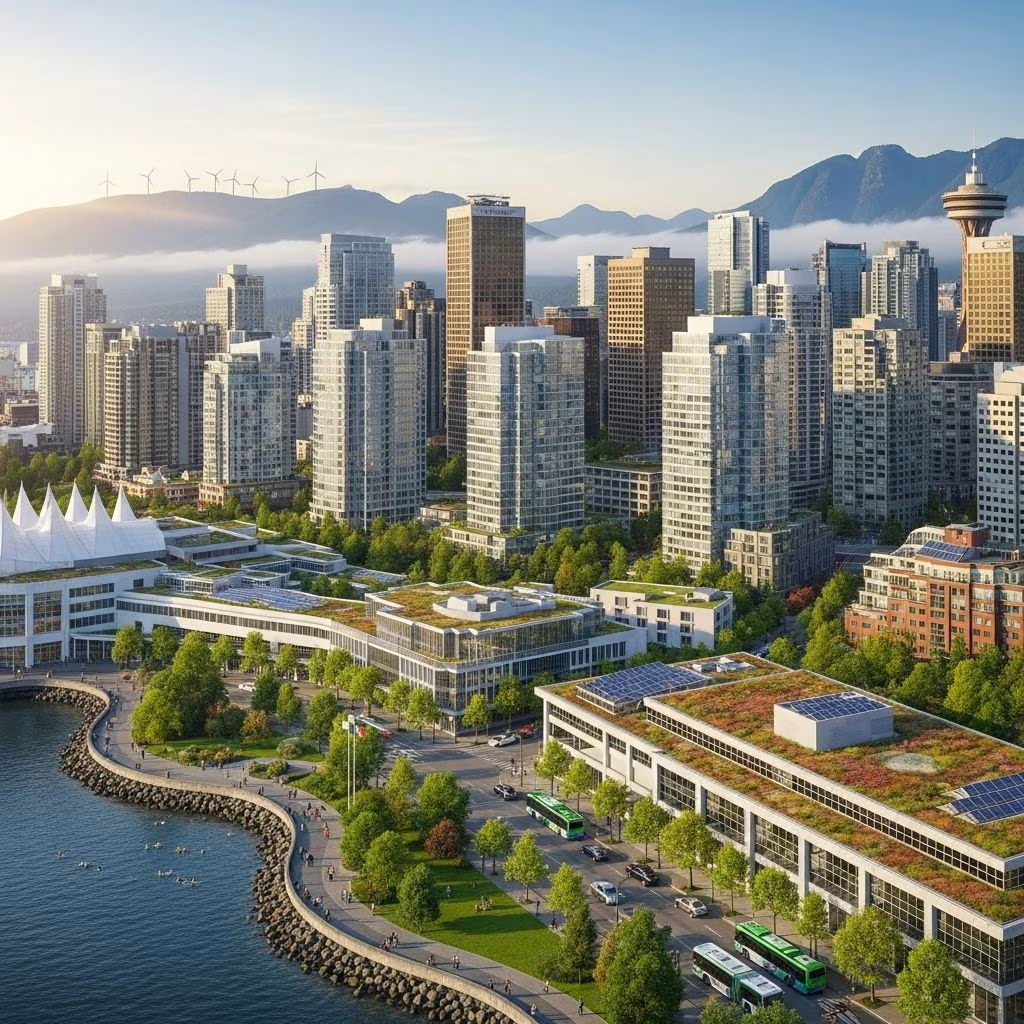
Vancouver earned the top spot as the world's most sustainable city, combining renewable energy, green infrastructure, and urban livability.
 Travel Essentials
When considering the world’s most environmentally conscious cities, Vancouver, Canada, has emerged as a standout leader. The city recently secured the top position on the Reinders Corporation’s Green City Index, as highlighted by Forbes, solidifying its reputation as a beacon of sustainable urban living. This achievement reflects decades of deliberate environmental planning, infrastructure investment, and community commitment to reducing carbon footprints while maintaining vibrant urban livability.
Vancouver’s recognition as the world’s most sustainable city didn’t happen overnight. The city’s environmental credentials have been built through a comprehensive, multifaceted approach that addresses energy production, transportation, urban design, and waste management simultaneously. What distinguishes Vancouver from other green cities is its ability to balance environmental responsibility with the practical needs of a modern metropolitan area, creating a model that other cities worldwide are increasingly seeking to emulate.
The city’s journey toward sustainability reflects a broader commitment by local government and residents to prioritize environmental stewardship in all major planning decisions. This holistic philosophy has transformed Vancouver into a case study for sustainable urban development, demonstrating that environmental goals and economic prosperity are not mutually exclusive.
The Green City Index, developed by Reinders Corporation, evaluates cities across six critical sustainability indicators. These metrics provide a comprehensive assessment of urban environmental performance, examining dimensions that directly impact residents’ quality of life and planetary health. Understanding these criteria reveals why Vancouver’s approach to sustainability stands out in a competitive global landscape.
Vancouver achieved a Green City Index score of 101.71, narrowly surpassing Oslo, Norway, which scored 100.57. This closely contested ranking demonstrates that while Vancouver leads the current standings, the competition among environmentally committed cities remains intense. The top-tier positioning reflects Vancouver’s success across all measured categories rather than dominance in any single area.
At the core of Vancouver’s environmental success lies its remarkable renewable energy infrastructure. The city’s reliance on hydroelectric power, generated from surrounding water systems and regional networks, provides a clean, renewable energy source that powers homes, businesses, and public services. This 98 percent renewable energy achievement fundamentally distinguishes Vancouver from cities dependent on fossil fuels or mixed energy portfolios.
Hydroelectricity’s role in Vancouver’s sustainability cannot be overstated. Unlike cities that must invest heavily in transitioning away from coal, natural gas, or nuclear power, Vancouver benefits from established hydroelectric infrastructure that has served the region for decades. This advantage, combined with ongoing investments in grid modernization and efficiency improvements, positions the city to maintain its renewable energy leadership.
The implications of such high renewable energy usage extend beyond carbon reduction. Lower energy-related emissions translate to improved air quality, reduced health costs associated with pollution, and economic advantages from stable, domestically-sourced power. For residents, this means cleaner air and lower environmental health risks, particularly for children, elderly populations, and those with respiratory conditions.
Vancouver’s provision of 119 square meters of green space per capita reflects deliberate urban planning that prioritizes natural environments within the city’s boundaries. This metric, significantly higher than many comparable metropolitan areas, demonstrates that urban density and environmental quality need not conflict. Instead, thoughtful integration of parks, green corridors, and natural areas creates livable communities while supporting biodiversity and ecosystem health.
The city’s green spaces serve multiple functions beyond aesthetic appeal. Urban forests and parks absorb carbon dioxide, reduce urban heat island effects, manage stormwater runoff, provide habitat for wildlife, and offer recreation opportunities that improve public health. Vancouver’s approach treats green infrastructure as essential urban planning rather than optional amenity.
Transportation represents one of the largest sources of urban emissions globally. Vancouver addresses this challenge through a comprehensive strategy that makes public transit, walking, and cycling more attractive and convenient than private vehicle use. The city’s expanded sidewalks, extensive bike lane networks, and efficient transit systems have fundamentally reshaped how residents move through the city.
This transportation revolution generates multiple co-benefits. Reduced vehicle traffic decreases air pollution, improves public health through increased physical activity, reduces noise pollution, and frees urban space previously dedicated to parking and roads for productive uses. The prioritization of public transit and active transportation also addresses equity concerns, providing mobility options for residents without private vehicles.
Biking infrastructure has expanded significantly throughout Vancouver, with dedicated bike lanes, bike-sharing systems, and bike parking facilities making cycling a practical transportation option. Walking-friendly urban design, including wide sidewalks and pedestrian-priority zones, encourages residents to travel short distances on foot. Together, these active transportation options reduce reliance on motorized vehicles and contribute substantially to the city’s low per-capita emissions.
Vancouver’s building standards demonstrate forward-thinking climate policy. The city mandates that all new construction must meet zero-emissions standards, ensuring that future development contributes to rather than undermines sustainability goals. This requirement drives innovation in building design, materials, and systems, encouraging developers and architects to pioneer solutions that may eventually become industry standards.
Perhaps more ambitiously, Vancouver has committed to retrofitting existing structures to meet the same zero-emissions criteria by 2050. This massive undertaking will involve upgrading heating systems, improving insulation, implementing renewable energy sources, and modernizing aging infrastructure across the city’s existing building stock. Such comprehensive retrofit programs represent some of the most aggressive climate action commitments globally.
Beyond energy and transportation, Vancouver’s commitment to sustainability extends to waste management and circular economy principles. The city works toward becoming completely zero-waste by 2040, a goal that requires fundamental transformation of how materials flow through urban systems. Rather than viewing waste as inevitable, zero-waste philosophy treats materials as resources that should be recovered, reused, or recycled rather than discarded.
Achieving zero-waste goals demands multi-stakeholder engagement. Vancouver regularly hosts recycling events, shares comprehensive action plans with citizens, and educates residents about waste reduction strategies. These initiatives build public understanding of waste’s environmental impacts and empower individuals to make sustainable consumption choices.
While mitigation—reducing emissions—receives significant attention, Vancouver also invests in adaptation and resilience planning. Rising sea levels pose particular challenges for coastal cities, and Vancouver has implemented strategies to improve resilience to climate-related risks. This forward-looking approach recognizes that some climate impacts are already inevitable and requires proactive planning to protect communities and infrastructure.
Resilience planning includes updated building codes for flood protection, restoration of natural ecosystems that buffer against storms, and infrastructure improvements that account for changing climate patterns. By addressing both mitigation and adaptation, Vancouver develops comprehensive climate strategies that protect residents and reduce long-term costs.
Vancouver’s top ranking reflects broader Canadian environmental commitments. The country placed multiple cities within the Green City Index’s top ten, with Toronto and Montreal also achieving recognition. This pattern demonstrates that Canada’s sustainability leadership extends beyond a single city, reflecting national values and policies that prioritize environmental protection.
Country-wide, Canada ranked second in the overall sustainability rankings, indicating systemic approaches to environmental management across multiple municipalities. This collective success provides valuable insights into how national policies, provincial regulations, and local initiatives can align to support sustainability at scale.
Looking beyond Canada, Vancouver’s achievements stand out within a competitive global field. Oslo, Stockholm, Munich, Zurich, and San Francisco all demonstrated strong sustainability performance, yet Vancouver’s integrated approach to renewable energy, green space, transportation, and building standards secured the top position. Each leading city offers lessons from different sustainability strategies, whether emphasizing particular sectors or achieving balanced excellence across all measured categories.
This international competition drives innovation, as cities learn from one another’s successes and adapt solutions to local contexts. Vancouver’s ranking may inspire other municipalities to invest in similar programs, creating a positive demonstration effect that accelerates global sustainability progress.
While Toronto and Montreal both achieved top-ten rankings, Vancouver’s combination of renewable energy usage, green space availability, transportation efficiency, and building standards created a higher overall Green City Index score. Each city excels in different areas, but Vancouver’s integrated approach across all six measured categories provided the winning advantage.
Vancouver’s top ranking indicates that it outperformed established European sustainability leaders like Oslo and Stockholm. This achievement challenges assumptions that European cities automatically lead in environmental performance, demonstrating that North American cities can achieve comparable or superior results through sustained commitment and strategic investment.
Sustainability investments often yield economic benefits including lower long-term energy costs, reduced health expenditures from improved air quality, economic growth in clean technology sectors, and enhanced urban attractiveness to businesses and residents seeking sustainable communities. Vancouver’s model demonstrates that environmental and economic goals can reinforce rather than contradict each other.
While every city’s context differs, Vancouver’s multi-sector approach offers transferable lessons: prioritizing renewable energy infrastructure, integrating green spaces into urban planning, investing in public transit and active transportation, establishing strong building standards, and engaging residents in sustainability initiatives. Success requires long-term commitment and coordination across government, business, and community stakeholders.
Vancouver’s recognition as the world’s most sustainable city represents more than a single achievement—it demonstrates that modern metropolitan areas can prioritize environmental responsibility while maintaining economic vitality and quality of life. The city’s renewable energy infrastructure, green spaces, transportation systems, and ambitious climate commitments create a comprehensive sustainability model that addresses interconnected environmental challenges.
As cities worldwide face intensifying climate impacts and environmental pressures, Vancouver’s example provides both inspiration and practical guidance. The city’s success across multiple sustainability dimensions shows that balanced environmental progress, rather than specialization in single areas, creates resilient, livable communities. By continuing to advance its sustainability agenda and sharing lessons with other municipalities, Vancouver contributes to global progress toward a more environmentally sustainable future.
