

 Travel Essentials
 Travel Essentials

Explore Varanasi’s sacred ghats, sunrise Ganges rituals, Ganga Aarti, and timeless streets where spirituality, life, and death meet.
 Travel Essentials
Perched on the banks of the sacred Ganges River, Varanasi stands as one of the world’s oldest continuously inhabited cities, drawing millions seeking spiritual awakening and profound introspection. This ancient hub in Uttar Pradesh, India, weaves a tapestry of rituals, chaos, and serenity that profoundly impacts visitors, often reshaping their worldview on existence itself.
Varanasi, revered across Hinduism, Jainism, and Buddhism, pulses with millennia-old traditions. Believed to be over 3,000 years old, it serves as a pilgrimage epicenter where devotees flock for purification and liberation. The city’s labyrinthine alleys and 84 ghats—stone steps descending to the river—form the backbone of daily life, blending devotion with everyday commerce.
Unlike typical tourist spots, Varanasi confronts visitors with unfiltered reality. Narrow lanes teem with cows, pilgrims, vendors, and sadhus (holy men), creating a sensory overload that transitions into unexpected calm. Many describe an initial disorientation giving way to adaptation within days, fostering a deep sense of belonging amid the pandemonium.
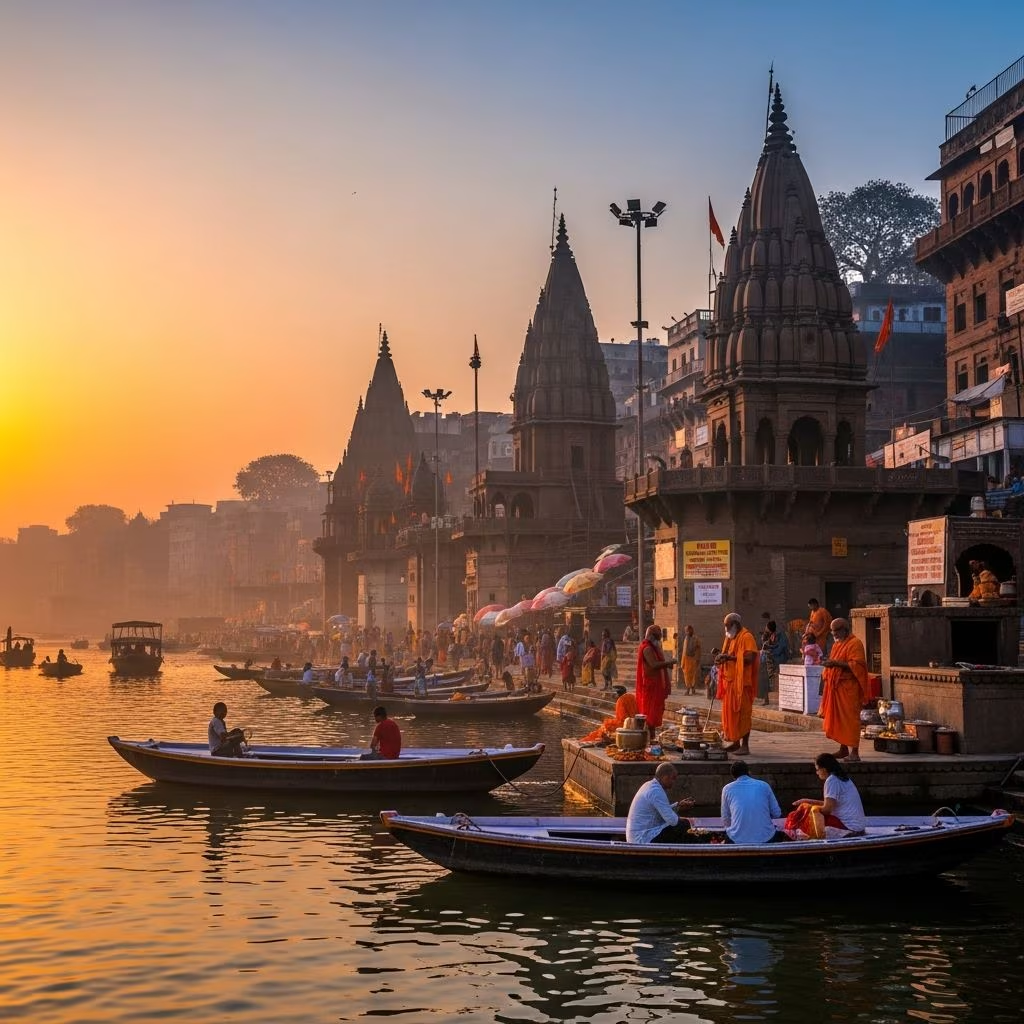
As the sun rises, the Ganges awakens with hundreds of boats carrying pilgrims for ritual dips. These sunrise boat rides offer panoramic views of the ghats, where bathers immerse in the holy waters, believed to cleanse sins accumulated over lifetimes. The air fills with chants, bells, and the rhythmic splash of oars, setting a tone of reverence.
Participating in or observing these ablutions provides a gateway to Hindu cosmology. Water from the Ganges is considered amrita (nectar of immortality), carried home in small vials by devotees worldwide. For travelers, this spectacle underscores themes of renewal and the cyclical nature of life.
| Ghat Name | Key Activity | Best Time |
|---|---|---|
| Dashashwamedh Ghat | Main bathing and aarti site | Sunrise/Sunset |
| Manikarnika Ghat | Cremations and moksha rituals | 24/7 |
| Assi Ghat | Yoga, meditation, evening prayers | Dawn/Dusk |
Varanasi’s most poignant draw lies in its open-air cremation grounds, particularly Manikarnika and Harishchandra Ghats. Here, wood pyres burn continuously, illuminating the night as families perform last rites. Hindu belief holds that death in Varanasi grants moksha, freeing the soul from reincarnation’s cycle.
Witnessing these ceremonies strips away Western taboos around death. Bodies wrapped in saffron shrouds arrive on bamboo stretchers, circled seven times before ignition. The process, devoid of mourning’s excess, emphasizes acceptance. Visitors often report epiphanies: life’s fragility, the illusion of permanence, and peace in impermanence.
Yet, sensitivity is paramount. Photography is taboo, and touts may approach—politely decline to honor the sanctity. These sites transform grief into contemplation, as one traveler noted amid personal loss, finding solace in the city’s embrace of life’s end.
At dusk, Dashashwamedh Ghat erupts into the Ganga Aarti, a synchronized ritual of fire, incense, and song honoring Mother Ganga. Brahmin priests in saffron robes perform intricate dances with brass lamps, accompanied by conch shells and bhajans (devotional songs). Thousands gather, afloat or ashore, in a spectacle of light reflecting on the river.
This 45-minute ceremony encapsulates Varanasi’s devotional fervor. Arrive early for a prime spot; boat vantage points enhance the experience. Many feel an electric spiritual charge, connecting to something ancient and universal.
Beyond the riverfront, Varanasi’s old city beckons with its maze of galis (lanes). Kashi Vishwanath Temple, one of 12 Jyotirlingas, draws endless queues for darshan (divine viewing) of Shiva’s lingam. Security is tight post-1990s tensions; expect thorough checks.
Encounters with sadhus add mystique—ash-smeared ascetics sharing wisdom or ganja. Engage respectfully; their teachings on detachment resonate deeply. Street food like kachori, lassi, and banarasi paan offers flavorful pitstops amid the hustle.
Varanasi’s cuisine mirrors its spirit: simple, sattvic (pure), and communal. Savor thandai (spiced milk), malaiyo (winter froth), and riverside chaat. Craft traditions thrive—silk weaving in workshops, brasswork in Thateri Bazar. Visiting weavers reveals Banarasi sarees’ intricate zari work, a labor-intensive art passed generations.
Reach Varanasi via Lal Bahadur Shastri Airport (25km away) or direct trains to Varanasi Junction. Stay in guesthouses near Assi Ghat for authenticity or heritage hotels like BrijRama Palace for luxury river views.
Best season: October-March (cooler weather). Pack modest clothing, comfortable shoes for uneven paths, and mosquito repellent. Hire authorized guides via tourism boards to avoid scams—English-speaking locals enhance immersion.
Duration: 3-5 days ideal. Itinerary sample:
Yes, with standard precautions. Stick to main ghats daytime; women should cover shoulders/knees. Chaos feels intense but is rarely dangerous.
Absolutely. Cremation areas welcome respectful observers; some inner sanctums restrict non-Hindus.
Modest attire: long pants/skirts, covered shoulders. Scarves useful for temples.
Book boats in advance; arrive 1 hour early for shore seats.
Predominantly yes; sacred city norms favor sattvic meals.
Varanasi defies casual tourism. It mirrors existence’s raw edges—birth, death, joy, suffering—compelling introspection. Travelers depart with shifted priorities: less materialism, more presence. The city’s ‘magical spell’ instills peace amid chaos, proving spirituality permeates daily acts.
Whether seeking moksha, cultural depth, or personal renewal, Varanasi delivers. It reminds us: life flows like the Ganges—eternal, unpredictable, sacred.
