

 Travel Essentials
 Travel Essentials

Venice faces severe overtourism, leading to depopulation, environmental damage, and cultural erosion. Discover causes, impacts, and sustainable solutions for thoughtful travel.
 Travel Essentials
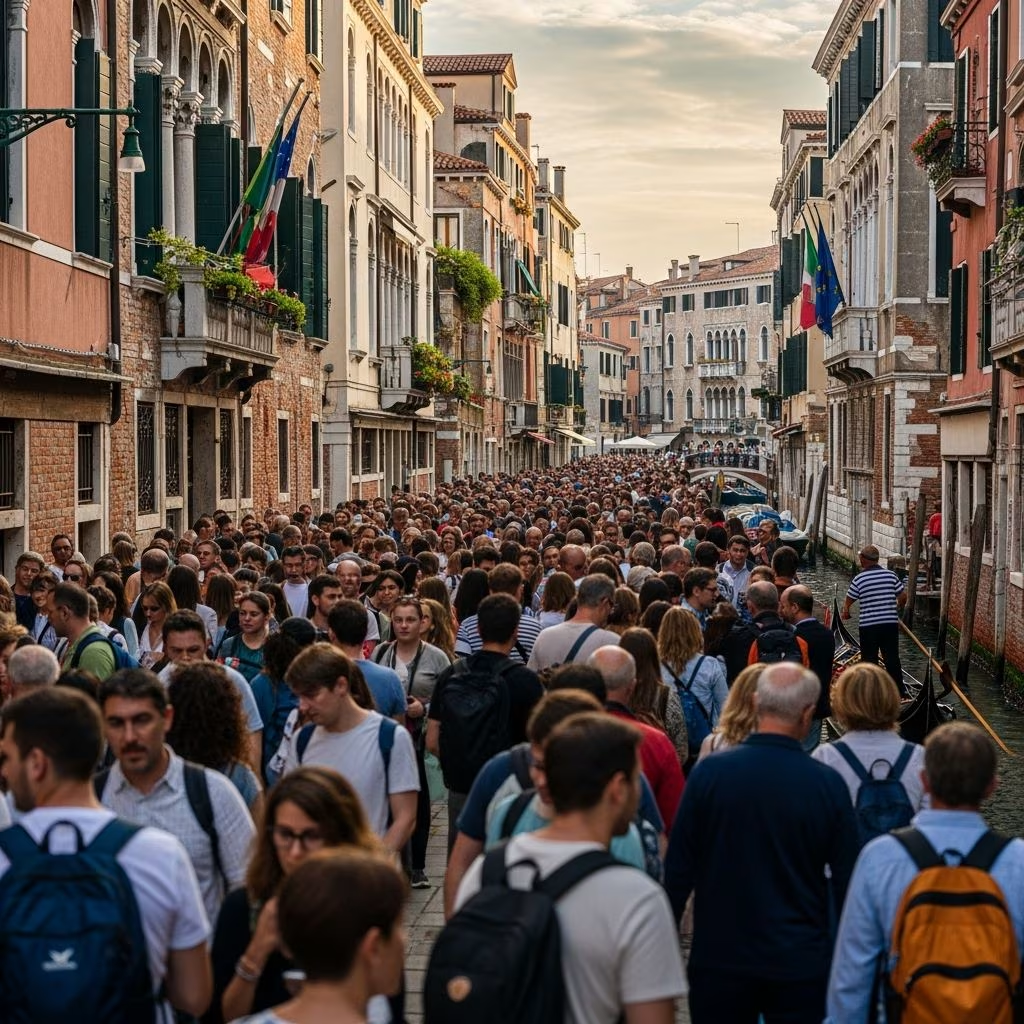
Venice, the enchanting lagoon city famed for its canals and Renaissance architecture, grapples with an existential threat from unchecked tourism. Once home to over 170,000 residents, its historic center now shelters fewer than 50,000, as waves of visitors—up to 30 million annually before recent disruptions—overwhelm its fragile infrastructure and displace locals. This phenomenon, known as overtourism, transforms a living city into a theme park, straining resources and eroding authenticity.
Several interconnected factors fuel Venice’s tourism explosion. Low-cost airlines have democratized access, ferrying millions of day-trippers who arrive empty-handed and leave without meaningful economic contributions. Cruise ships, once docking daily in the Giudecca Canal, disgorge thousands of passengers, generating pollution and congestion while contributing minimally to local coffers—often less than 5% of their spend stays in Venice.
Peer-to-peer accommodations like Airbnb exacerbate housing shortages, converting residential apartments into short-term rentals. Skyrocketing rents force families out, as small businesses yield to souvenir shops and fast-food outlets catering to transient crowds. Pre-pandemic figures showed nearly 20 million visitors to the historic center alone, with peaks exceeding 100,000 daily, far surpassing sustainable levels.
The exodus of residents paints a stark picture. From 175,000 in 1951, the population plummeted to under 50,000 by 2023, with projections dipping further. High living costs, driven by tourism, make groceries, housing, and services unaffordable. Neighborhood shops—bakeries, toy stores, family grocers—close as landlords demand premiums for tourist-facing ventures.
Locals navigate a gauntlet of rolling suitcases, boisterous groups, and selfie sticks. Canals, once serene waterways, host litter and improper picnics, while bridges become impromptu dining spots. Public transport vaporetti overflow, prioritizing tourists over commuters. This monoculture stifles non-tourism jobs; mechanics, teachers, and artisans migrate to the mainland, hollowing out community life.
“Small businesses that once served the community have disappeared… One beloved toy shop was forced to close when the rent became unaffordable.”
Venice’s unique lagoon ecosystem bears the brunt. Cruise ships’ propellers stir sediment, accelerating erosion of islands and accelerating subsidence—a process compounded by climate change and acqua alta floods. Air and water pollution from these behemoths release emissions equivalent to thousands of cars daily, threatening UNESCO-listed heritage sites.
Overcrowding exceeds physical carrying capacity in icons like Piazza San Marco, where sitting on steps is now banned to prevent wear. Day-trippers amplify waste: single-use plastics clog canals, straining limited sewage systems designed for far fewer people. A 2018 European Parliament report highlighted how tourism exacerbates air/water pollution and infrastructure decay.
| Impact Area | Description | Data Point |
|---|---|---|
| Population Decline | Residents fleeing due to costs | <50,000 in historic center |
| Visitor Numbers | Annual pre-COVID influx | ~30 million |
| Cruise Impact | Daily passengers at peak | Up to 30,000/ship |
| Economic Leakage | Local retention from cruises | <5% |
Venice has experimented with interventions. A 2021 cruise ban relocated mega-ships to Marghera, reducing lagoon traffic but not visitor numbers, as passengers still bus into the center. A €5 day-tripper fee, introduced in 2024, aims to curb peaks (April-October), exempting overnighters to favor meaningful stays. Early data shows mixed compliance, with fines for evasion.
Other efforts include capping group sizes, promoting off-season visits, and revitalizing non-tourism economies like maritime ports. UNESCO’s scrutiny, listing Venice as a ‘site in danger’ candidate, pressures for stricter tourist carrying capacity (TCC) enforcement—physical, economic, and social.
Thoughtful tourists can mitigate harm. Stay overnight in family-run hotels or B&Bs to boost local economies. Dine at osteria offering Venetian cicchetti, supporting independent eateries over chains. Explore beyond San Marco: wander Cannaregio’s Jewish Ghetto or quiet Torcello island via vaporetto.
Engage locals respectfully—no canal swims, bridge picnics, or loud groups. Apps like ‘Venice Access’ map crowd levels in real-time.
Sustainable models propose ‘antibiotic’ limits (50-60k daily visitors) paired with ‘probiotic’ diversification: reopening ports, incentivizing resident returns via subsidies, and tech for crowd management. Public awareness campaigns urge quality over quantity tourism. If unaddressed, Venice risks total depopulation, becoming a Disney-fied relic.
Yet hope persists. Post-COVID pauses revealed quieter canals teeming with life. Collaborative efforts—government, NGOs, businesses—could restore equilibrium, preserving La Serenissima for generations.
Tourism-driven rent hikes, job scarcity outside hospitality, and daily disruptions from 30 million+ visitors annually.
No; ships moved nearby, passengers still flood the city. Broader measures like visitor fees are needed.
Yes, with planning: avoid peaks, stay longer, explore peripheries for authentic experiences minus extreme crowds.
€5 for peak-season visits; payable online, exempts overnight guests to encourage deeper engagement.
Social TCC prioritizes residents; proposals cap at 50-60k/day with economic diversification.
