

 Travel Essentials
 Travel Essentials

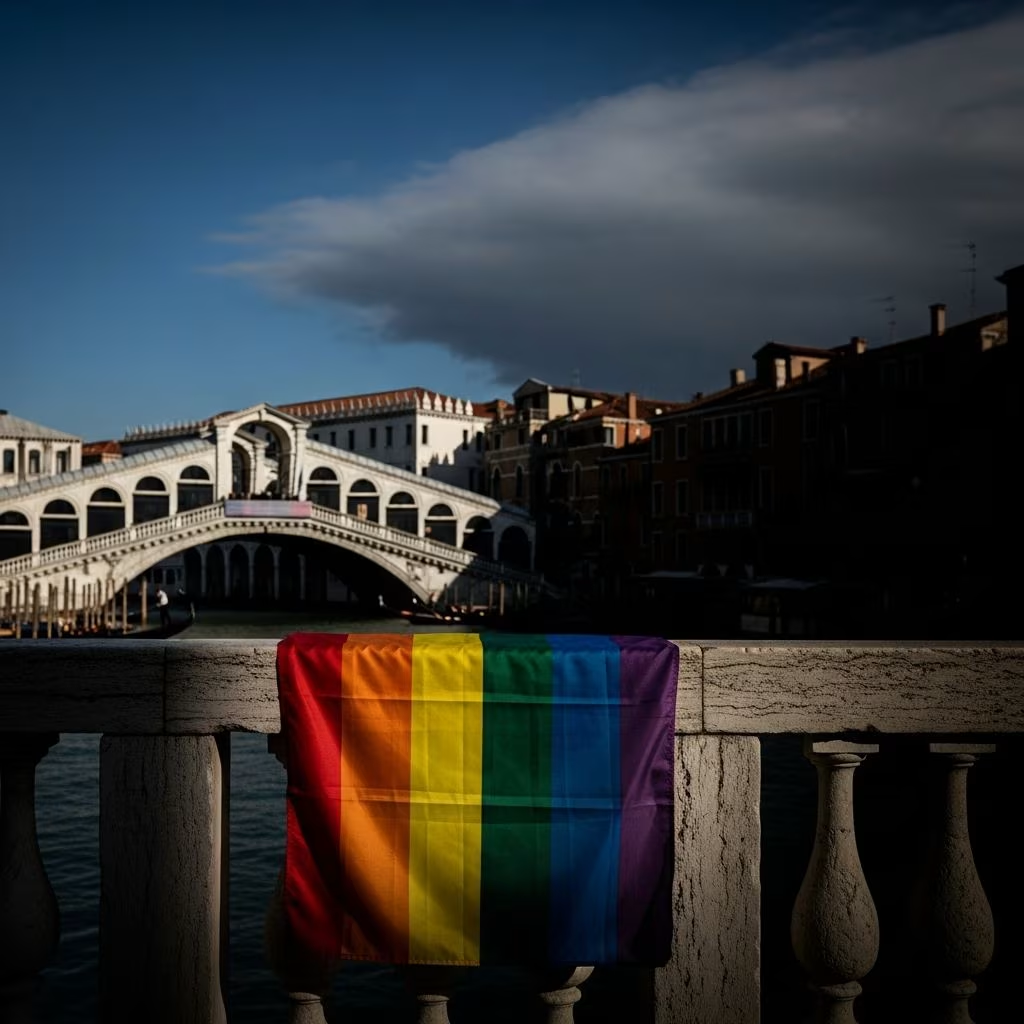
Explore the controversial restrictions on LGBTQ+ gatherings in Venice and the political landscape surrounding cultural celebrations in the city.
 Travel Essentials
Venice, one of the world’s most iconic and romantically celebrated destinations, has become the center of a significant cultural and political debate regarding the celebration of LGBTQ+ identities and events. The restrictions placed on pride gatherings in this historic Italian city reflect broader tensions between traditional conservative governance and contemporary movements for inclusivity and human rights.
Since 2015, Luigi Brugnaro has served as the mayor of Venice, representing the city as a conservative businessman and politician. As an independent candidate who later became affiliated with centre-right political movements, including his 2021 association with Coraggio Italia, Brugnaro has championed policies that reflect his traditionalist worldview. His administration has pursued several initiatives that prioritize what he characterizes as cultural preservation and family-oriented values, though these policies have generated considerable international controversy and criticism from human rights advocates.
Brugnaro’s political framework emphasizes what he sees as protecting Venice’s cultural identity and social norms. However, his approach to governance has frequently conflicted with modern understandings of civil rights and non-discrimination. His tenure has been marked by decisions that raise questions about inclusivity, tolerance, and the role of local government in protecting or restricting citizens’ freedoms of expression and assembly.
In 2015, following his election as mayor, Brugnaro made a controversial declaration that has defined much of the discourse surrounding his administration. He publicly stated that gay pride parades would not be permitted in Venice during his tenure as mayor. When interviewed by La Repubblica, he elaborated on this position, characterizing pride events as “a farce” and describing them using aesthetic critiques rather than substantive policy arguments.
The reasoning provided by Brugnaro centered on cultural and aesthetic objections rather than security or administrative concerns. He suggested that pride celebrations belonged elsewhere, specifically mentioning Milan as an alternative location or suggesting they occur in private settings. This framing of his restrictions as matters of taste and cultural appropriateness rather than legitimate governance concerns drew widespread condemnation from civil rights organizations, international media outlets, and LGBTQ+ advocacy groups worldwide.
The restrictions represent more than a single policy decision; they exemplify a broader conservative approach to municipal governance that raises critical questions about:
Brugnaro’s approach to LGBTQ+ related matters extends beyond restricting public events. In another controversial action, his administration implemented a ban affecting educational materials in Venice’s schools. The mayor ordered the removal of approximately 49 books from school libraries and curricula—books that addressed themes of discrimination and homosexuality. Among the targeted titles was a French children’s book titled “Jean Has Two Mums,” which explores family diversity through the perspective of a young child.
This censorship initiative revealed a comprehensive strategy to limit LGBTQ+ representation across multiple sectors of civic life. By restricting access to literature that normalizes diverse family structures and LGBTQ+ identities at the educational level, the policy sought to shape cultural discourse from childhood forward. Educational specialists and child development professionals have raised concerns about such restrictions, noting that age-appropriate literature depicting diverse families supports psychological development, reduces stigma, and promotes social understanding among young people.
The book banning drew particular criticism because it affected children’s literature designed to introduce concepts of inclusion and family diversity in developmentally appropriate ways. International organizations focused on education and human rights questioned whether such restrictions served legitimate educational purposes or constituted an abuse of governmental authority to impose ideological perspectives on young citizens.
Brugnaro’s policies attracted opposition from prominent cultural figures with connections to Venice. Elton John, the internationally acclaimed musician and LGBTQ+ activist who maintains a residence in the city, became an outspoken critic of the mayor’s restrictions. John’s vocal opposition to these policies generated significant international media attention, bringing the Venice situation into conversations about gay rights, artistic freedom, and the responsibilities of political leaders in cosmopolitan cities.
The public disagreements between Brugnaro and John represented a clash between different visions of what Venice should represent to the world. While the mayor characterized his position as defending Venetian cultural values, critics—including John—argued that inclusivity, diversity, and freedom of expression are themselves central to contemporary cultural values that a city welcoming millions of international visitors should embody.
The restrictions implemented in Venice sparked international condemnation from human rights organizations, LGBTQ+ advocacy groups, and civil rights bodies. Rights groups described the policies as discriminatory and contrary to principles of equality enshrined in European human rights frameworks. The Italian government faced pressure regarding these local policies, with international observers questioning whether sufficient oversight existed to prevent municipalities from enacting restrictions that contradicted national and European non-discrimination standards.
The controversy raised important questions about:
Venice’s situation reflects broader political dynamics within Italy regarding LGBTQ+ rights and conservative governance. Italy has experienced significant debate over same-sex partnerships, adoption rights, and anti-discrimination protections. Different municipalities and regions have pursued varying policies reflecting the country’s ideological diversity and the influence of traditional Catholic social perspectives in some areas.
Brugnaro’s rise to leadership and his subsequent policies occurred within the context of European right-wing political movements gaining electoral strength. His affiliation with centre-right coalitions and subsequent leadership of Coraggio Italia positioned him within political networks advocating for what they characterize as traditional values and cultural protection. This positioning reflected and reinforced similar movements across Europe emphasizing national or regional identity against what they frame as external cultural pressures.
As one of the world’s premier tourist destinations, Venice’s policies regarding LGBTQ+ inclusion have implications for its international reputation and appeal. Cities that emphasize inclusivity and cultural diversity often attract wider audiences, investment, and international business relationships. Conversely, policies perceived as discriminatory can affect tourism patterns, particularly among LGBTQ+ travelers and their allies who increasingly consider a destination’s cultural policies when planning travel.
The restrictions potentially impact Venice’s positioning as a cosmopolitan, welcoming destination open to diverse visitors from around the world. Tourism boards and city marketing campaigns typically emphasize openness and cultural richness, but policies restricting public expression of LGBTQ+ identities can create contradictions between marketing messaging and actual civic policies.
Italy’s legal system, like other European democracies, provides constitutional protections for freedom of assembly and expression. The Italian Constitution guarantees rights to peaceful assembly and prohibits discrimination based on sexual orientation. The question of whether local restrictions on pride events align with or violate these constitutional protections remains a matter of legal and political debate. Some legal scholars have argued that such restrictions potentially violate constitutional guarantees, while proponents of the restrictions argue that local governments retain certain discretionary authority over public events.
The situation in Venice remains unresolved in many respects. As of the current date, Brugnaro continues in his role as mayor, and the restrictions remain in place. The broader question of whether such local policies will face legal challenges, government intervention, or change through electoral processes continues to develop. The Venice case has become emblematic of larger debates occurring across Europe regarding the balance between traditional governance perspectives and contemporary commitments to equality and non-discrimination.
For LGBTQ+ communities, human rights advocates, and citizens concerned with democratic principles, Venice’s policies serve as a cautionary example of how local political authority can be exercised to restrict rights, even within democratic frameworks. For supporters of Brugnaro’s approach, the policies represent legitimate expressions of local governance priorities and cultural preservation. This fundamental disagreement about the proper role of government in shaping cultural expression remains unresolved in the Venetian context and reflects broader ideological divisions within contemporary democracies.
