

 Travel Essentials
 Travel Essentials

Discover how to navigate Venice efficiently using vaporettos, water taxis, buses, and walking. Learn ticket prices, routes, and insider tips for moving around this iconic Italian city.
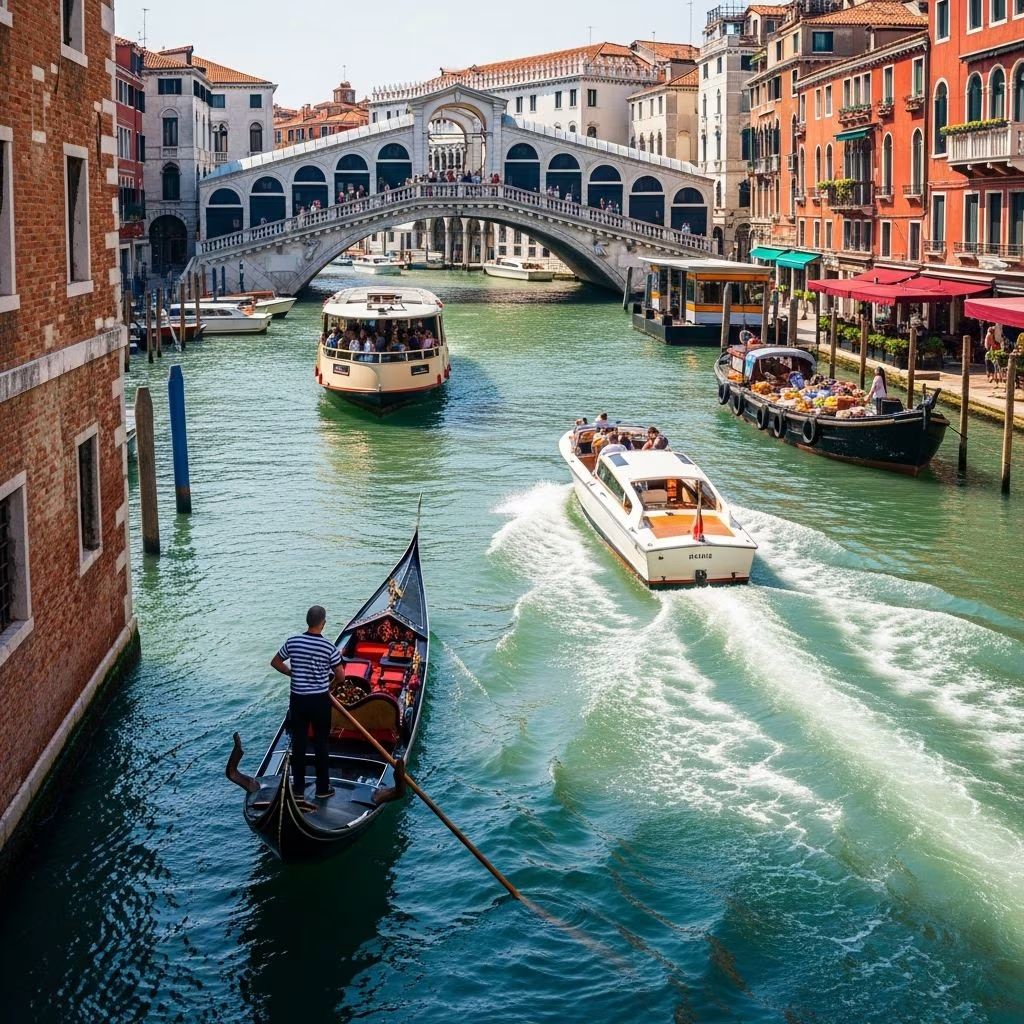 Travel Essentials
Venice presents a unique transportation challenge unlike any other European city. With its network of canals replacing streets and its compact geography, travelers must adapt to a distinctly aquatic environment. Understanding the local transport system is essential for maximizing your time and budget while exploring this remarkable destination.
Before selecting transportation methods, recognize that Venice itself is remarkably small. The city center can be traversed on foot in approximately thirty minutes, eliminating the necessity for transport when staying centrally. This pedestrian-friendly scale means many visitors can explore major attractions through walking alone. However, reaching outer neighborhoods, nearby islands, and the mainland requires understanding Venice’s multi-layered transport infrastructure.
The city is divided into distinct zones: the historic island center, surrounding lagoon islands like Murano and Burano, the mainland area of Mestre, and the broader mainland including Marco Polo Airport. Each destination demands different transportation approaches, making familiarity with available options invaluable.
The vaporetto represents the cornerstone of Venice’s public transportation network. These distinctive water buses serve as the primary means by which both residents and visitors navigate the lagoon and canal system. Operating from early morning until late night, vaporetti provide comprehensive coverage connecting Venice’s central areas with outlying islands and neighborhoods.
Vaporetti commence service at 4:30 AM and continue until 12:30 AM, accommodating early risers and evening explorers alike. Service frequency varies throughout the day, with peak hours offering more frequent departures and reduced frequency during off-peak periods and nighttime hours. Those planning evening activities should account for diminished service when scheduling return journeys.
Several key vaporetto lines service distinct routes throughout the city:
Vaporetto tickets require strategic planning due to variable pricing structures. Single journey tickets differ from multi-day passes, and advance purchases offer savings compared to onboard purchases. Additionally, luggage exceeding one piece incurs a €6 surcharge per extra bag. Purchasing tickets in advance and understanding pass options prevents overspending during your visit.
For travelers prioritizing privacy and schedule flexibility, water taxis offer an alternative to vaporetti. These vessels accommodate up to ten passengers and provide direct routing to destinations potentially underserved by standard vaporetto lines. Water taxi stands operate throughout the city, and advance booking is available through Consorzio Motoscafi. Pricing varies according to route distance and passenger count, making water taxis a premium option for those requiring customized routing or preferring exclusive transport.
Beyond vaporetti and water taxis, Venice offers supplementary water transport methods suited to specific needs and preferences.
Traghetto gondolas provide economical water crossing options for specific routes, typically across the Grand Canal at points lacking bridges. These services represent a budget-conscious alternative to standard gondola rides while providing authentic waterborne transport.
Gondolas function primarily as tourist attractions rather than practical transit, though they technically constitute public transport options. Traditional rowed gondolas provide atmospheric experiences navigating narrow canals but cost considerably more than vaporetti, making them impractical for regular transportation needs.
For travelers arriving at Marco Polo Airport, the Alilaguna waterbus provides a scenic transport option directly into Venice. Three service lines—Linea Blu (Blue), Linea Arancia (Orange), and Linea Rossa (Red, operating April through September)—connect the airport with the Grand Canal, cruise port, and Lido. This option combines convenience with Venetian ambiance, though timing and luggage capacity should be considered.
Multiple transport options connect Marco Polo Airport to Venice’s center, each presenting distinct advantages:
| Transport Method | Cost | Duration | Characteristics |
|---|---|---|---|
| Alilaguna Waterbus | Variable | ~60 minutes | Scenic, direct to Venice center, seasonal variations |
| ATVO Coach | €8 one-way / €15 round-trip | ~70 minutes | Most economical, multiple stops, frequent departures |
| ACTV Bus 5 Aerobus | €8 one-way / €15 round-trip | ~50-70 minutes | Budget option with mainland stops before Venice |
| Land Taxi/Car Service | ~€60 | ~30 minutes | Premium option with door-to-door convenience |
Bus services terminate at Piazzale Roma, effectively Venice’s entrance square, . Tickets for bus services are purchasable at airport kiosks or from attendants at bus stops. Budget travelers benefit from advance ticket purchases, while those prioritizing speed might consider water or taxi alternatives despite higher costs.
Arriving by train places travelers directly at Santa Lucia station, with immediate access to vaporetto docks and ticket windows along the Grand Canal. From this central location, three primary options facilitate onward travel: vaporetto service, private water taxi, or walking. The station’s central Grand Canal location provides exceptional connectivity to most Venice destinations via Lines 1 or 2.
Venice’s broader administrative area extends to Mestre on the mainland, requiring distinct transport solutions for those staying outside the island proper.
Conventional buses with wheels operate across the causeway connecting mainland Mestre with Venice’s Piazzale Roma entrance. These services integrate Mestre neighborhoods with the island center, essential for those based on the mainland. Single advance tickets cost €1.50, increasing to €3 if purchased onboard, with ten-ticket carnets available for €14. Ticket validation upon boarding remains mandatory for all services.
Venice operates two tram lines exclusively serving the mainland. Line T2 operates solely within Mestre, while the secondary line crosses the causeway to Piazzale Roma. Like bus services, tram tickets cost €1.50 advance or €3 onboard, with ten-ticket carnets at €14. Ticket validation is required upon boarding. These services benefit those preferring tram transit over buses for mainland connections.
Walking deserves emphasis as Venice’s optimal transportation method when staying centrally. The city’s compact scale and pedestrian-prioritized design make walking not merely viable but often preferable to motorized transport. Many major attractions are reachable on foot from central accommodation, eliminating transportation costs while enabling spontaneous exploration.
Strategically selecting ticket types significantly impacts trip budgeting. Single-journey tickets suit occasional travelers, while multi-day passes benefit those using vaporetti frequently. Purchasing tickets in advance avoids onboard premiums and reduces boarding delays. Understanding luggage surcharges ensures budget accuracy, particularly for travelers with multiple bags.
Aligning activities with vaporetto schedules proves essential, particularly for evening explorations. Reduced nighttime service frequency necessitates planning return journeys before service diminishes. Similarly, those traveling between Venice and distant lagoon islands should verify seasonal service availability, as some routes operate only during specific periods.
If staying in central Venice, walking alone suffices for most attractions. The city’s half-hour traversal distance means most landmarks are accessible on foot. However, visiting outlying islands or staying in peripheral locations requires transport supplementation.
Walking costs nothing and represents the most economical approach. For water travel, vaporetto passes offer better value than individual tickets, particularly for multi-day visits. Bus services from mainland locations provide cheaper alternatives to airport taxis.
Water taxis justify their expense for travelers prioritizing schedule flexibility, privacy, or routing to underseviced locations. For straightforward point-to-point travel between major stops, vaporetti typically suffice.
Each transport mode accommodates luggage differently. Vaporetti charge €6 per bag beyond the first; buses typically allow standard baggage without surcharge. Water taxis accommodate luggage within their ten-person capacity. Understanding these policies prevents unexpected charges and aids packing decisions.
Vaporetti specifically designed for lagoon service connect island destinations. Mainland buses and trams serve only the Mestre area and the causeway route to Piazzale Roma. Island exploration requires vaporetto usage or private water taxi services.
Navigating Venice successfully requires understanding its unique transportation ecosystem combining water-based transit, limited mainland services, and extensive pedestrian infrastructure. While vaporetti form the backbone of water transport, walking remains underrated as a viable exploration method within the compact island center. Strategic ticket selection, awareness of service schedules, and realistic distance expectations enable efficient, economical navigation throughout the city and surrounding lagoon. Arriving with transportation knowledge transforms potential confusion into confident, purposeful movement through this extraordinary destination.
