

 Travel Essentials
 Travel Essentials

Learn crucial preparation strategies for Venice including transportation, accommodation, dress codes, fees, and behavioral expectations to maximize your visit.
 Travel Essentials
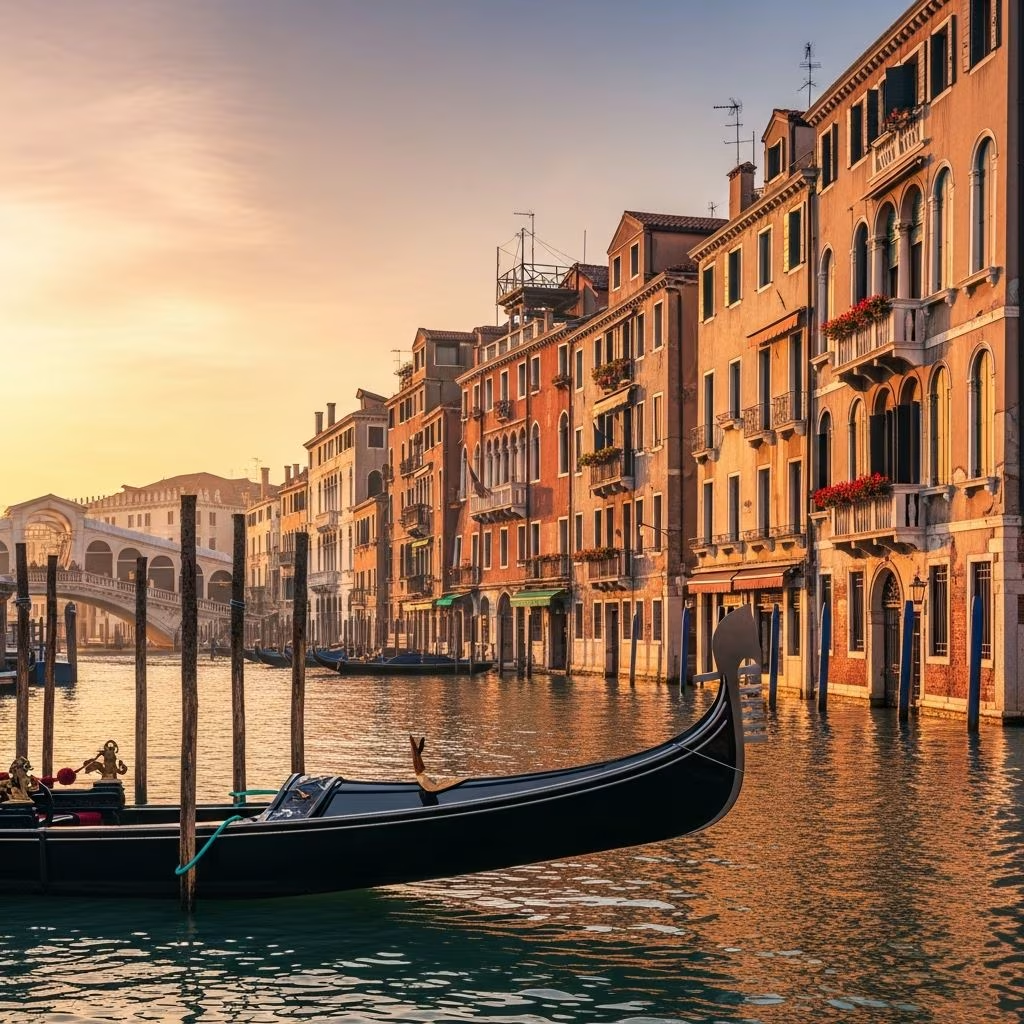
Venice represents one of Europe’s most enchanting yet demanding destinations. Unlike conventional cities built on solid ground, this remarkable lagoon settlement requires visitors to fundamentally adjust their travel expectations and logistics. Successful navigation of Venice depends far less on spontaneity and far more on informed preparation. This comprehensive guide addresses the critical factors that distinguish a seamless Venetian experience from a frustrating one.
Most travelers underestimate the temporal demands of Venice. While some visitors squeeze the city into a rushed day trip, such abbreviated visits permit experiencing only the most crowded focal points. A minimum commitment of five days allows visitors to absorb the city’s character beyond Piazza San Marco and the Rialto Bridge, which function as tourist magnets that often disappoint through overcrowding.
A full week represents the ideal duration, particularly when paired with day excursions to outlying islands like Burano and Torcello. This extended timeframe permits wandering the quieter sestieri (districts), discovering hidden squares and local establishments, and adjusting to the city’s unique rhythms. The extended stay also provides buffer time for weather variations, tidal conditions, and the natural fatigue that accompanies continuous navigation through Venice’s maze-like pathways.
Since 2024, Venice has implemented a visitor contribution system designed to manage overtourism. This Venice Access Fee applies to day-trippers during peak seasons and represents an additional cost beyond accommodation and dining expenses. The fee structure varies seasonally, with higher rates during summer months when tourist volumes reach their zenith.
Beyond this municipal fee, visitors should budget separately for vaporetto (waterbus) transportation passes. Individual journey tickets cost approximately €10, but multi-day passes offer significantly better value. A 24-hour pass costs around €25, while three-day passes reach approximately €65. For visitors planning extensive water transportation use, these passes prove considerably more economical than per-ride purchases.
Venice’s unique topology eliminates conventional street-level transportation entirely. The city comprises six sestieri separated by narrow canals and connected by over 400 bridges. This architectural reality necessitates extensive walking, often across uneven paving stones with challenging gradients and moisture-prone surfaces.
Appropriate footwear represents a non-negotiable consideration. Flip-flops and lightweight sandals prove disastrous on Venice’s demanding terrain. Hard paving stones create pronounced foot soreness, while moisture and algae coating many surfaces creates genuine slipping hazards. Supportive walking shoes with reliable traction transform the experience from uncomfortable endurance to manageable exploration.
The main island measures approximately 11 kilometers across, meaning reaching primary attractions from certain accommodation locations requires substantial walking distances. Visitors should honestly assess their physical stamina levels during accommodation booking, prioritizing centrality when mobility limitations exist. Notably, Venice remains profoundly unsuitable for wheelchair users and those with significant walking limitations due to narrow streets, frequent stairs, and congested pathways.
Venice’s cultural and climatic environment demands specific dress selections that avoid both offense and practical discomfort. Religious sites, particularly St. Mark’s Basilica, enforce strict dress codes requiring covered shoulders and knees. Carrying a lightweight cardigan or shawl permits rapid compliance when entering sacred spaces.
Summer humidity transforms Venice into an intensely uncomfortable environment. From June through September, temperatures combined with moisture and congestion create oppressive conditions. A swimsuit becomes essential equipment, not optional, as escape to the Lido’s beaches provides necessary relief from urban heat. However, swimming attire remains inappropriate for city streets, and wearing such clothing outside beach contexts incurs substantial fines.
Winter travel (January-February) brings lower tourism and more manageable temperatures, though tidal variations create occasional canal-level flooding. Spring and autumn offer optimal climatic conditions with moderate temperatures and reduced tourist volumes. Packing layers and waterproof outerwear proves wise regardless of season, as Venice’s canals create unpredictable micro-climates.
Navigating Venice’s waterbus network requires understanding its fundamental characteristics. The ACTV operates vaporetti serving consistent routes at predictable intervals during daylight hours. However, evening service varies dramatically from daytime expectations. Many lines cease operation entirely before 9 PM, while others maintain severely restricted schedules. This operational reality demands advance planning for evening dining arrangements, as miscalculating return transportation creates frustrating delays.
Ticket validation represents a frequently overlooked requirement with genuine consequences. Passengers must validate passes at dedicated readers before boarding—a beeping confirmation and green light indicates successful registration. Failing to validate despite possessing valid passes results in substantial fines. This system catches many unsuspecting visitors during routine inspections.
For crossing the Grand Canal, only four permanent bridges exist: the Rialto Bridge, the Accademia Bridge, the Calatrava Bridge, and the Bridge of Sighs. The traghetto system supplements these crossings through specialized gondolas offering basic transportation across the canal at modest costs, providing alternatives to lengthy overland routes around bridge locations.
Venice functions as a living city, not a historical theme park, despite tourist volumes suggesting otherwise. Italian cities maintain strict behavioral codes with financial penalties for infractions, but Venice enforces particularly stringent regulations on specific activities commonplace elsewhere.
Behaviors that incur substantial fines include:
These infractions carry penalties ranging from €100 to €500, occasionally exceeding these amounts for particularly egregious violations. Venice’s municipal police actively monitor tourist behavior, particularly in heavily trafficked areas surrounding primary attractions. Understanding and respecting these regulations reflects appropriate gratitude toward residents who endure constant tourist presence.
Accommodation choices profoundly impact the overall Venice experience. The city’s physical layout means that proximity to primary attractions versus proximity to transportation hubs often conflicts. Accommodation in central locations near Piazza San Marco or the Rialto Bridge ensures maximal walking convenience but places visitors in perpetually crowded areas with limited local character.
Alternative sestieri including Dorsoduro, Cannaregio, and Santa Croce offer substantially reduced tourist volumes while maintaining reasonable proximity to primary attractions. These neighborhoods retain authentic Venetian character, feature local restaurants catering to residents rather than tourists, and permit sleeping in quieter environments.
Regardless of location selection, verify accommodation street addresses during booking. Many properties occupy upper stories of residential buildings accessed through narrow alleyways with confusing numbering systems. Street-level verification prevents extended luggage-dragging through maze-like passages upon arrival. Santa Lucia train station and Piazzale Roma square serve as primary entry points where luggage must be transferred from mainland transport, after which only foot transportation remains viable.
The Venetian lagoon contains numerous islands warranting exploration beyond the primary Venice landmass. Murano specializes in glass production, offering workshops and showrooms displaying centuries of glassmaking traditions. Burano captivates photographers through its distinctive rainbow-colored houses lining narrow canals, complemented by centuries-old lace-making heritage still practiced by resident artisans.
Torcello represents the lagoon’s most historically significant settlement before Venice’s ascendancy, featuring the remarkable Cathedral of Santa Maria Assunta with extraordinarily well-preserved 11th and 12th-century mosaics. Despite its historical importance, minimal contemporary infrastructure exists, contributing to its peaceful atmosphere. Torcello remains reachable through brief ferry connections from Burano, facilitating convenient island-hopping excursions.
Vaporetto passes typically cover transportation to lagoon islands, making these destinations economically accessible for pass holders. Planning complete day excursion itineraries maximizes this transportation value rather than limiting exploration to mainland Venice.
Prior to 2020, Venice faced regular tidal flooding creating substantial practical complications. The MOSE flood barrier system, activated during the pandemic, has dramatically reduced inundation frequency. However, specific low-lying areas including portions of Piazza San Marco and the Rialto market district still experience periodic flooding during exceptionally high tides.
These flooding events typically last under one hour and rarely present serious obstacles to navigation, as pathways remain passable. For tourists, the phenomenon often proves visually compelling rather than genuinely problematic. Winter months (January-February) occasionally produce opposite conditions with dramatically receded water levels, exposing canal beds and creating muddy conditions that complicate photography rather than creating practical impediments.
The hi!tide Venice application provides real-time tidal information, enabling visitors to anticipate conditions before visiting specific locations. This tool proves particularly valuable during winter months or when visiting sensitive areas like Piazza San Marco during predicted high-tide events.
Successful Venice travel depends on appropriate gear selection. Beyond supportive footwear and weather-appropriate clothing, several items prove unexpectedly valuable:
Successful Venice experiences depend fundamentally on realistic expectations and thorough advance preparation. The city’s challenges—crowds, physical demands, unique infrastructure, and behavioral expectations—are genuine. However, these complications diminish substantially through informed planning and appropriate mindset adjustments. Venice remains extraordinarily rewarding for visitors approaching it as a destination requiring adaptation rather than conformity to conventional tourism patterns.
