

 Travel Essentials
 Travel Essentials

Venice proposes an artificial island cruise terminal outside the lagoon to banish giant ships, reduce environmental harm, and maintain tourism appeal amid ongoing debates.
 Travel Essentials
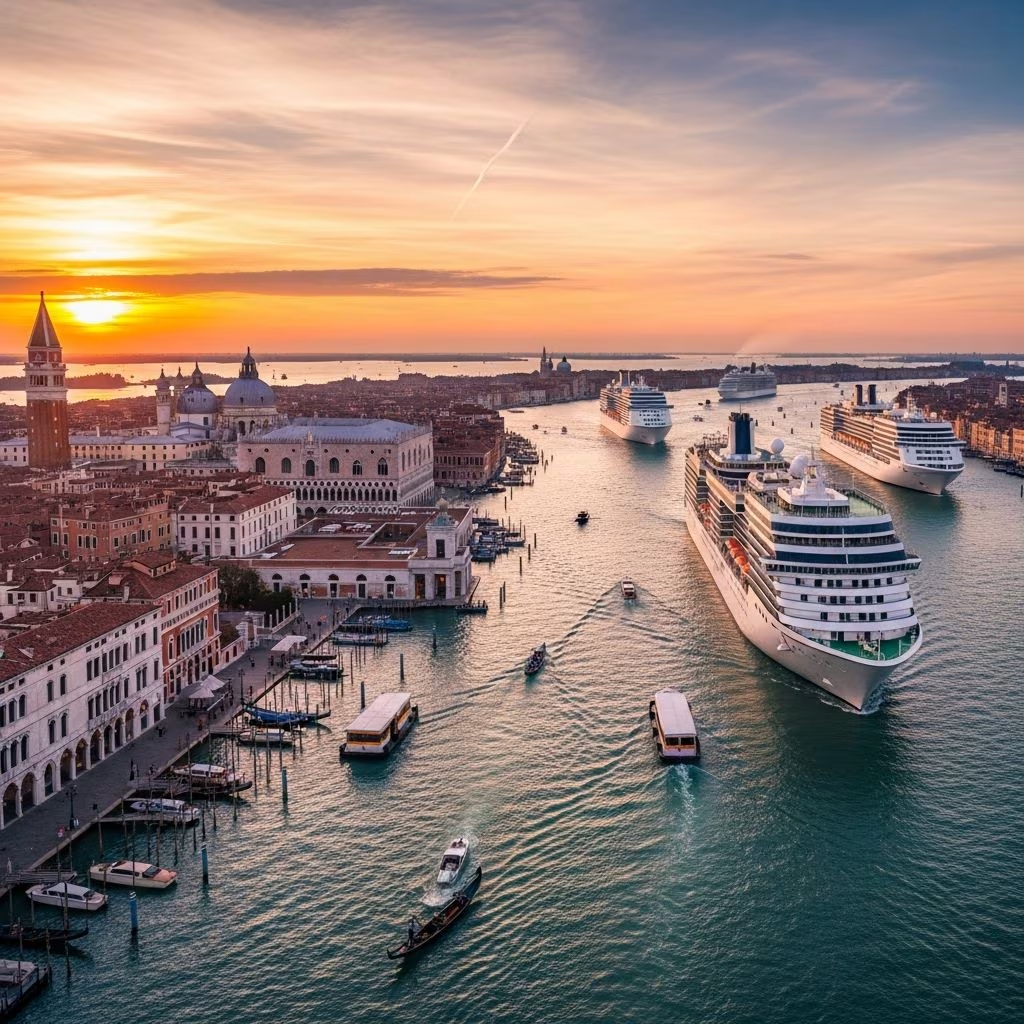
Venice, the iconic floating city built on a delicate lagoon ecosystem, faces a pressing challenge from the behemoth cruise ships that navigate its narrow channels daily. These floating giants, often exceeding 300 meters in length, bring millions of tourists but threaten the very foundations of this UNESCO World Heritage site through erosion, pollution, and overwhelming crowds. In response, innovative proposals have emerged to relocate cruise operations to an artificial island terminal positioned outside the lagoon’s sensitive boundaries, allowing ships to dock safely while shuttling passengers via smaller vessels into the historic center.
The Venetian Lagoon, a shallow expanse of water spanning 550 square kilometers, has long been vulnerable to human activity. Over the past decade, cruise ship traffic has intensified, with vessels carrying up to 5,000 passengers each squeezing through inlets like the Giudecca Canal. This not only visually dwarfs the city’s Renaissance architecture but also generates powerful wakes that erode canal banks and stir up toxic sediments from the seabed. Environmental advocates argue that these ships contribute significantly to the lagoon’s subsidence, exacerbating Venice’s chronic flooding issues known as acqua alta.
Local residents and preservation groups have mobilized against this intrusion. Protests, legal battles, and UNESCO warnings have culminated in regulatory actions, including a 2021 Italian government decree banning ships over 40,000 gross tons from the city center. Temporarily, operations shifted to Marghera, an industrial port on the mainland, where passengers transfer via buses or water taxis. However, Marghera remains within the lagoon, offering only partial relief.
At the forefront of solutions is the concept of a man-made terminal island at the lagoon’s mouth, near the Lido inlet connecting to the Adriatic Sea. Proposed by engineering firm Duferco, this 900-meter-long jetty would accommodate up to five large cruise ships simultaneously. Passengers would disembark onto the platform and board high-speed catamarans, each carrying 800 people, for a scenic 45-minute journey into Venice. This setup preserves the thrill of waterborne arrival without the destructive passage of mega-ships through protected waters.
Costing approximately €128 million, the project promises completion in just two years, bypassing the need for extensive dredging. Unlike alternative plans to widen channels like Contorta-Sant’Angelo—which environmentalists decry for disrupting marine habitats—the offshore island minimizes ecological footprint by situating infrastructure in open Adriatic waters. Duferco’s spokesperson emphasized its appeal as a ‘perfect compromise,’ garnering support from politicians and green groups alike.
A landmark 2022 ruling by the Veneto TAR (Regional Administrative Court) breathed new life into the offshore terminal idea. The court overturned objections from the Ministry of Cultural Heritage, affirming that the proposed site at Punta Sabbioni or San Nicolò lies outside lagoon boundaries. This decision mandates the Ministry of Infrastructure and Transport to forward the project to CIPESS for funding and approval, potentially reviving a concept first floated in 2006.
The ruling addresses years of bureaucratic delays, including a halted international bid for alternatives. Now, with ships redirected from the lagoon, Venice could retain its status as a home port, processing customs at Marittima before eco-friendly shuttles ferry visitors. This phased approach positions the terminal as both a long-term fix and interim measure.
| Aspect | Current Situation (Lagoon Access) | Offshore Terminal Proposal |
|---|---|---|
| Environmental Impact | High: Wake erosion, sediment pollution, habitat disruption | Low: No lagoon dredging, reduced ship traffic inside |
| Construction Time | N/A | 2 years |
| Cost | Ongoing maintenance | €128 million upfront |
| Tourist Experience | Direct but overwhelming | Scenic shuttle ride |
| Economic Benefit | €500M+ annually from cruises | Maintained with minimal loss |
The table above contrasts key factors, highlighting how the artificial island shifts burdens seaward. Economically, cruises inject over €500 million yearly into Venice, supporting jobs in hospitality and transport. Relocation risks short-term disruptions but ensures sustainability, with catamaran fleets promoting lower-emission travel. Critics, including groups like We Are Here Venice, caution that full implementation may drag on, urging stricter interim measures.
These viewpoints underscore a rare consensus amid polarized debates.
Venice’s dilemma mirrors global overtourism woes in places like Barcelona and Santorini. The offshore model could inspire similar innovations, such as floating terminals or electric shuttle networks. By 2026, with updated MoSE flood barriers operational, pairing infrastructure upgrades with cruise relocation fortifies Venice against climate threats. Long-term, it encourages day-trip limits and quality-over-quantity visitor policies.
Technological aids, like AI-optimized routing for shuttles, further enhance efficiency. Investments in green propulsion for catamarans—potentially hydrogen-powered—align with EU sustainability mandates, positioning Venice as a trailblazer.
Despite momentum, hurdles persist. Funding relies on government approval amid Italy’s fiscal constraints. Construction in the Adriatic demands resilient designs against storms and rising seas. Moreover, ensuring seamless passenger logistics prevents bottlenecks that could deter lines like MSC or Royal Caribbean.
Some activists push for outright cruise bans, arguing any facilitation sustains mass tourism. Yet data shows cruises represent 20% of visitors but 80% of maritime impact—targeted relocation offers precision over prohibition.
Optimistically, by 2028, the terminal operationalizes, slashing lagoon traffic by 90%. Pessimistically, delays prolong Marghera reliance, with ships skirting but not escaping the ecosystem. Hybrid paths might blend dredging with partial offshore use.
Visitor numbers, capped experimentally at 20 million annually, benefit regardless, fostering authentic experiences over fleeting selfies.
It involves building a 900m jetty in the Adriatic for cruise docking, with catamarans ferrying passengers into the lagoon.
To prevent erosion, pollution, and safety risks from large vessels in shallow, historic canals.
Around €128 million and two years to construct.
Yes, by avoiding lagoon dredging and reducing ship wakes.
Pending CIPESS approval post-2022 court ruling, potentially operational by late 2020s.
