

 Travel Essentials
 Travel Essentials

Explore Venice's rare low-tide phenomenon, where canals dry up exposing mud beds, impacting gondolas, vaporetti, and daily life. Learn visitor tips, causes, and contrasts with flooding.
 Travel Essentials
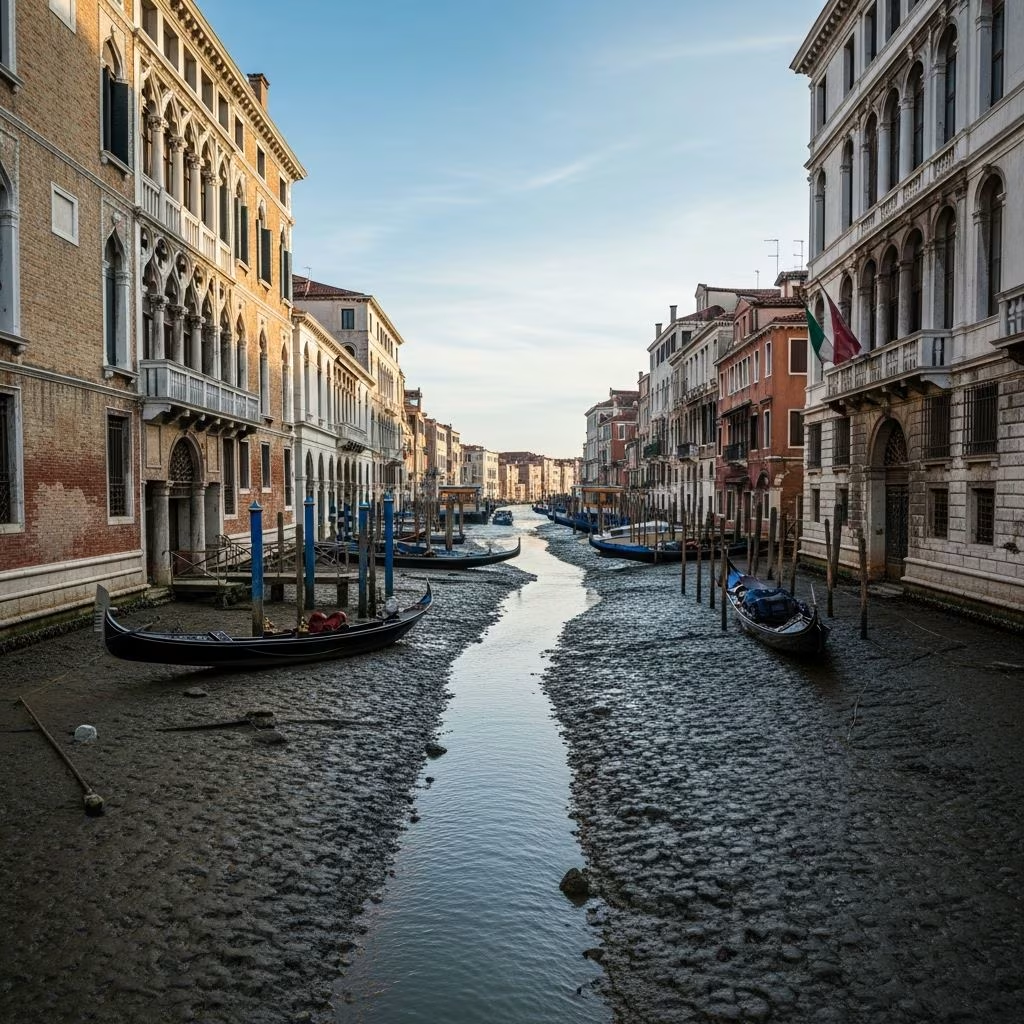
Venice, the floating city built on a lagoon, occasionally reveals its hidden underbelly when exceptionally low tides drain its famous canals. Known locally as bassa marea or acqua bassa, this natural event drops water levels more than 50cm below average, exposing layers of mud and sediment that rarely see daylight. Travelers witnessing this phenomenon encounter a dramatically altered Venice, where gondolas may struggle to navigate and smaller waterways become impassable.
The Venetian lagoon’s water levels fluctuate daily due to tidal influences from the Adriatic Sea. Bassa marea occurs when high atmospheric pressure combines with low lunar tides, pushing water away from the coast. Recent events saw levels plummet to -70cm below average, far exceeding typical lows of -50cm. Experts like those at Venice’s tide monitoring center attribute this to stationary anticyclones—persistent high-pressure systems—exacerbated by seasonal factors such as full moons and sea currents.
Unlike the more notorious acqua alta (high water), which floods streets during autumn and winter, bassa marea is less frequent but equally striking. It typically peaks in winter months like January and February, though prolonged episodes can extend impacts. Climate change discussions arise, but specialists emphasize these are natural variations not directly tied to global warming or regional droughts, despite coincidental overlaps.
When tides recede dramatically, Venice’s 150+ canals transform. Narrow side channels dry first, revealing centuries of accumulated silt, algae, and debris. The Grand Canal, deeper and wider, retains more water but still sees stranded vessels near bridges. Photos from recent lows show gondolas tilted in muck near Rialto Bridge, a surreal contrast to the city’s usual liquid grace.
This exposure highlights the lagoon’s delicate ecosystem, where sediment from the Po River and industrial Po Valley settles over time.
Venetians rely on canals as their roadways. Low tides disrupt deliveries, waste collection, and ambulances, which must dock remotely and proceed on foot. Water taxis face similar hurdles in minor channels, while vaporetti (public ferries) get rerouted during extremes below -60cm.
| Service | Normal Operation | Low Tide Impact |
|---|---|---|
| Gondolas | Full canal access | Stuck in mud; limited to main channels |
| Vaporetti | All routes active | Diverted; alerts via ACTV app |
| Ambulance Boats | Direct to sites | Dock afar; foot travel required |
| Water Taxis | Narrow canal entry | Restricted; longer routes |
City officials monitor via apps like ‘Hi! Tide Venice’ for real-time levels, helping residents adapt.
Tourism, Venice’s lifeline, faces direct hits. Gondola rides, a bucket-list staple, become impractical in low water—props scrape bottoms, and boats can’t pass under low bridges. Visitors report fewer options in side canals, where drops are most severe.
To optimize experiences:
Despite challenges, many find the exposed canals a unique photo op, contrasting the polished postcard image.
Venice’s flood barriers, installed since 2020, have curbed acqua alta effectively outside Piazza San Marco, which floods early due to its low elevation. High tides strike October to March, twice daily for hours. Low tides mirror this rhythm but reveal rather than inundate.
Both phenomena underscore Venice’s vulnerability, prompting sustainable tourism pushes.
Arm yourself with tools:
Recent lows, like those in early 2023, lasted days due to anticyclones, rarer than 2008’s record.
Exposed canals reveal pollution hotspots—plastic waste, sunken bikes—sparking clean-up calls. The Tide Forecasting Center stresses natural cycles, but subsidence and sea rise amplify extremes. MOSE barriers protect from highs; lows need dredging investments.
Travelers can contribute by avoiding litter and supporting eco-tours.
No, it’s safe—slippery walkways near edges are the main risk. Stick to paths.
Hours twice daily; prolonged events span days under high pressure.
Yes, on main canals away from low-tide peaks. Check apps first.
Not directly; atmospheric patterns dominate, per experts.
Most yes; some diverted. Follow ACTV updates.
Low tides peel back Venice’s glamour, offering raw lagoon insights. Pair gondola dreams with mudflat hikes for fuller appreciation. Monitor tides, adapt plans, and witness the city’s resilient pulse.
