

 Travel Essentials
 Travel Essentials

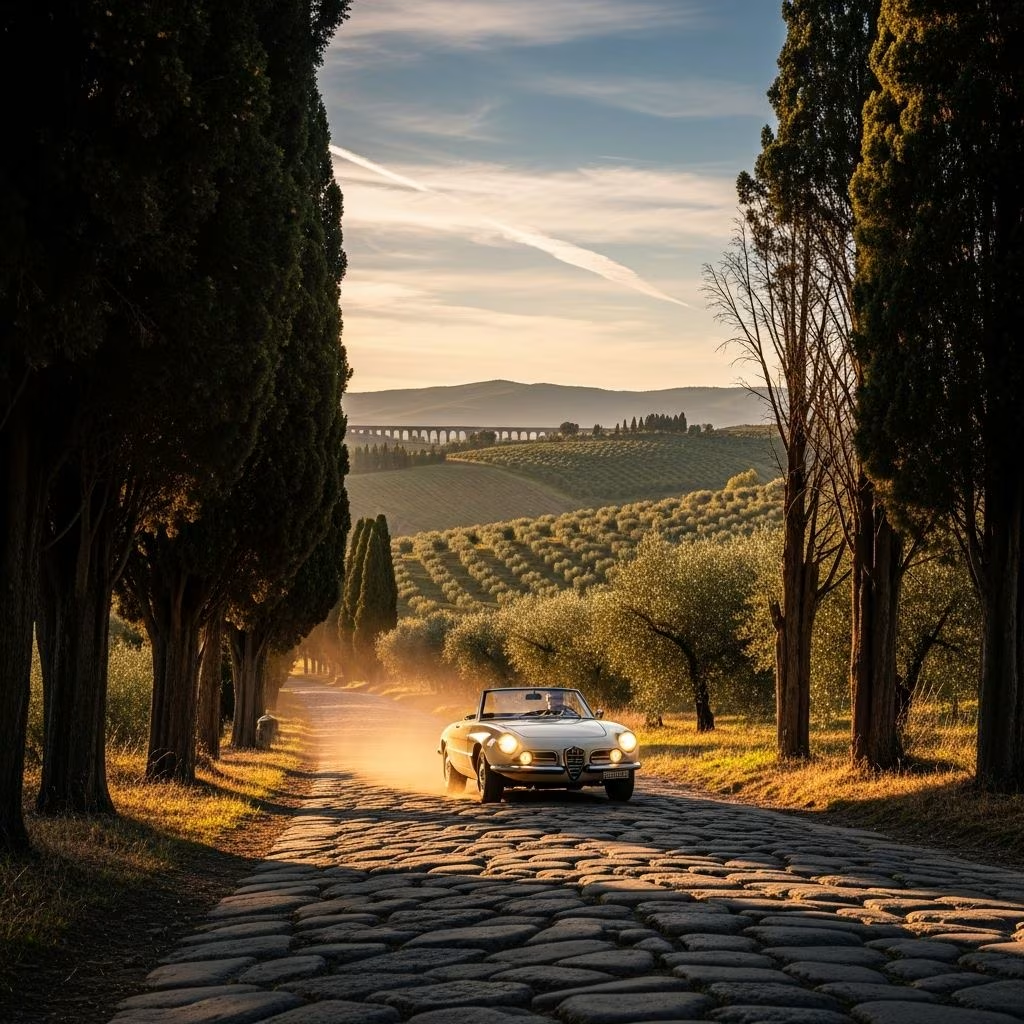
Embark on a modern road trip along the historic Via Appia from Rome to Brindisi, exploring ancient ruins, charming towns, and stunning Italian landscapes preserved for centuries.
 Travel Essentials
The Via Appia, one of ancient Rome’s greatest engineering feats, stretches approximately 570 kilometers from the heart of Rome to the port city of Brindisi in Puglia. Constructed starting in 312 BC by Appius Claudius Caecus, this road revolutionized transportation, military logistics, and trade across the Italian peninsula. Today, driving its path offers a unique blend of history, archaeology, and natural beauty, allowing modern travelers to retrace steps laid down over two millennia ago.
Initiated during the Second Samnite War, the Via Appia was designed primarily for swift troop movements from Rome to Capua, a distance completed in under five years. By 191 BC, the full route to Brindisi—then called Brundisium—was finalized, spanning nearly 570 km without interruption. Roman engineers employed innovative techniques: layered basalt stones for the base, precise camber for drainage, and milestones to mark progress, ensuring durability that persists today.
The road’s expansion under emperors like Trajan introduced the parallel Via Appia Traiana, a coastal variant from Beneventum (modern Benevento) to Brindisi, featuring monumental bridges and well-preserved segments. This network symbolized Rome’s proverb, “all roads lead to Rome,” as the city hubbed nearly 80,000 km of roads empire-wide.
A full drive from Rome to Brindisi takes 6-8 hours on modern roads paralleling the ancient path, but allot 4-7 days for immersive stops. Rent a car in Rome (opt for manual transmission for narrow lanes), secure an international permit, and download offline maps. Best seasons: spring (April-June) or fall (September-October) to avoid summer heat. Fuel costs around €150-200; tolls minimal on secondary routes.
Begin in the lush Appia Antica Park, a 15-km walkable/cyclable stretch of original paving from Porta Metronia. Visit the Catacombs of San Callisto (vast underground Christian burials) and San Domitilla. Tomb of Cecilia Metella looms dramatically, a 1st-century BC mausoleum. Picnic amid umbrella pines; buses 118 return to Rome in 30 minutes.
Head south through Agro Pontino plains to Terracina, where the road climbs Monte Sant’Angelo via the Caffarella Valley. In Capua, explore the ancient amphitheater rivaling Rome’s Colosseum. Overnight in Caserta, near the opulent Royal Palace—a Bourbon masterpiece.
At Benevento, diverge to Trajan’s Arch (Trajan’s 115 AD triumph) and the Via Appia Traiana’s coastal path. Cross preserved Roman bridges; stop at ancient sites hidden in olive groves. Puglia’s heel emerges with trulli houses in Alberobello preview.
Traverse Bari’s vibrant ports, then inland to historic Matera (technically off-route but essential—cave dwellings UNESCO-listed). Rejoin near Monopoli for seaside cliffs and masserie (fortified farmhouses-turned-hotels).
Arrive in Brindisi: Trajan’s Arch welcomes; climb the Roman column for sea views. Stroll the lungomare promenade; ferry to Greece optional. Reflect on the road’s role as Rome’s eastern gateway.
| Site | Location (km from Rome) | Key Features | Visit Time |
|---|---|---|---|
| Tomb of Cecilia Metella | ~5 km | Cylindrical mausoleum, medieval fortress | 1 hour |
| Capua Amphitheater | ~150 km | 2nd-largest in Italy, gladiator history | 45 min |
| Trajan’s Arch, Benevento | ~225 km | Reliefs of Dacian wars | 30 min |
| Brindisi Roman Column | 570 km | Marble survivor, port marker | 20 min |
These sites showcase Roman grandeur; entry fees €5-12, many free exteriors.
Original Via Appia sections are bumpy—drive slowly (20-30 km/h). Modern SS7 parallels safely. Watch for cyclists, pedestrians in parks. ZTL zones in towns restrict access; park outskirts. EV charging sparse in rural Puglia—plan ahead. Emergency: 112 EU-wide.
Opt for masserie in Puglia: Masseria Torre Coccaro (Ostuni) blends olive groves with spas. In Rome outskirts, Relais La Collina; Benevento’s affordable B&Bs. Budget: €80/night agriturismo; luxury €250+.
Fuel with Lazio’s porchetta, Campania mozzarella di bufala, Puglia orecchiette with cime di rapa. Brindisi seafood: raw prawns, tiella rice. Pair with Primitivo wines from Manduria vineyards.
In 2024, the entire Via Appia earned UNESCO World Heritage status, recognizing its 500+ km as cultural testament. Parks like Appia Antica protect against urbanization; Italy pushes full candidacy.
Not driving? 15-km park walks take 5 hours. E-bikes rent €25/day. Organized tours from Rome €100/day, covering catacombs to Traiana.
Parts are pedestrian-only; use parallel modern roads for safety and speed.
Direct drive: 6-8 hours; scenic: 5-7 days.
Spring/fall; avoid July-August heat.
Minimal on regional routes; A1 faster but less historic.
Yes, guided tours only; book ahead.
This journey bridges antiquity and modernity, where emperors’ paths meet today’s adventurers. Amid UNESCO acclaim, experience Italy’s layered history before crowds swell. Pack patience, curiosity—rewards await at every milestone.
