

 Travel Essentials
 Travel Essentials

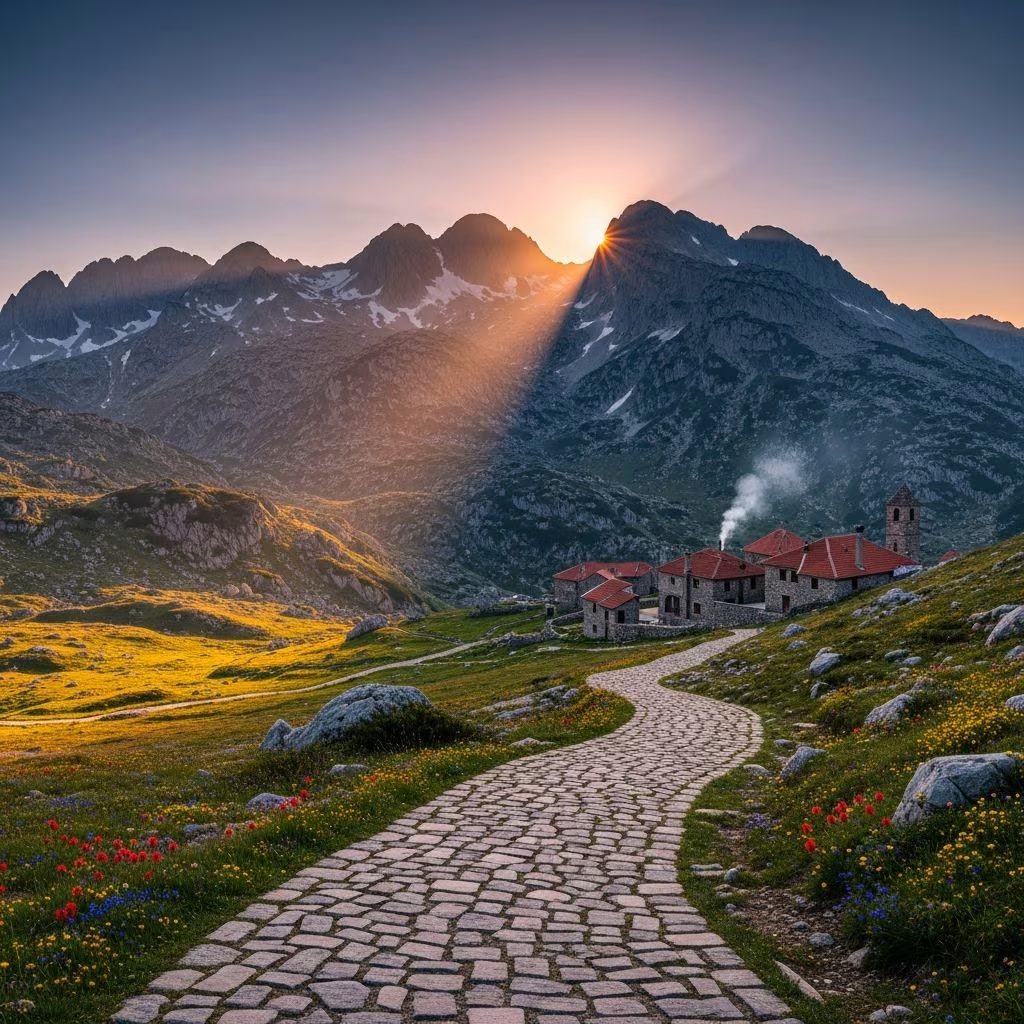
Learn about the transformative hiking experience connecting seven Balkan nations through the Dinaric Alps, blending outdoor adventure with authentic cultural immersion.
 Travel Essentials
The mountainous spine of southeastern Europe holds one of the continent’s most remarkable yet underutilized outdoor corridors. Spanning across seven nations and encompassing nearly 2,000 kilometers of interconnected pathways, this extensive trail system represents far more than a hiking route—it embodies a vision of unity transcending decades of political division. The project emerged as a response to a region often misunderstood by international travelers, offering an alternative narrative built on natural beauty and living heritage rather than historical conflict.
What began as a grassroots initiative in 2010, focusing on connecting protected areas in two neighboring countries, has evolved into an ambitious trans-national framework designed to reshape how adventurers experience the region. Today, this comprehensive network welcomes trekkers of varying abilities, from casual day-hikers seeking short excursions to serious backpackers committed to multi-month expeditions.
The mountainous system comprises three distinct routes, each offering a unique perspective on the landscape and communities below. The primary route, known as the White Trail, follows the highest elevations and ridgelines throughout the mountain chain. This main artery traverses the most dramatic topography, beginning in the limestone karst regions of Slovenia and extending south through the Albanian highlands. The route encompasses approximately 1,200 kilometers, making it the most developed and popular option for international hikers.
Two additional routes remain under continuous development. The Blue Trail hugs coastal and lowland areas, providing a gentler hiking experience with different ecological and cultural perspectives. The Green Trail penetrates more densely forested northern regions, appealing to hikers seeking shade and abundant freshwater sources during warmer months.
The Dinaric Mountains represent one of Europe’s least explored and appreciated ranges. Unlike the Alps or Pyrenees, which dominate popular consciousness, this chain remains largely undiscovered by mainstream tourism. The mountains create a dramatic natural boundary defining the western and southern limits of the Balkan Peninsula, their limestone composition creating distinctive karst landscapes characterized by sinkholes, underground rivers, and dramatic rock formations.
The geological diversity of the range creates remarkably varied ecosystems across relatively short distances. Dense beech forests at lower elevations gradually give way to alpine meadows and barren rock faces at higher altitudes. This ecological variation supports distinctive fauna and flora found nowhere else, making the region significant from both biological and conservation perspectives.
The mountains have shaped human settlement patterns for millennia. Traditional pastoral communities have grazed livestock across high-altitude plateaus during summer months, a practice continuing to this day in many regions. These time-honored practices maintain cultural traditions while preserving the landscape in its semi-natural state.
The trail system accommodates diverse travel styles and time constraints. Rather than demanding a specific commitment level, the framework enables participation ranging from brief explorations to comprehensive traversals. Weekend hikers can tackle individual segments connecting nearby villages and viewpoints. Week-long expeditions allow for deeper immersion within particular national regions. Three-month thru-hikes permit complete end-to-end journeys with extended stays in communities along the route.
Travelers can choose between self-directed adventures and professionally guided experiences. Independent hikers navigate using trail markings and detailed route descriptions, enjoying flexibility and solitude. Guided group treks provide structured itineraries, cultural interpretation, and logistical support including accommodation and meals. Many commercial outfitters now offer customizable itineraries accommodating specific interests and fitness levels.
Beyond physical geography, the trail system serves as a corridor through living cultural traditions. Mountain communities throughout the region have maintained distinctive practices, architecture, cuisine, and social structures despite modernization pressures. Hiking the route provides authentic encounters with these communities without requiring extensive planning or language expertise.
In many villages, traditional cheesemaking practices continue unchanged. Local artisans craft dozens of distinct varieties using methods refined over generations. Summer alpine pasturing remains standard practice in certain regions, with families relocating to high-altitude communities during warmer months. These cultural practices are not performed for tourist audiences but represent genuine continuations of heritage.
Architectural styles vary distinctly between regions, reflecting local materials, climate adaptation, and historical influences. Stone construction predominates throughout, with building techniques adapted to steep terrain and heavy snowfall. Religious traditions remain visible through numerous small chapels, monasteries, and sacred sites encountered along the route.
| Region | Distinctive Characteristics | Cultural Highlights |
|---|---|---|
| Slovenia | Alpine influenced, extensive forestry, advanced tourism infrastructure | Traditional wooden architecture, dairy farming heritage |
| Croatia | Mediterranean influences, Adriatic proximity, karst formations | Historic mountain refuges, traditional clothing, local crafts |
| Bosnia & Herzegovina | Complex multicultural heritage, remote plateaus, limestone terrain | Ottoman influences, traditional highland communities, unique cuisine |
| Montenegro | Dramatic vertical relief, pastoral traditions, national parks | Nomadic herding practices, traditional cheesemaking, mountain dialects |
| Albania & Kosovo | Least developed sections, alpine meadows, traditional lifestyles | Authentic village life, traditional agriculture, ethnic heritage |
The trail system traverses seven major national parks and protected areas, each offering distinct ecological characteristics. These protected zones represent concerted efforts to preserve representative ecosystems and maintain biodiversity corridors across international boundaries. Several parks encompass rare habitats found nowhere else in Europe.
The landscape presents dramatic contrasts within relatively short hiking distances. Limestone formations create stunning visual features including natural arches, cliff faces, and underground water systems. Alpine meadows burst with wildflower blooms during spring and early summer. Forested sections provide cool refuge during peak heat, with numerous springs and streams offering fresh water and refreshment opportunities.
Wildlife encounters remain possible though not guaranteed. Mountain goats navigate impossible-seeming terrain on cliff faces. Eagles soar above ridgelines. Smaller mammals including marmots, chamois, and lynx inhabit the higher elevations. Reptiles and amphibians thrive in water-rich habitats at lower elevations.
The modern trail network emerged at a pivotal moment in the region’s history. Early 2010s initiatives focused on demonstrating that sustainable tourism could unite communities separated by recent conflicts. The symbolic value extended beyond recreation—hiking routes through the mountains offered tangible evidence that cultural and economic cooperation could transcend political boundaries.
The initiative attracted passionate hikers from throughout the Balkans and beyond, including local mountaineers determined to demonstrate their region’s tourism potential. These pioneers established many of the routes, marked trails, and documented conditions that enable contemporary travel. Their commitment to creating infrastructure for international visitors signaled confidence in the region’s trajectory and commitment to peaceful tourism development.
Over subsequent years, the project expanded dramatically in scope and ambition. International tourism organizations provided support and recognition. Local governments increasingly understood economic benefits of visitor expenditure. Communities began developing accommodation and food services specifically for trekkers. The vision evolved from a bold experiment into an established fixture of European adventure tourism.
Planning a trekking expedition requires attention to seasonal timing, physical preparation, and logistical arrangements. Summer months from June through September offer optimal conditions with stable weather and open high-altitude routes. Spring and autumn present challenges from unpredictable weather and occasional trail closures, though fewer crowds and dramatic seasonal changes appeal to experienced hikers.
Physical preparation should reflect planned route difficulty and duration. Day hikes and short expeditions require basic fitness, while extended treks demand significant cardiovascular conditioning and strength training. Elevation gains throughout the system vary considerably, with some sections featuring relentless climbing and others offering gentle grades.
Accommodation options range from established alpine refuges in developed sections to village guesthouses and basic hostels in remote areas. Many routes permit wild camping in designated zones. Food availability varies—larger villages offer adequate supplies while remote sections require carrying provisions between resupply points. Water sources are generally abundant at lower elevations but scarce at high altitude.
The trail system generates significant economic benefits for rural mountain communities. International visitor expenditure on accommodation, meals, guides, and supplies provides income for local families and small businesses. Employment opportunities in tourism complement traditional agricultural and pastoral activities. These economic benefits increase incentives for maintaining mountain communities and cultural traditions.
The framework emphasizes sustainable tourism principles avoiding mass tourism impacts. Trail design limits daily visitor numbers and disperses impact across multiple routes and seasons. Community-based tourism operations ensure local populations benefit directly from visitor spending. Environmental protection measures address waste management, trail erosion, and wildlife disturbance.
Decades of conflict and media coverage created persistent negative stereotypes about the Balkans region. International visitors often harbored misconceptions about safety, cultural practices, and contemporary conditions. Direct encounters through hiking travel challenge these outdated narratives. Visitors interact with welcoming, hospitable communities thriving in peaceful conditions. They witness thriving cultural practices and natural beauty rather than conflict narratives.
The trail network deliberately positions itself as a corrective to misrepresentation. By showcasing vibrant communities, stunning landscapes, and rich heritage, the system offers visitors authentic experiences contradicting negative preconceptions. Many international hikers become informal ambassadors for the region, sharing positive experiences and encouraging friends and family to visit.
The network continues evolving as additional routes receive development and international recognition. Blue and Green Trail sections undergo ongoing improvements to match White Trail standards. Regional connectivity improvements will eventually link the main trans-Balkan system to broader European trail networks. Accommodation expansion addresses capacity constraints during peak seasons.
Technology integration offers opportunities for enhanced visitor experience. Digital trail mapping provides real-time navigation and condition updates. Mobile applications connect hikers with local services and cultural information. Social media communities enable trip planning and experience sharing among international hikers.
The White Trail extends approximately 1,200 kilometers through Slovenia, Croatia, Bosnia and Herzegovina, Montenegro, Albania, Kosovo, and North Macedonia, following the highest ridgelines of the Dinaric Alps.
Complete traversals typically require 60-90 days for experienced hikers, though the route accommodates shorter segments ranging from single days to several weeks.
Summer months from June through September offer optimal conditions with stable weather and open high-altitude sections. Shoulder seasons present challenges from unpredictable weather but offer fewer crowds.
Most sections require only hiking experience, though certain high-altitude segments demand scrambling abilities and comfort at elevation. Route choices accommodate various skill levels.
Multiple outfitters offer guided expeditions with various durations and focuses, providing logistical support, cultural interpretation, and group hiking experiences.
The trail system represents far more than a hiking route—it embodies aspiration for peaceful cross-border cooperation and cultural understanding. By connecting mountain communities across seven nations, the network demonstrates tourism’s potential for positive social impact. For individual hikers, trekking through the Dinaric Alps offers physical challenge, natural beauty, and authentic cultural immersion within a single unified experience. The region continues attracting adventurers seeking to challenge themselves while supporting sustainable development in overlooked European communities.
