


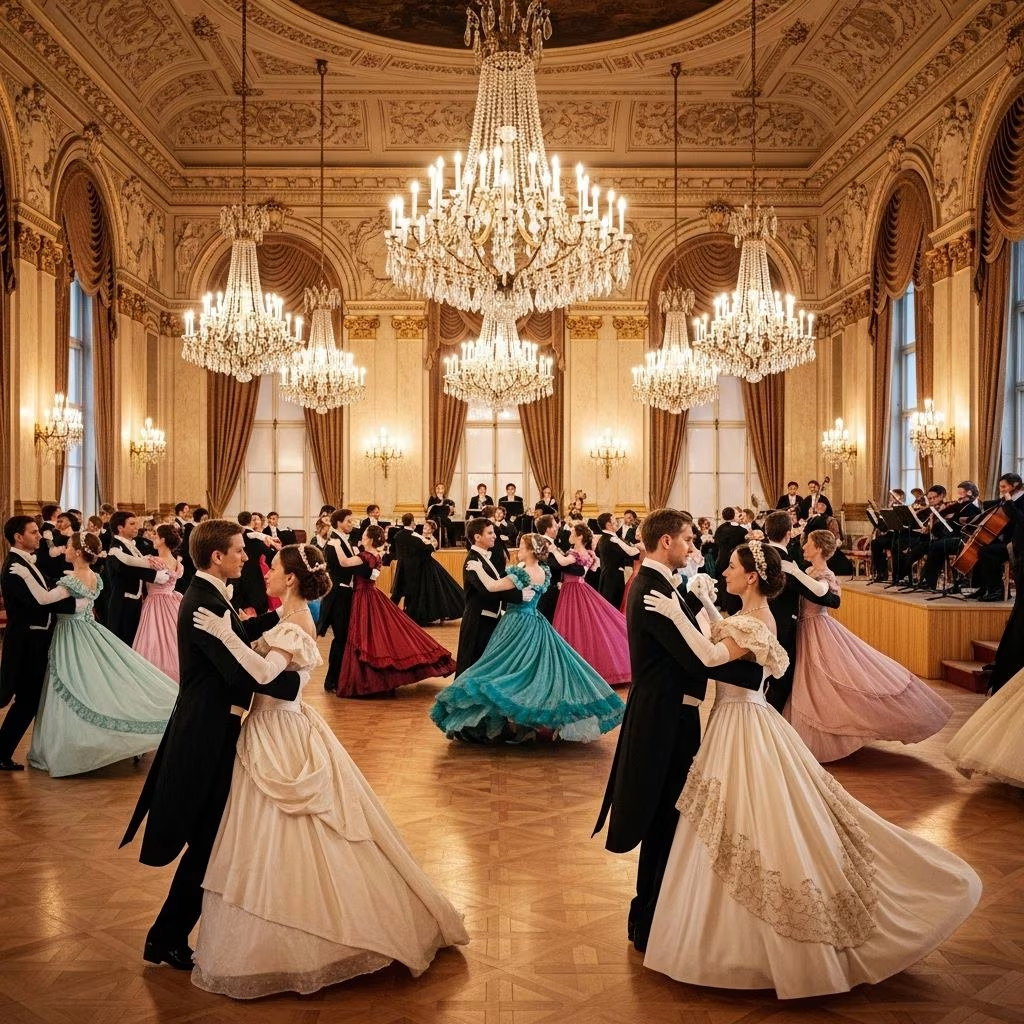
Discovering Vienna’s Most Enchanting Winter Tradition
Vienna’s winter ball season represents one of Europe’s most celebrated cultural traditions, drawing thousands of visitors annually to experience the city’s legendary ballroom events. These elegant gatherings showcase the refined elegance and musical heritage that have defined Vienna for centuries, blending classical Austrian traditions with contemporary social celebration. The season creates an atmosphere of timeless glamour where attendees from around the world come together to dance, socialize, and immerse themselves in Viennese culture.
Unlike casual evening entertainment, these balls demand preparation and understanding of specific customs, dress codes, and social protocols. Whether you’re a seasoned ballroom dancer or attending your first formal dance event, navigating Vienna’s ball season requires knowledge of timing, venue selection, ticket acquisition, and appropriate behavior on the dance floor. This comprehensive guide provides everything necessary to make your Vienna ball experience memorable and authentically engaging.
The Historical Significance and Timeline of Ball Season
Vienna’s ball tradition stretches back to the Congress of Vienna, establishing the city as Europe’s premier ballroom destination for nearly two centuries. The season follows a centuries-old calendar that aligns with the Austrian carnival season, known locally as Fasching. Each year, Vienna hosts more than 450 balls, ranging from intimate neighborhood gatherings to grand society events that attract international guests.
The official commencement occurs annually on November 11 at precisely 11:11 in the morning, marked by a public waltz and quadrille performance on the Graben, Vienna’s historic central plaza. This ceremonial beginning officially launches the carnival season and signals the start of Vienna’s most festive months. The season extends through early spring, technically concluding on Shrove Tuesday, which marks the end of the carnival period and typically falls in late February or early March depending on the liturgical calendar.
However, the true height of the season concentrates in January and February, when the city’s most prestigious and glamorous balls occur. During these two months, Vienna’s ballrooms operate at full capacity nearly every evening, offering attendees multiple opportunities to experience different venues, styles, and social circles. The season’s intensity during these winter months creates an unparalleled festive atmosphere throughout the city.
Understanding Ticket Acquisition and Access Strategies
Contrary to popular misconception, Vienna’s balls remain open to the general public without membership requirements or exclusive club affiliations. Anyone interested in attending can purchase tickets directly, making the season accessible to international tourists and local residents alike. However, acquiring tickets requires strategic planning due to high demand and varying sales windows.
Online Purchasing
Most traditional balls maintain dedicated websites where attendees can purchase tickets directly in advance. This remains the most reliable method for securing entry, particularly for popular events. Major balls typically open online sales several months before the event date, with some exceptions following different timelines.
Ticket Categories and Availability
Vienna balls offer different ticket types with varying price points and benefits. Seated tickets, which guarantee reserved positions at tables throughout the venue, typically sell out first due to their premium nature and superior viewing positions. However, first-time attendees or budget-conscious visitors often find success with alternative ticket options.
Flâneur Tickets
An excellent option for those without reserved seating preferences involves purchasing flâneur tickets, entrance passes that grant full access to the ballroom without assigned seats. These tickets provide exceptional value and complete freedom to move throughout the venue, observe different areas, and join dance activities spontaneously. Flâneur ticket holders enjoy identical access to food, beverages, and entertainment as seated guests while maintaining flexibility and often paying significantly less.
Concierge and Hotel Arrangements
Certain luxury hotels including the Imperial, Sacher, and Altstadt maintain established relationships with ball organizers and can arrange tickets for their guests. This service proves particularly valuable for visitors encountering sold-out events, as hotels sometimes maintain reserved allocations. Concierge services can also provide guidance on appropriate venues matching individual preferences and experience levels.
Timing Considerations
For most traditional January and February balls, ticket sales commence in the previous autumn, typically September through November. However, the Vienna Opera Ball notably follows a different schedule, opening sales approximately twelve months in advance and earning a reputation for selling out with exceptional speed. Early planning and calendar awareness prove essential for securing tickets to the season’s most prominent events.
Day-of Purchase Possibility
Historically, ticket desks operated at ball venues on event evenings, allowing spontaneous attendees to purchase entry. This option has become increasingly unreliable in recent years, as pent-up demand following pandemic-related cancellations resulted in near-complete sellouts by evening. Current planning should not depend on securing day-of tickets.
Navigating Dress Code Requirements and Fashion Considerations
Proper attire forms a fundamental aspect of ball attendance, with specific requirements varying by event prestige and traditional emphasis. Understanding dress code expectations ensures you meet venue standards while presenting yourself appropriately within Vienna’s refined ballroom culture.
For Women
Female attendees should plan for long evening dresses as the standard requirement across most Vienna balls. White gowns are expressly discouraged and reserved exclusively for sixteen-year-old debutantes making their formal society debut—a tradition maintained at formal balls throughout the season. Beyond this primary distinction, women possess considerable latitude in gown selection regarding color, style, and design. Elegant evening wear in jewel tones, pastels, metallics, or classic black all remain entirely appropriate. Many women select dresses reflecting personal style while maintaining the formal evening aesthetic the occasion demands.
For Men
Gentleman attendees face somewhat flexible but clearly defined expectations. The most prestigious and traditional balls require tail coats paired with white bow ties, a standard maintained at events including the Vienna Philharmonic Ball, Vienna Opera Ball, and Techniker Cercle Ball. At these formal affairs, only service staff wear black bow ties, making white tie the definitive requirement.
For the majority of remaining balls, a quality tuxedo suffices and represents the most common choice among male attendees. Modern ball culture increasingly accepts alternatives including formal dark suits paired with ties or even tie-free configurations, though traditional venues maintain stricter expectations. Researching specific ball dress codes through invitation details or official websites prevents inadvertent wardrobe missteps.
Accessories and Additional Elements
Formal evening shoes, jewelry, and other accessories should coordinate with your selected attire, maintaining an overall polished appearance befitting the elegant ballroom setting. The formality of your outfit should match the specific ball’s traditional nature—more casual neighborhood balls permit less formal evening wear than grand society events.
Essential Ballroom Etiquette and Social Protocol
Understanding Viennese ballroom culture and established social protocols ensures respectful participation and positive interactions with fellow dancers. These customs have evolved over centuries and remain actively practiced within Vienna’s ballroom community.
The Opening Ceremony Experience
Traditional Vienna balls formally commence with an opening ceremony occurring approximately thirty minutes to an hour after doors open. This ceremonial prelude features the opening committee—dozens of young couples dressed formally in black (men) and white (women)—performing choreographed dances including a polonaise, waltz, and either the Fledermaus Quadrille or an originally composed dance. Some balls supplement these traditional dances with brief ballet, opera, or orchestral performances and remarks from prominent local dignitaries. The ceremony concludes with the proclamation “Alles Walzer!” (Everyone waltz!), signaling that attendees may flood the dance floor for the first waltz of the evening.
Dance Floor Dynamics and Movement Protocols
The Viennese waltz requires specific floor navigation patterns different from other ballroom dances. Faster, more skilled dancers circulate along the ballroom’s perimeter, while slower-moving couples dance closer to the center. All dancers must maintain movement along the line of dance, never against it, creating a smooth counterclockwise flow. When the dance floor becomes densely packed—which frequently occurs during popular waltzes—slowing or stopping temporarily becomes necessary only if other dancers block your path ahead. During such crowded moments, the Viennese waltz’s proper technique becomes physically impossible, making it advisable to wait for the floor to thin before resuming dancing.
Dance Etiquette and Invitation Protocols
Traditionally, gentlemen maintain the responsibility for inviting ladies to dance, and it remains uncommon for women to approach unfamiliar men as dance partners. When inviting a lady to dance, the most proper approach involves asking if she would honor him with a dance. A lady should not casually decline such an invitation, though she may politely request dancing at a later time if already committed to another partner or temporarily fatigued. Accepting a dance invitation carries no implication of personal attraction or romantic interest—it simply represents participation in the evening’s social dancing.
Male attendees bear a particular social obligation to ensure all ladies receive dance invitations throughout the evening. If a gentleman observes a woman who has not danced for an extended period, he should invite her to dance once, regardless of personal preference. This practice maintains inclusive celebration and ensures everyone enjoys the evening. For married women or those attending with partners, etiquette requires asking the accompanying gentleman’s permission before requesting a dance.
Prohibited Behaviors
Certain behaviors violate ballroom etiquette and remain universally discouraged. “Cutting in”—interrupting an ongoing dance to claim a new partner—constitutes rude and unacceptable conduct that ladies should decline by suggesting a later dance instead. Additionally, gentlemen should never abandon their dancing partners in the middle of the dance floor; proper practice involves escorting them off the floor at dance completion unless both wish to continue together.
Formal Dance Greetings
At the beginning and conclusion of each dance, partners may exchange bows and curtsies, a practice that adds formal elegance to the evening. The gentleman offers his right arm to his dance partner, who places her left hand upon it, and together they walk toward or away from the dance floor. This courteous physical protocol reflects Viennese ballroom tradition and proper deportment.
Pre-Ball Dining and Evening Preparation
Vienna balls typically commence at 9:00 p.m. or later in the evening, necessitating specific meal planning to maximize dancing enjoyment. The customary approach involves dining several hours before ball arrival, allowing adequate digestion time before beginning extended periods of dancing. This practice proves particularly important for Viennese waltz participation, as dancing vigorously immediately after consuming a large meal creates significant physical discomfort and impairs dancing quality.
Some American-hosted balls and certain international events include dinner service, but this remains exceptional rather than standard for traditional Vienna balls. Planning an earlier dinner at a Vienna restaurant, in your hotel, or at a pre-ball venue ensures you arrive at the ballroom appropriately nourished yet comfortable for dancing.
The Evening Program: Music, Dances, and Entertainment
Vienna ball evenings extend well past the opening ceremony, featuring varied programming designed to appeal to different dancer preferences and traditions. Understanding the typical evening flow helps you prepare mentally and physically for the full experience.
Most traditional Vienna balls emphasize Viennese waltzes and polkas as the primary dancing content, maintaining the classical ballroom focus that defines the season. However, contemporary balls increasingly incorporate modern ballroom dances including tangos and foxtrots alongside the traditional repertoire. The largest and most prominent Vienna balls further diversify programming by incorporating Latin music, swing, and contemporary pop selections, accommodating attendees across the dance skill and interest spectrum.
Around midnight or later in the evening, attendees traditionally form long lines across the ballroom to dance the Fledermaus Quadrille, a choreographed group dance that requires no prior experience or knowledge. This participatory moment creates an inclusive, joyful celebration that welcomes even non-dancers into the festivities. The quadrille provides an excellent opportunity for less experienced dancers to participate alongside everyone else without requiring partner availability or specific ballroom knowledge.
Venue Variations in Programming
It bears noting that Vienna’s ball season encompasses hundreds of events with varying formality levels and programming approaches. Some balls maintain traditional focus almost exclusively, while others emphasize contemporary entertainment with minimal traditional elements. Certain events marketed as “balls” contain no dancing whatsoever, instead functioning as formal evening social gatherings or themed parties. Researching specific ball websites and descriptions ensures your expectations align with the actual event programming.
Selecting Appropriate Venues for Your Experience Level
Vienna’s ball venues reflect diverse architectural styles and historical significance, each providing distinct atmospheres and audiences. Understanding venue options helps match your preferences with suitable events.
Grand Traditional Venues
The Vienna City Hall, with its spectacular neogothic ballroom and historic arcades, hosts numerous prestigious balls including the New Year’s Eve Gala and serves as an iconic location for formal celebration. The Hofburg Palace, Vienna’s former imperial residence, provides an authentically aristocratic setting that appeals to tradition-focused attendees. These monumental venues offer incomparable historical atmosphere and architectural grandeur.
Musical Institution Venues
The Musikverein, home to the Vienna Philharmonic Orchestra, hosts the renowned Vienna Philharmonic Ball and the popular Techniker Cercle, attracting music-focused attendees. The art nouveau-style Wiener Konzerthaus provides an elegant alternative musical venue hosting events like the Bonbonball. These locations combine acoustical excellence with refined design, appealing to musically sophisticated guests.
Neighborhood and Local Balls
Beyond the famous city-center venues, exploring neighborhood balls in areas like Hietzing or the Christian Rochusball in Landstrasse offers authentic insights into Viennese ball culture as locals experience it. These intimate gatherings often feature more relaxed atmospheres, less international tourist presence, and genuine community celebration. Such venues provide excellent introductions to ball culture for first-time attendees seeking less overwhelming environments.
Frequently Asked Questions About Vienna Ball Attendance
Do I need special qualifications or club membership to attend a Vienna ball?
No. Vienna balls remain open to anyone willing to purchase a ticket. No club membership, social standing, or specific qualifications are required for attendance. The season welcomes international visitors and local residents equally.
What if I cannot dance the Viennese waltz?
Many attendees enjoy balls without dancing, socializing and observing instead. The Fledermaus Quadrille at midnight welcomes non-dancers into group participation. Additionally, balls increasingly feature contemporary music and dances beyond traditional waltzes, providing options for various skill levels.
When should I purchase tickets?
For most January and February balls, purchase tickets between September and November of the previous year. The Vienna Opera Ball opens sales approximately twelve months in advance. Flâneur tickets typically remain available longer than seated reservations.
Can I attend alone?
Absolutely. Solo attendance is entirely acceptable and common. The social protocol of gentlemen inviting ladies to dance accommodates single attendees fully, and many people enjoy the flexibility of dancing with multiple partners throughout the evening.
What happens if I purchase a ticket and cannot attend?
Check the specific ball’s refund and cancellation policies on their official website. Policies vary significantly between events, so understanding cancellation terms before purchase prevents unwelcome surprises.
Making the Most of Your Vienna Ball Experience
Attending a Vienna winter ball represents a distinctive cultural experience combining elegant social celebration with historical tradition. Success requires modest preparation regarding tickets, attire, and etiquette knowledge, but the reward justifies the effort. Whether you choose an elaborate grand ball or an intimate neighborhood gathering, Vienna’s ball season offers unforgettable evenings of music, dancing, and refined social connection that have captivated visitors for centuries.
References
- How to Go to a Winter Ball in Vienna, Austria — Lonely Planet. 2024. https://www.lonelyplanet.com/articles/how-to-go-to-a-winter-ball-in-vienna-austria
- Attending a Viennese Ball — Viennese Ball Organization. 2024. https://www.vienneseball.org/Attending.htm
- Experiencing a Vienna Ball – How Can You Actually Attend One? — Bulgaria on the Go. 2023. https://bulgarianonthego.blog/vienna-ball-season/
- Vienna’s Ball Season: Dress Code, Events & More — Österreich Institut. 2024. https://www.oesterreichinstitut.com/en/viennas-ball-season/
- Vienna Ball Season: Let the Waltz Begin! — Wien.info. 2024. https://www.wien.info/en/art-culture/music-stage-shows/dance/ball-season-340214
- Vienna’s Most Beautiful Balls — Austria.info. 2024. https://www.austria.info/en-gb/inspiration/ball-season/

