

 Travel Essentials
 Travel Essentials

Navigate Vietnam confidently with practical tips on culture, transportation, safety, and regional highlights.
 Travel Essentials
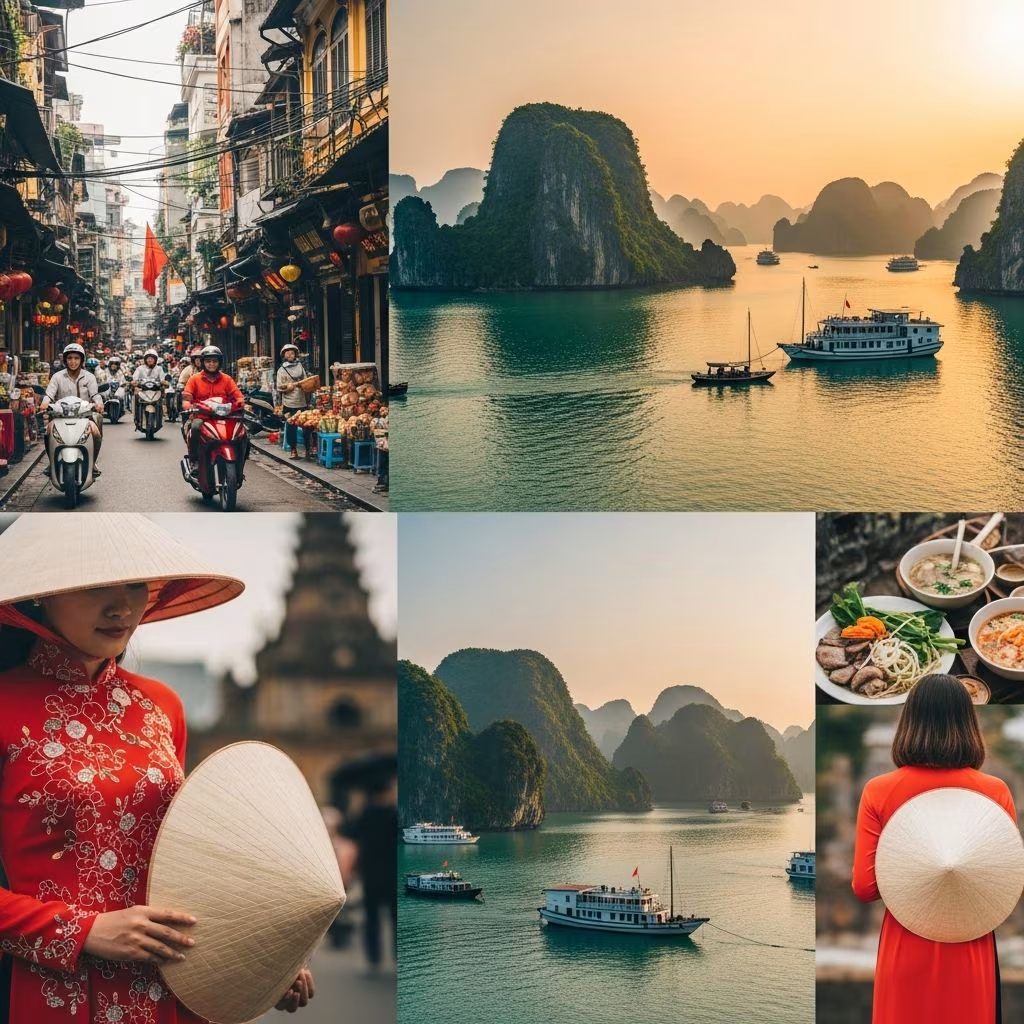
Vietnam stands as one of Southeast Asia’s most dynamic destinations, offering travelers an intoxicating blend of ancient traditions, bustling urban energy, and pristine natural landscapes. From the moment you arrive, the country’s sensory richness becomes apparent—the aroma of street food wafting through narrow alleyways, the constant hum of motorbike traffic, and the warmth of local hospitality create an immersive experience unlike anywhere else. However, navigating this vibrant nation requires understanding its cultural nuances, practical logistics, and regional characteristics to make the most of your journey.
Vietnamese society operates according to its own distinct set of values and customs that, while often relaxed in urban areas, maintain traditional elements in more rural communities. Respecting these cultural norms significantly enhances your interactions with locals and ensures you’ll be welcomed rather than viewed as an ignorant tourist.
Emotional restraint is fundamental to Vietnamese culture. Raising your voice or displaying anger publicly is considered inappropriate and counterproductive, even when frustrated or facing a difficult situation. Local people conduct themselves with composure, and tourists who mirror this demeanor earn respect and often receive better service and assistance. When problems arise—missed bookings, transportation delays, or misunderstandings—maintaining a calm, polite demeanor proves far more effective than expressing frustration openly.
Dress codes reflect Vietnam’s balance between modernity and tradition. While Ho Chi Minh City and Hanoi embrace contemporary fashion, temples and spiritual sites demand modest clothing. Cover your shoulders and knees when visiting these sacred spaces, and remove your shoes when entering residential homes or certain establishments. In rural areas and smaller towns, conservative dress choices show respect for local values and help you blend in more naturally.
LGBTQ+ travelers generally find welcoming attitudes in major cities, where younger generations demonstrate progressive views. However, public displays of affection attract attention and potential disapproval, particularly outside urban centers. Discrete behavior and awareness of your surroundings allows LGBTQ+ visitors to travel comfortably throughout the country.
Vietnam’s transportation landscape presents both opportunities and challenges. Understanding how to move through this environment safely and efficiently transforms travel from stressful to manageable.
Urban traffic represents one of Vietnam’s most distinctive characteristics. Motorbikes dominate the roads—a sea of two-wheeled vehicles moving in seemingly chaotic patterns that actually follow an unspoken logic. Crossing streets requires abandoning Western expectations of stop signs and traffic signals. Red lights are frequently ignored, and pedestrian crossings offer minimal protection. Instead of waiting for a gap that never comes, step into traffic confidently and move steadily forward. Drivers are accustomed to pedestrians and possess remarkable ability to navigate around them. Think of yourself as a rock in a flowing stream—maintain a steady pace, avoid sudden movements, and let traffic flow around you. This technique works precisely because it’s predictable; drivers can calculate your trajectory and adjust accordingly.
Walking strategy matters more than caution in Vietnamese cities. Move slowly and deliberately, which allows motorists to anticipate your movements. Panic or hesitation creates dangerous uncertainty. After a few crossing experiences, most travelers develop intuitive confidence in this system.
For longer distances, Vietnam offers affordable buses, trains, and domestic flights. Night buses connect major cities and provide budget accommodation simultaneously, though comfort levels vary. Trains operate on scenic routes, particularly between northern and central regions. Ride-sharing apps function effectively in larger cities and provide transparent pricing, eliminating negotiation hassles that plague taxis.
Vietnam’s geography stretches over 1,000 kilometers, with each region offering distinct experiences. Strategic selection ensures you maximize limited time.
Hanoi, the capital, pulses with chaotic energy that first-time visitors either love immediately or find overwhelming. The Old Quarter’s labyrinthine streets house hundreds of small shops, each specializing in specific products—one street for silver, another for lanterns, another for textiles. This organization reflects centuries-old merchant traditions. Egg coffee, a local invention combining egg yolks with strong Vietnamese coffee, has become a cultural symbol worth experiencing in traditional cafés around Hoan Kiem Lake. The French Quarter offers architectural elegance and a slower pace, while West Lake provides serene local atmosphere away from tourist crowds.
Sapa transforms visitors through its misty mountain scenery and minority ethnic villages. Rice terraces carved into steep hillsides create landscapes of breathtaking beauty, especially during planting season when water reflects the sky in mirror-like paddies. Trekking routes pass through communities where the Hmong, Dao, and other ethnic groups maintain traditional lifestyles. Homestays provide authentic cultural immersion with substantial home-cooked meals that fuel mountain explorations.
Ha Long Bay’s limestone karsts rising from emerald waters rank among Asia’s most iconic natural formations. Despite popularity, overnight cruises offer escape from day-tripper crowds through opportunities to kayak in hidden coves and sleep beneath star-filled skies. Beach areas tucked between limestone cliffs provide swimming opportunities, though expectations of expansive sandy shores should be adjusted—intimacy rather than breadth defines these beaches.
Ninh Binh functions as Ha Long Bay’s inland equivalent, substituting river cruises through karst valleys for bay explorations. Tam Coc provides convenient access to river journeys, temple complexes built into cliff faces, and cycling paths through agricultural landscapes that showcase rural Vietnam’s agricultural foundation. This region attracts fewer international tourists than coastal areas, offering more authentic interactions.
Phong Nha has earned recognition as a cave enthusiast’s paradise. Son Doong Cave, the world’s largest cave, requires special permits but provides an incomparable underground adventure. Numerous other caverns offer varying difficulty levels, from leisurely walks to technical explorations through underground rivers and formations.
Hue served as Vietnam’s imperial capital and retains that historical significance through palace ruins, royal tombs, and riverside pagodas. The city’s slower pace suits travelers interested in history and architecture. The Perfume River creates romantic cycling and boating opportunities, while the local cuisine delivers spicy flavors that reflect the region’s distinct culinary traditions.
Hoi An attracts travelers with its preservation of traditional Vietnamese architecture. Lantern-lit streets in the ancient town create photogenic evening atmospheres, while tailor shops offer custom-made clothing at bargain prices. The nearby fishing village of An Bang Beach provides coastal respite, and cooking classes teach Vietnamese culinary fundamentals in intimate settings.
Ho Chi Minh City (formerly Saigon) epitomizes Vietnamese dynamism. Markets overflow with local products, museums chronicle war history and contemporary culture, rooftop bars serve cocktails above gridlocked streets, and nightlife spans from backpacker establishments to sophisticated lounges. The city never stops moving, presenting constant stimulation that energizes some travelers while exhausting others.
Dalat breaks from tropical coastal Vietnam through cool mountain climate, pine forests, and remnants of French colonial architecture. Flower farms, the eccentric Crazy House architecture, and canyoning adventures provide diversions from typical beach and city experiences. The region’s climate and landscape genuinely feel disconnected from Vietnam’s lowland areas.
Phu Quoc Island delivers tropical beach experiences with clear waters and island village authenticity, while Con Dao remains refreshingly underdeveloped and quiet, attracting travelers seeking escape from well-worn paths. The Mekong Delta represents Vietnam’s agricultural heartland—a vast network of waterways, floating markets, and small villages where traditional life continues relatively unchanged.
Documentation requirements demand attention before departure. Passports must maintain six months validity beyond your travel dates. Most visitors require visas, obtainable through embassies, travel agencies, or e-visa services. Processing times and requirements vary by nationality, necessitating advance research and planning.
Currency exchange rates favor travelers substantially when exchanging foreign currency in Vietnam. Withdraw Vietnamese dong (VND) at ATMs using international cards, which typically offer better rates than airport exchanges. Credit cards work in major cities and tourist establishments, but cash remains essential in rural areas and smaller towns.
Internet connectivity presents minimal challenges. Local SIM cards provide affordable data plans, or travelers can use eSIM services for seamless connectivity without changing physical cards. Messaging apps function reliably for communications, though certain VPNs may be necessary for accessing blocked websites.
Health precautions should include travel insurance, vaccinations recommended by medical professionals, and awareness of food safety practices. Street food is generally safe when purchased from busy stalls with high turnover, but exercise reasonable caution with unfamiliar preparations.
Vietnam’s climate varies significantly by region and season. Hanoi and northern areas experience cool, dry winters (October to April) and hot, humid summers. Central regions tolerate most seasons, while southern Vietnam remains warm year-round with distinct dry (November to April) and wet (May to October) seasons. Optimal travel timing depends on your preferred activities and regional focus, but generally, October through April offers the most pleasant conditions across most of the country.
Two-week itineraries allow comprehensive north-to-south explorations incorporating Hanoi, Ninh Binh, Ha Long Bay, Hoi An, and southern beaches or the Mekong Delta. This pace permits moderate travel days without feeling rushed, though flexibility accommodates unexpected discoveries or weather adjustments.
Vietnam maintains generally favorable safety conditions for travelers. The atmosphere remains friendly, particularly outside major tourist centers where interactions feel more genuine. Standard travel precautions apply—secure valuables, avoid displaying expensive items, and remain aware of surroundings, particularly in crowded areas.
Scams targeting tourists exist but remain less common than in other Southeast Asian destinations. Bribing authorities is both illegal and increasingly rare. If someone hints at unofficial payments, a polite refusal typically resolves the situation. Understanding common tourism traps helps navigate transactions confidently.
Photography ethics matter in Vietnam. Always request permission before photographing people, particularly in ethnic minority areas where cameras can feel intrusive. Respecting boundaries builds positive interactions and creates authentic travel memories rather than extractive tourism experiences.
