

 Travel Essentials
 Travel Essentials

Explore Vietnam's top natural wonders including Halong Bay, Son Doong Cave, majestic mountains, and pristine islands, offering unparalleled adventures amid diverse ecosystems.
 Travel Essentials
Vietnam captivates with its extraordinary tapestry of natural features, blending dramatic coastlines, vast cave networks, towering peaks, and lush valleys. These sites, many recognized by UNESCO, draw adventurers to witness geological masterpieces shaped over millennia.
Vietnam’s shores boast some of the world’s most photogenic seascapes, where limestone formations rise dramatically from turquoise waters. These areas offer kayaking, cruising, and island hopping amid serene beauty.
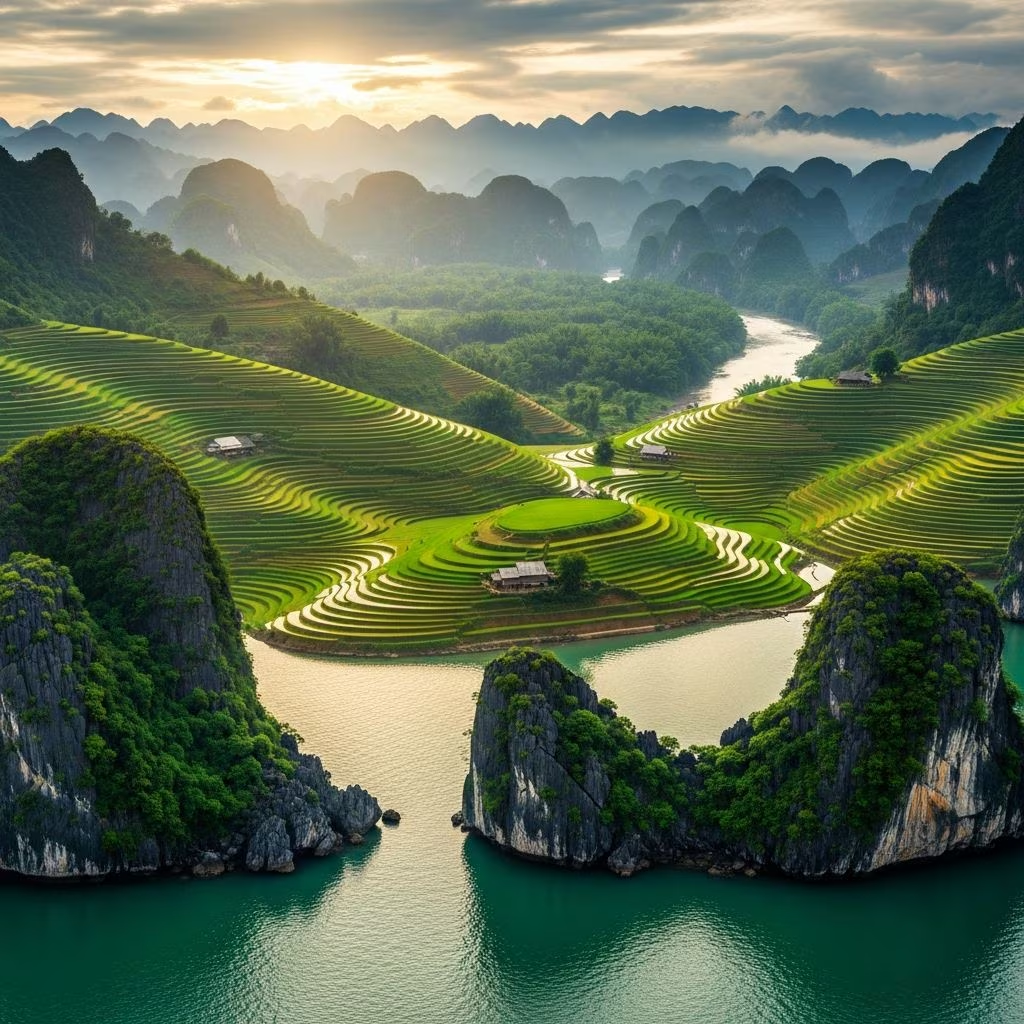
Halong Bay stands as Vietnam’s crown jewel, featuring over 1,600 forested limestone islands scattered across 1,500 square kilometers in the Gulf of Tonkin. Designated a UNESCO World Heritage Site in 1994, its jagged peaks and calm emerald waters create a surreal panorama.
Visitors glide through hidden lagoons on wooden junk boats, passing sea arches and floating villages. The bay’s karst towers, some soaring 100 meters, harbor caves adorned with stalactites. Best explored via overnight cruises, which include stops at Cat Ba Island for hiking and beaches.
Southeast of the mainland, Phu Quoc Island emerges as a haven of white-sand beaches and coral reefs. Its national park covers dense jungles teeming with wildlife, while Sao Beach exemplifies pristine turquoise shallows fringed by palms.
Divers explore vibrant underwater gardens, and motorbike trails wind through pepper plantations and fishing hamlets. Sunset views from remote coves provide tranquil escapes from mainland bustle.
Vietnam harbors some of the planet’s most immense cave systems, carved by ancient rivers through karst mountains. These subterranean worlds feature colossal chambers, underground rivers, and unique ecosystems.
Spanning Quang Binh Province, this 857-square-kilometer UNESCO site (2003) showcases over 300 caves amid limestone karsts and rainforests. Phong Nha Cave, with its 44.5-kilometer river passage, offers boat tours through illuminated chambers.
Paradise Cave dazzles with 31 kilometers of pristine passages, while Dark Cave invites ziplining and mud baths. The park’s biodiversity includes rare primates and orchids, supporting guided treks.
Nestled within Phong Nha-Ke Bang, Son Doong Cave dwarfs all others at 38,000 square meters in volume, with ceilings up to 200 meters high. Discovered in 1991 and opened limitedly in 2013, it features an underground jungle, fossils, and a river.
Exclusive four-day expeditions, capped at 1,000 visitors yearly, involve rappelling, swimming, and camping beside massive stalagmites rivaling skyscrapers. Its isolation preserves a pristine microclimate.
Northern Vietnam’s highlands present rugged alpine scenery, ethnic cultures, and harvest spectacles. These regions reward hikers with panoramic vistas and misty peaks.
Known as the Tonkinese Alps, these mountains near Sapa peak at Fansipan (3,143 meters), Vietnam’s highest. Cable cars ascend to summit viewpoints, while trails traverse Hmong villages and cloud forests.
Terraced rice fields in Mu Cang Chai and Sapa glow golden in September-October, a UNESCO cultural landscape. Homestays offer immersion in hill tribe traditions amid dramatic valleys.
Ha Giang Province’s limestone pinnacles and hairpin roads form a wild frontier. The Dong Van Karst Plateau Geopark hosts flower blooms in spring and buckwheat fields in fall, ideal for motorbike loops.
Trekking reveals Tay and Hmong settlements, with vistas of plunging canyons and karst spires.
Vietnam’s waterways feature powerful falls and delta mosaics, blending hydrology with verdant surrounds.
Straddling the Vietnam-China border, Ban Gioc’s three-tiered drops plummet 30 meters into the Quay Son River. Peak flow from June-September creates rainbows; September’s rice harvest adds golden frames.
Boat rides approach the base, with trails to Nguom Ngao Cave nearby.
Southern Vietnam’s Mekong branches into a 40,000-square-kilometer web of canals, mangroves, and orchards. Floating markets in Cai Be buzz with commerce, while homestays reveal fruit farms.
Cycling paths skirt paddy fields, and bird sanctuaries host egrets at dawn.
Near Da Nang, five limestone outcrops harbor pagodas, caves, and vistas. Thuy Son’s Tam Thai Pagoda crowns hikes, with elevator access easing ascents. Marble artisans craft souvenirs below.
Southeastern dunes contrast lush coasts: red doi hong near town, vast white doi cat trang farther out. Jeep tours or sandboarding capture wind-sculpted shifts.
Northern Ba Be Lake, Vietnam’s largest natural basin, nestles amid karsts. Paddling reveals waterfalls, Puong Cave, and 550 plant species. Trekking spots gibbons and orchids.
Ninh Binh’s UNESCO site merges limestone peaks, caves, and rice paddies. Rowboat tours navigate 50 caves linking valleys, evoking a watery Jurassic Park.
| Wonder | Key Activities | Best Season |
|---|---|---|
| Halong Bay | Kayaking, cruising, hiking | Oct-Apr |
| Son Doong | Trekking, caving expedition | Feb-Aug |
| Sapa Terraces | Hiking, village homestays | Sep-Oct |
| Phong Nha | Cave tours, ziplining | Dry: Feb-Aug |
| Mui Ne Dunes | Sandboarding, jeep tours | Dec-Apr |
This table highlights prime pursuits, aligning with weather for optimal experiences.
Access northern sites via Hanoi flights or overnight buses; southern via Ho Chi Minh City. Permits required for Son Doong via Oxalis Adventures. Pack insect repellent, sturdy shoes, and respect no-trace principles. Sustainable tourism preserves these gems.
Dry season (October-April) suits most; harvest viewing peaks September-October in north.
No, limited to guided four-day tours; book months ahead.
Overnight bus or motorbike; roads thrilling but challenging.
Yes, with guides; avoid midday heat.
Many accessible tours suit all ages; avoid extreme ones.
