

 Travel Essentials
 Travel Essentials

Explore the history, artistic significance, and contemporary resurgence of travel posters as both cultural artifacts and decorative art forms.
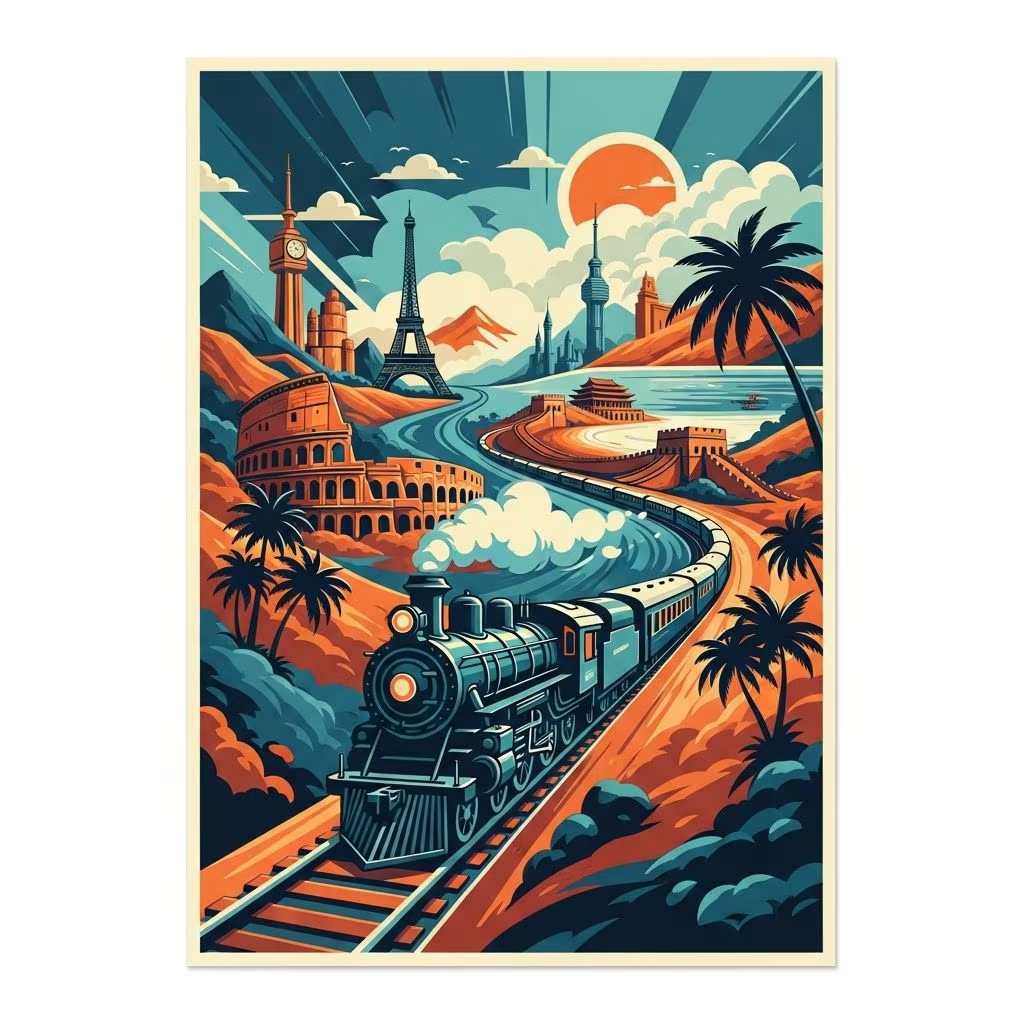 Travel Essentials
Travel posters represent far more than simple promotional materials—they embody a visual language that has captivated audiences for over 150 years. These striking images have evolved from practical marketing tools designed to encourage railway and steamship travel into celebrated art forms that adorn gallery walls and contemporary living spaces. Their journey from commodity to collectible reveals much about how societies imagine distant places, aspire to adventure, and express artistic innovation across generations.
The emergence of travel posters coincided with dramatic transformations in transportation and leisure culture. Beginning in the 1870s and gaining substantial momentum throughout the 1890s, these designs appeared as railways expanded across continents and steamship companies sought to attract passengers. The democratization of travel fundamentally changed the relationship between ordinary people and distant destinations. Where once only the wealthy embarked on extended journeys, improving transportation infrastructure and increasing disposable income among European and North American middle classes created new markets for commercial leisure travel.
Railway companies recognized early that promotional imagery could effectively communicate the experience of travel itself. Rather than simply listing schedules and ticket prices, these organizations commissioned artists to capture the emotional appeal of journeys and destinations. This marketing innovation transformed how destinations were perceived and desired, establishing patterns that persist in contemporary tourism advertising.
Early travel posters employed labor-intensive printing techniques such as “simili-aquarelle prints,” a 20-color process that required substantial capital investment but produced remarkably beautiful landscape renderings. These technical limitations paradoxically contributed to the posters’ aesthetic power, as artists had to distill destinations into their most visually compelling elements.
The 1920s and 1930s witnessed a revolutionary shift in both artistic style and conceptual approach. During this era, Art Deco aesthetics dominated design, bringing geometric precision, bold colors, and dynamic compositions to travel imagery. Simultaneously, the proliferation of competing transportation modes—automobiles, trains, airplanes, zeppelins, and ocean liners—spurred innovation in visual marketing. Artists began conceiving travel as an interconnected network rather than isolated journeys. A particularly innovative example from 1936 demonstrates this evolution: Roland Hugon created a photomontage combining railroad tracks with Art Deco geometry and flat colors, promoting seamless multimodal travel with the tagline “You leave one, you board the other”.
Colonial powers including Great Britain, France, and the Netherlands strategically employed vibrant and evocative imagery to showcase their territories. These posters, with their bold compositions and adventurous narratives, played crucial roles in encouraging citizens to undertake journeys across vast distances.
Travel posters succeeded commercially and artistically because they performed a unique cultural function. Beyond advertising specific routes or destinations, they offered visual gateways to imagined experiences. In an era before widespread mass media, photography, and digital imagery, these posters represented the primary means through which people could visualize unfamiliar places. The selectivity of poster design—its necessity to communicate complete narratives through single, focused compositions—created powerful emotional resonance.
The most effective vintage posters shared certain characteristics that transcended mere promotional objectives:
Vintage travel posters never truly disappeared from cultural consciousness, but beginning in the early 2000s, they experienced a remarkable revival extending far beyond nostalgic interest. This resurgence reflects three converging forces: renewed appreciation for mid-century aesthetic principles, advances in fine art printing technologies, and emergence of contemporary artists reinterpreting classical travel advertising codes.
The 2010s accelerated this movement dramatically, transforming travel posters from historical curiosities into authentic design language for modern interiors. Today, these artworks appear in boutique hotels, residential apartments, gallery exhibitions, and private collections. Their integration into contemporary décor reflects something deeper than simple aesthetics—a meaningful response to how modern life demands visual and emotional sustenance.
Modern collectors and designers value vintage travel posters for qualities directly relevant to contemporary living. These artworks provide what increasingly scarce resources offer: they make people feel something tangible and meaningful. In environments saturated with digital imagery and algorithmic content, the deliberate selectivity of poster design stands apart as refreshingly purposeful.
Travel posters function within home environments in multiple complementary ways:
| Function | Impact |
|---|---|
| Conversation Catalyst | Prompts discussions about destinations, travel experiences, and design appreciation |
| Atmospheric Warmth | Introduces human-scale, hand-crafted qualities into carefully designed spaces |
| Spatial Anchoring | Provides visual focal points that organize and define room compositions |
| Narrative Connection | Links daily environments to themes of exploration, memory, and possibility |
These practical benefits complement the deeper appeal: travel posters embody a sensibility valuing intentionality and aesthetic significance over passive consumption. They signal that space inhabitants have deliberately selected meaningful objects rather than defaulting to generic alternatives.
Travel poster design encompasses diverse artistic approaches reflecting different periods and cultural contexts. The Art Deco movement fundamentally shaped travel poster aesthetics, introducing geometric precision, streamlined forms, and sophisticated color coordination that communicated modernity and efficiency. These visual qualities directly aligned with transportation companies’ messaging about speed, reliability, and forward-thinking vision.
Beyond Art Deco, travel posters incorporated influences from:
The current resurgence features a crucial distinction: contemporary artists actively reinterpret vintage poster conventions rather than simply reproducing historical designs. This creative dialogue between past and present generates original works that honor classical aesthetics while incorporating contemporary sensibilities and diverse perspectives.
Digital reproduction technologies have democratized access to both historical exemplars and production capabilities. Artists now study scanned archive materials, experiment with historical techniques, and produce contemporary variations combining digital tools with traditional printing methods. This technological accessibility has attracted new generations of artists to the medium, enriching the visual vocabulary of travel poster design.
Beyond their decorative and commercial functions, vintage travel posters document historical attitudes toward geography, cultural otherness, and leisure. Colonial-era posters reveal how imperial powers imagined and marketed territories to domestic audiences. Mid-century designs reflect optimism about technological progress and global connectivity. These visual artifacts provide rich material for understanding how societies have conceptualized the world and their place within it.
Contemporary collectors increasingly appreciate this documentary dimension, valuing posters as windows into historical perspectives while recognizing problematic representational conventions embedded within them. This more sophisticated engagement enriches how modern audiences interpret and display vintage materials.
The revival of vintage travel posters has created robust markets for both historical originals and contemporary reproductions. Serious collectors seek specific poster artists, limited edition prints from particular decades, or designs representing particular destinations or transportation modes. The market accommodates diverse budget levels, from affordable modern reproductions to museum-quality original posters commanding substantial prices.
Key factors influencing collectibility include:
Original posters from the 1870s through 1950s exhibit characteristics of their era’s printing technologies, paper composition, and aging processes. Reproductions, while aesthetically faithful, employ contemporary materials and methods. Collectors often value originals for historical authenticity and investment potential, while reproductions provide accessibility and affordability for broader audiences.
Reputable sources include specialized dealers, auction houses with expertise in vintage posters, institutional archives offering reproductions, and carefully vetted online platforms. Authentication requires examining printing techniques, paper condition, provenance documentation, and consulting expert references.
Proper preservation requires UV-protective framing, acid-free mounting materials, climate-controlled storage, and protection from direct sunlight and moisture. Museums and serious collectors employ archival standards developed through decades of conservation research.
The artistic language of travel posters—combining geometric abstraction, evocative color, and narrative simplicity—remains extraordinarily effective. Contemporary practitioners appreciate how this medium bridges commercial communication and fine art, allowing meaningful expression about place, desire, and aesthetic experience.
Modern tourism boards and destination marketers frequently reference vintage poster aesthetics in digital campaigns, recognizing that classical design principles communicate authenticity and established cultural value more effectively than purely contemporary approaches.
As the revival continues to strengthen, travel posters demonstrate remarkable cultural resilience. They persist because they fulfill fundamental human needs: for beauty, inspiration, connection to imagined possibilities, and tangible objects expressing personal values. In an increasingly digital world, their physical presence and intentional compositions offer genuine counterweight to ephemeral screen-based imagery.
The medium continues evolving through diverse contemporary interpretations, expanded representation of historically underrepresented destinations and perspectives, and experimental combinations of traditional and digital techniques. Art institutions increasingly recognize travel posters as legitimate subjects for scholarly study and exhibition, elevating their status from commercial ephemera to serious artistic practice.
Travel posters ultimately endure because they articulate something essential about human experience: the profound appeal of new places, the transformative potential of journeys, and our desire to imagine ourselves in worlds beyond our immediate circumstances. Whether displayed in museums, homes, or offices, these artworks continue performing their original function—inspiring wanderlust—while simultaneously functioning as sophisticated artistic and cultural texts deserving serious aesthetic engagement.
