

 Travel Essentials
 Travel Essentials

Explore how to visit Punch at Ichikawa City Zoo near Tokyo, including travel tips, zoo details, macaque facts, and nearby attractions for an unforgettable day trip.
 Travel Essentials
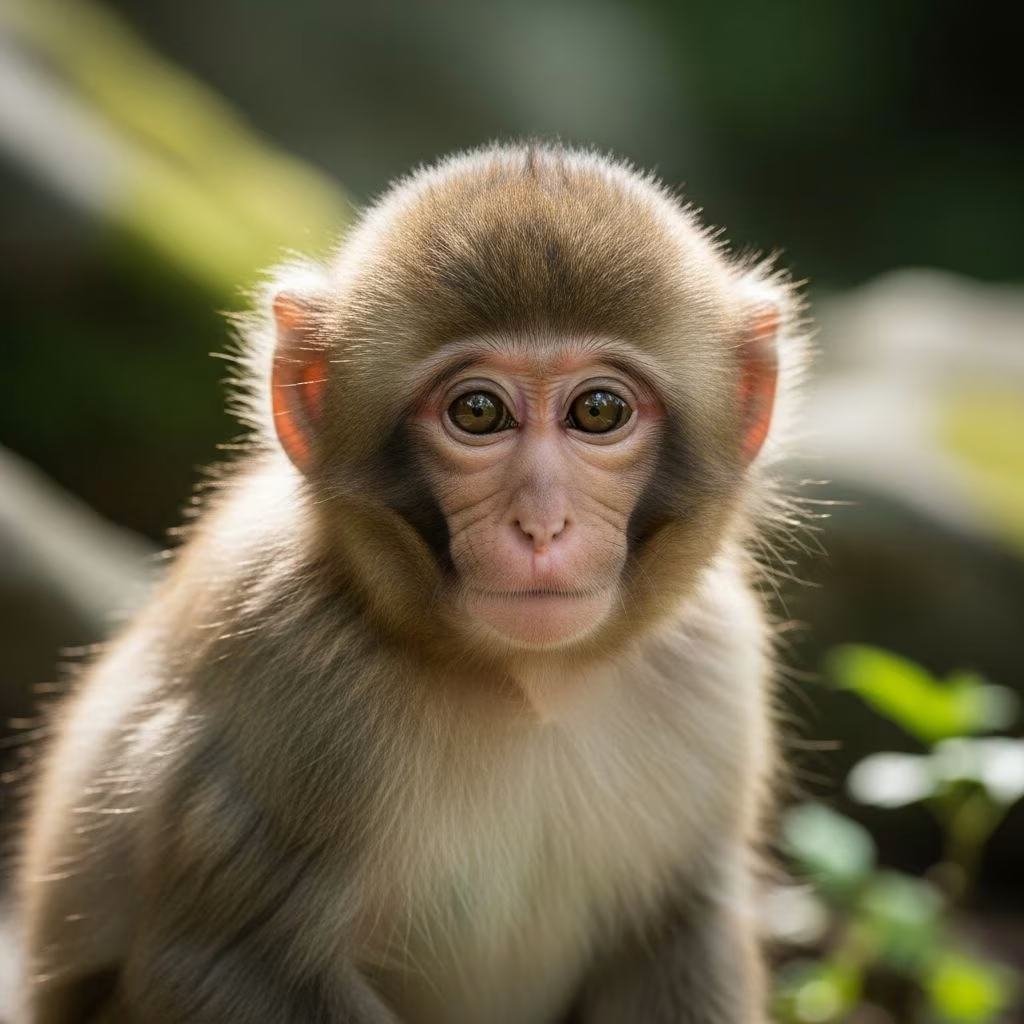
Japan’s Ichikawa City Zoo has become a must-visit destination thanks to Punch, a young Japanese macaque whose story of resilience and companionship has gone viral worldwide. Born in July 2025 and abandoned by his mother shortly after birth, Punch found solace in a stuffed orangutan toy provided by zookeepers, creating heartwarming videos that have drawn visitors from across the globe. This guide offers everything you need to plan your trip to see this endearing monkey, understand his habitat, and make the most of your time in Chiba Prefecture.
Punch’s journey began tragically when his mother rejected him, a not uncommon occurrence in primate troops where weaker infants sometimes face challenges integrating. Zookeepers at Ichikawa City Zoological and Botanical Gardens intervened, hand-raising the infant while introducing the plush toy to mimic maternal comfort. Videos of Punch clutching the toy while navigating interactions with the macaque group exploded online, blending heartbreak with hope as he slowly bonds with his peers.
Today, at around seven months old, Punch resides in the zoo’s Monkey Mountain enclosure alongside other Japanese macaques. Sightings depend on weather and the monkeys’ activity, but patient visitors often catch glimpses of him dragging his beloved companion around the rocky terrain. This viral sensation highlights animal welfare efforts and the emotional depth of primates, turning a local zoo into an international draw.
Located in Chiba Prefecture just east of Tokyo, Ichikawa City Zoo is easily accessible via Japan’s efficient transport network. Fly into one of Tokyo’s primary airports: Haneda (HND) or Narita (NRT). Haneda offers the quickest route, about 45-60 minutes by public transit, while Narita takes 60-90 minutes.
From Haneda Airport:
From Narita Airport:
Pro tip: Use apps like Google Maps or Hyperdia for real-time schedules, as through-services on lines like Hokuso can simplify journeys without transfers.
If arriving by Shinkansen or already in Tokyo, direct trains make Ichikawa a seamless 20-40 minute trip. From Tokyo Station, the Musashino Line goes to Ichikawa-Ono, followed by bus or a short walk. Motoyawata Station (JR Sobu and Toei Shinjuku Lines) connects well from Shinjuku or Akihabara and has dedicated buses:
| Bus Route | Destination | Alight Stop | Walk Time |
|---|---|---|---|
| 5 | Doshokubutsuen | Last stop (zoo) | 0 min |
| 14 | Ichikawa Eigyosho | Onomachi 4-chome | 10 min |
| 32/33 | Omachi Station area | Komagata | 15 min |
The closest station is Omachi on the Hokuso Line, with direct links to Ueno, Asakusa, and even Haneda. Taxis from stations cost around ¥1,000-2,000 and take 10-15 minutes.
Address: 284-1 Omachi, Ichikawa City, Chiba 272-0801. Phone: +81-47-338-1960.
Monkey Mountain is prominently located near the entrance—no map required. Respect rules: no feeding, flashing photos, or banging on glass to protect Punch and the troop’s well-being. The small zoo emphasizes native Japanese species, offering a relaxed, family-oriented vibe.
Often called snow monkeys, Japanese macaques (Macaca fuscata) are the northernmost nonhuman primates, adapting to diverse environments from subtropical forests to rocky cliffs and snowy mountains. Contrary to viral misconceptions, their natural rocky homes resemble the zoo’s enclosure, much like the famous Jigokudani hot springs troop.
These intelligent omnivores thrive in troops, with complex social dynamics. Rejection by mothers can occur due to stress or hierarchy, but rehabilitation like Punch’s shows successful interventions. The zoo’s setup promotes natural behaviors, aiding Punch’s gradual integration.
Ichikawa City Zoo anchors Omachi Park, a green oasis with complementary attractions:
Ichikawa itself, separated from Tokyo by the Edogawa River, blends suburban charm with urban access. Central areas around Motoyawata offer dining—try ramen shops, sushi spots, or cafes en route back. Extend your trip to Chiba’s beaches or Narita for temples.
Full-Day Plan from Tokyo:
Overnight Option: Stay in Ichikawa for evening ramen tours or early bird monkey spotting.
No, visibility depends on weather and monkey activity, but he’s often active mornings.
Basic English at the zoo; use translation apps for deeper info.
No—strict no-feeding policy for safety.
Spring or fall for mild weather; winter mimics snow monkey vibes.
Very—low cost, stroller access, and kid-pleasing animals.
Beyond cuteness, seeing Punch underscores themes of empathy, conservation, and Japan’s wildlife heritage. His story fosters appreciation for macaques’ adaptability and zoo efforts in rehabilitation. Combine with park explorations for a wholesome escape from Tokyo’s bustle, creating lasting memories.
