

 Travel Essentials
 Travel Essentials

This guide discusses the recommended age for children visiting Auschwitz, preparation strategies, tour options, and why such trips can foster empathy and historical awareness in youth.
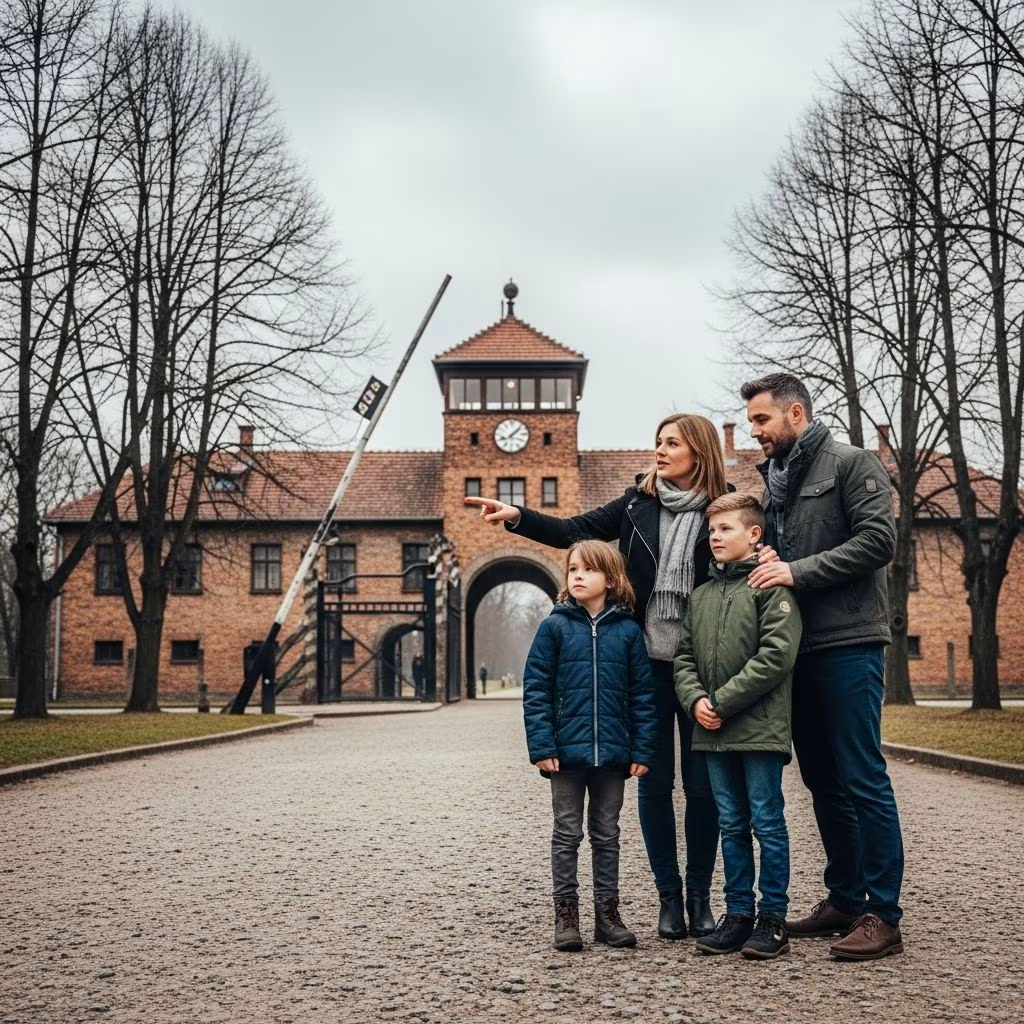 Travel Essentials
The Auschwitz-Birkenau Memorial and Museum stands as one of the most poignant historical sites in the world, preserving the grim reality of the Holocaust. Families often grapple with whether to include children in visits to such a profound place of remembrance. While official recommendations suggest children under 14 should avoid the site, many parents successfully bring tweens and teens, provided they prepare thoughtfully. This article delves into age considerations, logistical planning, emotional impacts, and strategies to make the experience meaningful without overwhelming young visitors.
Auschwitz comprised three main camps: a prison facility, an extermination center, and a forced-labor operation, making it the deadliest Nazi camp where over 1.1 million people perished, including countless children sent directly to gas chambers upon arrival. Today, preserved barracks, artifacts like piles of victims’ belongings, and exhibits detail the atrocities, serving as a stark educational tool. UNESCO recognized it as a World Heritage site in 1979, underscoring its global importance for Holocaust education.
Visiting requires entering a somber atmosphere immediately, such as walking through tunnels where victims’ names are recited, setting a tone of silence and reflection. For children, this can be transformative, countering superficial social media narratives with tangible history, as noted by educators advocating visits for secondary school students to combat denialism.
The Auschwitz Memorial advises against visits for children under 14, aligning with guidelines from institutions like London’s Imperial War Museum for its Holocaust exhibit. This is a recommendation, not a ban, allowing flexibility for families. The rationale centers on emotional maturity: younger children may struggle with the graphic content, including displays of human hair, shoes, and photographs of selections for death.
| Age Group | Recommendation | Reasons |
|---|---|---|
| Under 14 | Not recommended | Potential for nightmares, difficulty processing scale of horror; limited attention span for long tours. |
| 14-16 | Encouraged with prep | Teenagers grasp abstract concepts; school curricula often cover Holocaust, enhancing relevance. |
| 17+ | Highly suitable | Full comprehension; opportunity for deep reflection and civic awareness. |
Parents report success with children as young as 8, but only after assessing individual resilience—no headphones for immersion, even for younger ones.
Not all children mature at the same rate. Gauge readiness by their ability to handle intense stories, like those in school history lessons. A parent shared bringing an 8-year-old who coped well due to prior discussions, emphasizing that forcing disinterest risks missing a ‘unique experience’ for building character.
Many families view the trip as a ‘gift’ for fostering compassion and informed citizenship, especially amid rising antisemitism.
Book tickets months ahead via the official site; 2023 saw record crowds post-COVID. Opt for guided tours in English (available hourly) over self-guided for context. Choose the standard 3.5-hour Auschwitz I tour, adding Birkenau for fuller insight, but split if needed for kids.
Pro tip: Visit in shoulder seasons (spring/fall) to avoid peak summer lines.
Forewarned is forearmed. Start with accessible media to build context without trauma.
Frame the visit as honoring victims, not just horror—focus on resistance stories like Janusz Korczak, who stayed with orphanage children to Treblinka.
Auschwitz I features intact barracks with bunks, punishment cells, and vast artifact rooms—piles of 2 tons of hair evoke the industrial scale of murder. Birkenau’s ruins, including gas chamber remnants, amplify desolation across 425 acres.
For kids:
Personal accounts highlight teens finding it ‘powerful’ yet essential, shifting views on tolerance.
Beyond shock, visits instill empathy and vigilance. Students return advocating against prejudice, better voters in diverse societies. Parents note strengthened family bonds through shared reflection. Research supports experiential learning for Holocaust memory, vital as survivors dwindle.
Consider Krakow’s Galicia Jewish Museum or Schindler’s Factory for gentler intros. Virtual reality tours or USHMM apps provide remote access. For under-14s, these build toward future visits.
No strict rule, but under 14s are discouraged by staff.
3-4 hours for Auschwitz I; add 1.5 for Birkenau.
No dedicated ones, but guides adapt; audio guides help.
Quiet areas exist; parents can shorten or skip sections.
Absolutely—many call it life-changing.
Deciding to visit Auschwitz with children demands balancing respect for the site’s gravity with developmental stages. With preparation, it becomes a cornerstone of education, equipping youth to confront history’s lessons proactively. Thousands of families affirm its value, turning potential overwhelm into enduring insight.
