

 Travel Essentials
 Travel Essentials

Explore Wadi Rum's exceptional stargazing opportunities, from guided tours and ideal conditions to top camps and photography tips for an unforgettable cosmic experience.
 Travel Essentials
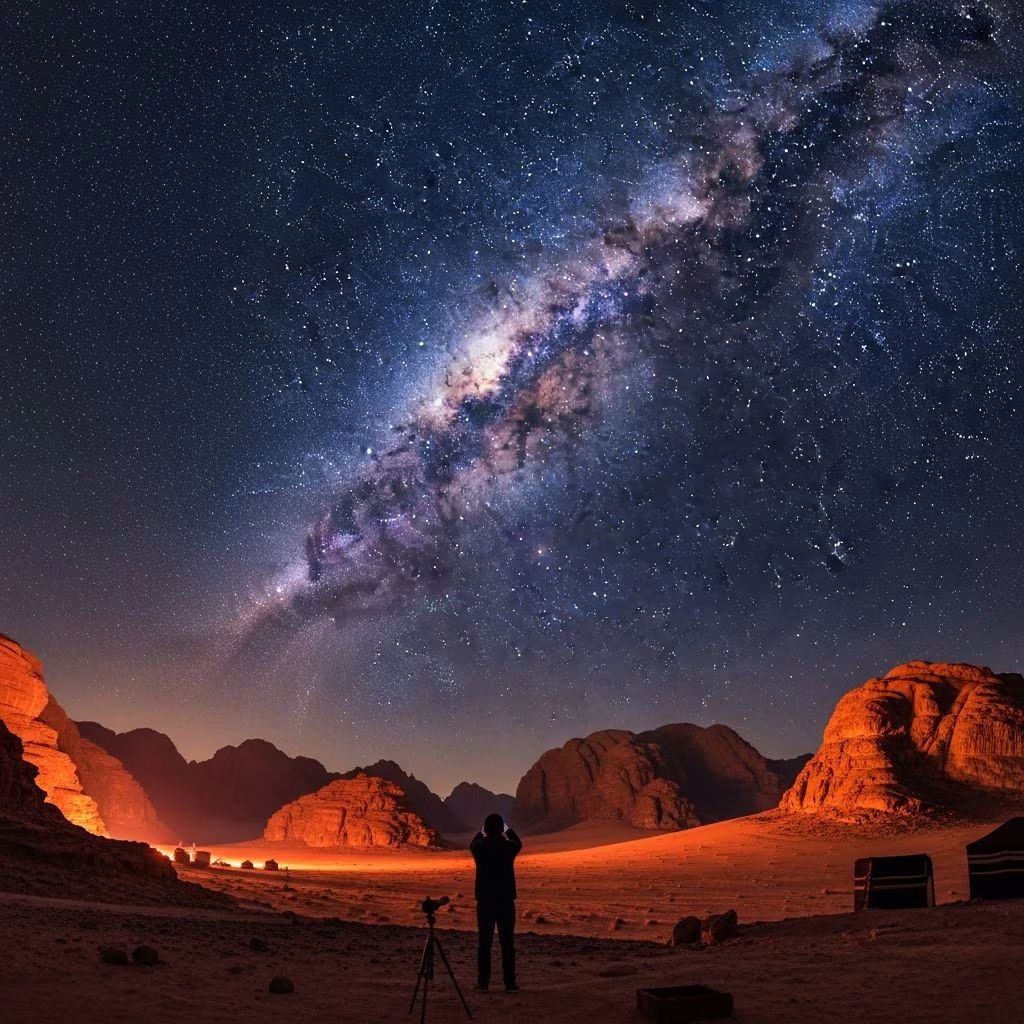
Wadi Rum, often called the Valley of the Moon, offers one of the world’s premier destinations for stargazing due to its remote location and negligible light pollution. This vast Jordanian desert provides breathtaking views of the night sky, including the Milky Way, prominent constellations, and bright planets, making it a must-visit for astronomy lovers.
Located in southern Jordan, Wadi Rum spans over 720 square kilometers of protected wilderness, far from urban centers. The absence of nearby cities ensures virtually no artificial light interferes with celestial observations. Clear, dry desert air minimizes atmospheric distortion, allowing visitors to see faint stars and deep-sky objects with the naked eye.
Minimal cloud cover throughout the year, especially in spring, autumn, and winter, contributes to reliable viewing conditions. Summer nights, while warmer, also deliver dark skies ideal for extended sessions. The region’s low humidity and infrequent rain further enhance visibility, turning every clear evening into a potential astronomical spectacle.
The best stargazing occurs after sunset, particularly post-midnight when the sky reaches peak darkness. New moon phases are preferable, as a full moon’s glow can wash out fainter stars. Visitors should consult lunar calendars to plan trips during darker periods for optimal Milky Way sightings.
Use red flashlights to preserve night vision, and position yourself in remote areas away from any camp lights. Patience rewards observers with shooting stars, which appear frequently in this meteor-friendly zone.
Wadi Rum’s skies showcase a rich array of constellations and planets. Key highlights include:
| Constellation/Object | Key Features | Visibility Notes |
|---|---|---|
| Ursa Major | Great Bear with Big Dipper asterism | Prominent year-round in northern sky |
| Taurus | Hyades cluster, red giant Aldebaran | V-shaped pattern, winter-spring favorite |
| Gemini | Bright stars Castor and Pollux | Twin figures visible in evenings |
| Canis Major | Supergiant Sirius, sky’s brightest star | Southern horizon standout |
| Milky Way | Galactic core and dusty lanes | Near new moon, summer peak |
Planets like Venus, Jupiter, Mars, and Saturn often shine brightly even before full darkness. Basic telescopes reveal Saturn’s rings or Jupiter’s Galilean moons, adding depth to the experience.
Many Bedouin-run camps and tour operators provide expert-led sessions. Guides share traditional lore alongside modern astronomy, pointing out constellations using lasers or telescopes. Tours typically last 1-2 hours, including transport to dark sites and equipment.
Popular spots include red sand dunes, Lawrence’s Spring, and Al-Khazali canyon, blending daytime adventures with nighttime skies. Reviews highlight guides’ engaging, humorous styles that make sessions memorable for all ages.
Select accommodations prioritizing dark sky access. Luxury eco-camps offer private tents or cave stays with unobstructed views, while budget options provide communal stargazing blankets. Top picks emphasize low-light policies post-dinner.
Facilities often include telescopes, reclining chairs, and hot beverages under the stars. Bedouin hospitality adds storytelling elements, connecting ancient navigation tales to visible patterns.
Minimal equipment suffices for naked-eye viewing, but enhancements elevate the experience:
Arrive early to acclimate, avoid white lights, and lie flat for panoramic views. Hydration and snacks sustain longer sessions.
The desert’s stability suits photography. Use a sturdy tripod for long exposures (15-30 seconds) at wide apertures and high ISO. Entry-level DSLRs or smartphones with night modes yield stunning Milky Way shots.
Tips include stacking multiple images for noise reduction and foreground elements like rock formations for composition. Guided photo tours teach techniques, ensuring clear, vibrant results even for novices.
Access Wadi Rum via Amman (4-hour drive) or Aqaba. Enter through the visitor center for permits. Book camps 1-2 months ahead, especially during peak seasons. Combine with Petra or Dead Sea for multi-stop itineraries.
Permits and fees are nominal; eco-friendly practices preserve the site’s International Dark Sky potential. Families, couples, and solo travelers all find tailored options.
Yes, clear skies prevail most nights, though new moon periods and non-windy seasons optimize views.
No, most tours supply telescopes and guides; binoculars enhance personal sessions.
Ranges from free camp activities to $20-50 USD for premium experiences, often bundled with overnights.
Absolutely—guides adapt for kids, sharing fun stories and easy identifications.
Frequently, but best under dark skies away from moonlight.
Jordan’s commitment to low-impact tourism sustains this natural wonder. Visitors help by minimizing light use and supporting certified camps. Future dark sky park status could elevate its global status.
