

 Travel Essentials
 Travel Essentials

Explore Wakayama Prefecture's UNESCO-listed trails, mountaintop monasteries, hot springs, and historic castles in this ultimate guide for first-time visitors seeking spiritual depth and natural beauty.
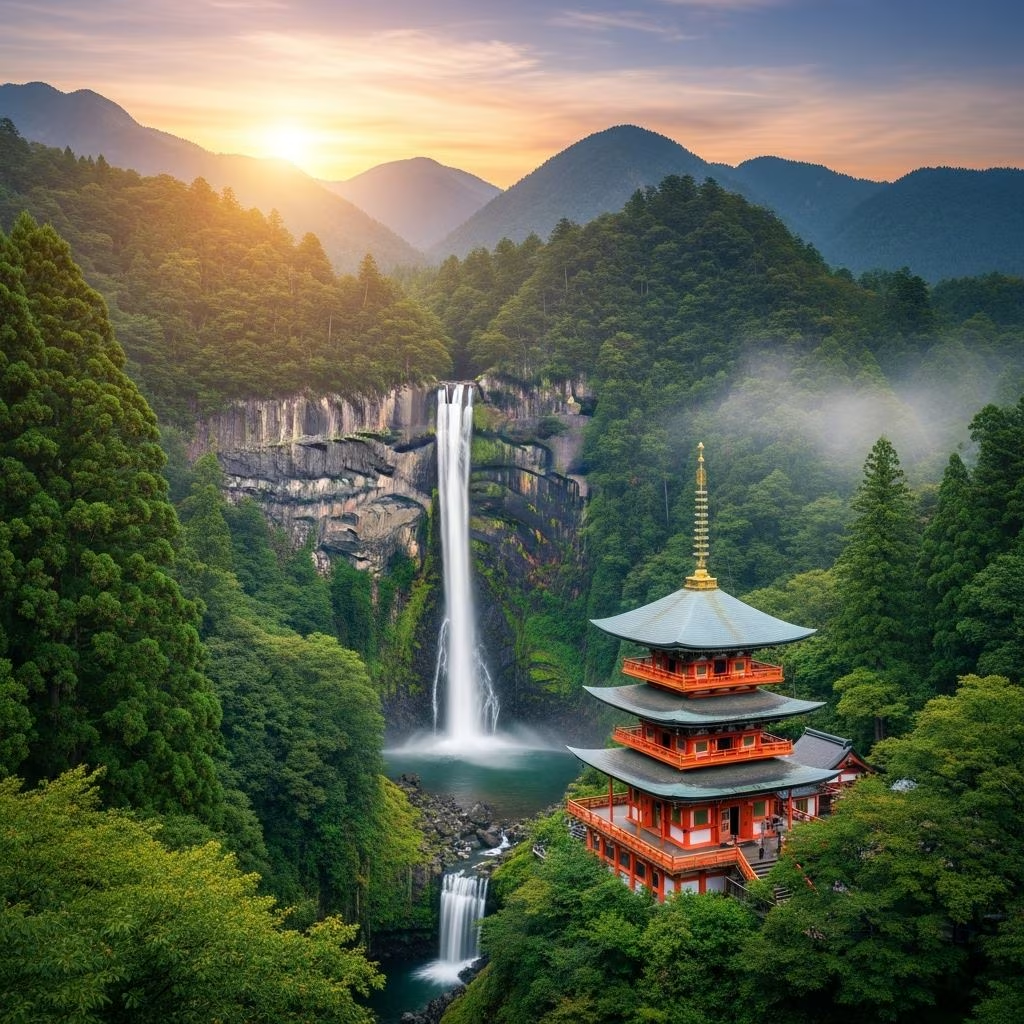 Travel Essentials
Wakayama Prefecture, nestled on the Kii Peninsula south of bustling Osaka and Kyoto, offers a profound escape into Japan’s spiritual and natural legacy. This rugged region, recognized by UNESCO for its sacred sites and pilgrimage paths, blends ancient Shinto shrines, Buddhist monasteries, steaming hot springs, and pristine coastlines into an unforgettable journey.
Far from the neon lights of urban Japan, Wakayama invites travelers to reconnect with nature and tradition. Its landscape of mist-shrouded mountains, dense forests, and dramatic Pacific shores has drawn emperors, samurai, and modern pilgrims for over a millennium. The prefecture’s spiritual essence stems from its role as a nexus of Shinto and Buddhist practices, where visitors can partake in temple stays, meditative hikes, and ritual baths.
Unlike overcrowded tourist hubs, Wakayama provides solitude amid grandeur. Highlights include the ethereal Koyasan temple town, the labyrinthine Kumano Kodo trails linking grand shrines, and onsen resorts where geothermal waters soothe weary bodies. Whether you’re a hiker chasing ancient footsteps or a seeker of inner peace, this prefecture delivers transformative experiences.
Perched at 900 meters above sea level, Koyasan (Mount Koya) is a sacred enclave founded in 816 by monk Kukai, the patriarch of Shingon Buddhism. This mountaintop complex spans 117 temples amid cedar groves, serving as a living monastery where over 50 establishments welcome overnight guests for shukubo stays.
A typical shukubo experience begins before dawn with morning prayers, followed by shojin ryori—vegan temple cuisine crafted from seasonal mountain ingredients. Wander the Okunoin cemetery, Japan’s largest, lined with 200,000 tombstones leading to Kukai’s mausoleum. The air hums with incense and chanting, fostering profound reflection.
The Kumano Kodo network of pilgrimage routes, inscribed as a UNESCO World Heritage site in 2004, connects sacred sites across the Kii Mountains. These paths, trodden since the Heian period (794-1185), link the Kumano Sanzan—three grand Shinto shrines: Hongu Taisha, Hayatama Taisha, and Nachi Taisha—plus the adjacent Seiganto-ji Temple.
The Nakahechi Route, dubbed the Imperial Route, is the most accessible, spanning 40-70 km over 4-7 days. Hikers pass stone torii gates, oji shrines, and waterfalls like the towering Nachi Falls, Japan’s tallest at 133 meters. More challenging paths like Kohechi or Iseji demand fitness and navigation skills.
| Route | Difficulty | Length | Highlights |
|---|---|---|---|
| Nakahechi | Moderate | 40 km | Nachi Falls, Kumano Shrines |
| Ohechi | Challenging | 70 km | Coastal views, remote shrines |
| Kohechi | Expert | 70 km | Mountain isolation, Koyasan link |
These trails embody Japan’s syncretic faith, merging Shinto nature worship with Buddhist enlightenment. Modern pilgrims receive stamps at shrines, echoing medieval practices.
Wakayama boasts some of Japan’s finest onsen, fed by volcanic sources. Shirahama’s white-sand beaches pair with ocean-view rotenburo at Saki-no-Yu, one of the nation’s oldest baths. Inland, Yunomine’s Tsubo-Yu offers a tiny creek-side soak, while Kawayu Onsen’s Sennin Buro accommodates hundreds in a riverside expanse during winter.
Other gems include Katsuura’s Bokido Cave Onsen, a sea cavern bath, and Ashiyu Alley in Shirahama for casual foot soaks amid dining. These waters, rich in minerals, promote relaxation and are steeped in folklore of divine healing.
The prefectural capital bridges history and whimsy. Wakayama Castle, rebuilt in the 1950s, perches on a hill with moats and turrets, exploding in cherry blossoms each spring for hanami picnics. Its grounds host festivals, preserving samurai-era vibes.
Dive into quirky culture at the Fusion Museum, where interactive exhibits celebrate Wakayama’s knitting industry—pedal a bike to knit your scarf. Stroll the vibrant Poledah shopping arcade or savor kuro tamago (black eggs boiled in onsen waters) from nearby sources.
Southern Wakayama’s Pacific coast dazzles with Shirahama’s quartz sands, Adventure World (panda sanctuary and marine park), and the Three Baika Caves. Cycle the shoreline or surf at Katsuura. Inland, Yoshino-Kumano Park offers panoramic hikes.
Reach Wakayama via JR trains from Osaka (1 hour) or Kyoto (2 hours). Fly into Nanki-Shirahama Airport from Tokyo. Buses connect Koyasan (90 minutes from Osaka) and Kumano (from Kii-Tanabe Station). Rent cars for flexibility on rural roads.
Sample 7-Day Itinerary:
Yes, with easy-access routes like Nakahechi and guided tours available.
Use official sites or agencies; expect ¥10,000-20,000/night including meals.
No, they offer solitude compared to popular hikes like Kumano Kodo.
Wash before entering, no swimsuits, tattoos often covered.
Absolutely—day trips from Osaka are feasible.
As tourism rises—fueled by awards like Lonely Planet’s nods—sustainable practices matter. Stick to trails, support local guesthouses, and minimize waste to honor this timeless land.
